

 English
  русский
  Español
PP Non-Woven Fabric: Types, Properties, and Applications Guide
Content
What Is PP Non-Woven Fabric?
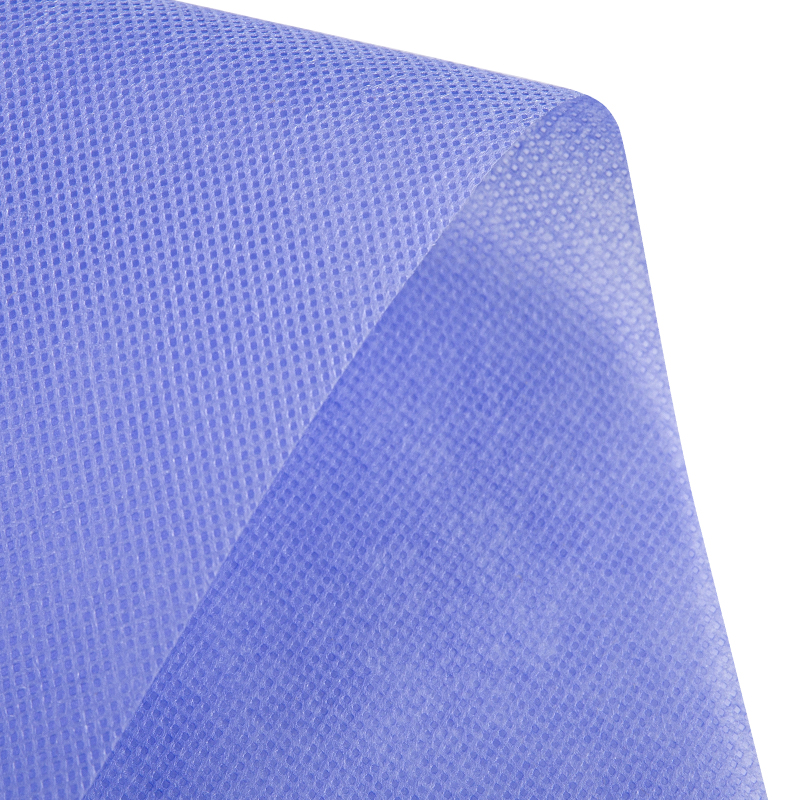
PP non-woven fabric—polypropylene non-woven fabric—is a sheet material produced by bonding or interlocking polypropylene fibers through mechanical, thermal, or chemical means rather than weaving or knitting. The result is a textile-like material with a continuous fiber structure, no yarn interlacing, and properties that can be precisely engineered by adjusting polymer grade, fiber diameter, bonding method, and basis weight. Global production of polypropylene non-wovens exceeds 20 million metric tons annually, making it one of the highest-volume technical textiles in the world.
Polypropylene is the dominant polymer choice for non-wovens for three reasons: its density of 0.91 g/cm³ is the lowest of any commodity thermoplastic (meaning more area coverage per kilogram), its melting point of approximately 160–165°C allows robust thermal bonding without degradation, and its chemical resistance to acids, alkalis, and most solvents makes it suitable for demanding applications where natural fibers would fail.
Manufacturing Processes and Their Structural Differences
The production method determines fiber diameter, bond strength, surface texture, and mechanical properties. The four principal processes used to make PP non-woven fabric are:
- Spunbond (SS or SMS): Molten polypropylene is extruded through spinnerets, drawn into continuous filaments 10–35 µm in diameter, and laid onto a moving belt to form a web. The web is thermally calendered between heated rollers to bond filament crossover points. Spunbond PP is the most widely produced non-woven globally, offering high tensile strength, dimensional stability, and consistent basis weights from 10 to 200 g/m². SMS (spunbond-meltblown-spunbond) combines a fine-fiber meltblown core between two spunbond layers for improved filtration efficiency.
- Meltblown: High-velocity hot air attenuates extruded PP into ultrafine fibers typically 0.5–5 µm in diameter—far finer than spunbond filaments. The microfiber web has a large surface area and tortuous flow path that gives meltblown PP its characteristic filtration and barrier performance. Used as the filtering core layer in N95 respirators, surgical masks, and HEPA prefilters.
- Needle-punch: Staple PP fibers are carded into a batt and mechanically entangled by thousands of barbed needles punching through the web per minute. The resulting fabric is thick, dense, and highly durable. Needle-punch PP non-wovens are used in geotextiles, automotive trunk liners, and industrial felt-replacement applications where thickness and abrasion resistance matter more than fine filtration.
- Thermal bond (air-through and calendered): Bicomponent PP/PE or PP/PP staple fibers are heat-bonded either by forcing hot air through the web or by passing the web between heated calender rolls. Thermal-bonded fabrics have a soft, lofty hand with good absorbency and are the primary substrate for baby diaper topsheets, adult incontinence products, and hygiene wipes.
Key Properties of PP Non-Woven Fabric
| Property | Typical Value / Characteristic | Significance |
|---|---|---|
| Basis weight | 10–200 g/m² | Determines barrier, strength, and drape |
| Tensile strength (MD) | 30–500 N/5 cm | Governs suitability for load-bearing uses |
| Moisture absorption | <0.01% | Inherently hydrophobic; can be hydrophilically treated |
| Service temperature | −40°C to +100°C continuous | Broad thermal range without embrittlement |
| UV stability (untreated) | Low — degrades within weeks in direct sunlight | UV stabilizer masterbatch required for outdoor use |
| Chemical resistance | Resistant to dilute acids, alkalis, alcohols, and most salts | Suitable for chemical filtration and medical packaging |
| Recyclability | Thermoplastic — mechanically recyclable (resin code #5) | Recyclable where sorting infrastructure exists |
Major Application Segments
PP non-woven fabric's combination of low cost, processability, and tunable performance has made it the material of choice across six major end-use segments:
- Hygiene and medical: Diaper topsheets, surgical drapes, gowns, face masks, and sterilization wrap account for the single largest consumption of PP non-wovens by volume. Medical-grade spunbond and SMS fabrics must meet ISO 13485 and EN 13795 standards for barrier performance and particulate cleanliness.
- Geotextiles: Needle-punch and heavy spunbond PP fabrics (100–300 g/m²) are used in road base separation, erosion control, drainage filtration, and landfill liner protection. PP geotextiles resist soil acids and biological degradation for service lives exceeding 50 years in buried applications when formulated with appropriate stabilizers.
- Agriculture: Lightweight spunbond PP (17–30 g/m²) is used as crop cover fabric to protect plants from frost, pests, and hail while transmitting 70–85% of incident light. Unlike polyethylene film, PP non-woven is breathable, eliminating condensation and reducing fungal disease pressure.
- Filtration: Meltblown PP and SMS laminates serve as filter media in HVAC systems (MERV 8–16), liquid filtration cartridges, automotive cabin air filters, and industrial dust collection. The electrostatic charge naturally retained or deliberately applied to meltblown PP significantly enhances particle capture efficiency without increasing airflow resistance.
- Packaging: PP non-woven shopping bags (80–120 g/m²) have become the dominant reusable bag material in markets that have banned single-use plastic bags. PP non-woven is also used in garment bags, furniture protection covers, and industrial packaging wraps.
- Automotive: Needle-punch PP non-wovens are used for trunk liners, hood insulators, door panel backing, and carpet underlay. Their light weight, moldability, and ability to absorb or dampen sound make them a cost-effective substitute for heavier woven or foam components.
Surface Treatments and Functional Finishing
Raw PP non-woven is hydrophobic. Surface treatments applied during or after production expand the material's functional range significantly:
- Hydrophilic finishing: Surfactant treatment or plasma activation renders the fabric wettable for hygiene applications where rapid fluid strikethrough is required. Durable hydrophilic finishes retain wettability through multiple wash cycles.
- Hydrophobic / repellent finishing: Fluorocarbon or silicone coatings enhance liquid barrier performance for surgical gowns, protective coveralls, and outdoor furniture covers.
- Antistatic treatment: Carbon fiber integration or conductive coating prevents static charge buildup in electronics packaging and cleanroom applications.
- Antimicrobial finishing: Silver ion, zinc oxide, or quaternary ammonium compounds are applied to medical and hygiene PP non-wovens to inhibit bacterial and fungal growth on the fabric surface.
- Flame retardant treatment: Halogen-free intumescent or phosphorus-based additives incorporated into the PP resin or applied as a topcoat bring fabrics into compliance with EN 13501, NFPA 701, and FAR 25.853 aviation standards.
- UV stabilization: HALS (hindered amine light stabilizer) masterbatch compounds incorporated at 0.3–1.5% loading extend outdoor service life from weeks to several years, critical for agricultural covers and geotextile applications.
Sustainability Considerations
PP non-woven fabric generates ongoing debate on sustainability. On the environmental credit side, polypropylene requires significantly less energy to produce than polyester or nylon, its low density means less polymer per unit area than competing materials, and it is theoretically recyclable as resin code #5. Reusable PP non-woven bags achieve a net environmental benefit over single-use polyethylene bags after approximately 11 uses according to lifecycle assessments published by the European Environment Agency.
On the liability side, PP is a fossil-fuel-derived polymer that does not biodegrade in soil or marine environments within any practical timeframe. Contaminated or composite PP non-wovens (such as laminated or adhesive-bonded materials) are difficult to recycle in practice even where collection infrastructure exists. The industry is responding with several approaches:
- Bio-based PP produced from sugarcane-derived propylene (currently limited commercial volumes)
- Recycled-content PP non-wovens using post-consumer or post-industrial PP resin
- Design-for-recyclability guidelines that eliminate incompatible laminates and additives
- Chemical recycling (pyrolysis) of mixed PP waste streams where mechanical recycling is impractical
Frequently Asked Questions
- Is PP non-woven fabric safe for food contact and medical use?
Virgin polypropylene is inherently non-toxic and is approved for food contact by the FDA (21 CFR 177.1520) and EU Regulation 10/2011. Medical-grade PP non-wovens must additionally comply with ISO 10993 for biocompatibility and be produced under controlled conditions to meet particulate and microbial cleanliness requirements. The presence of processing additives, colorants, or surface treatments may affect regulatory status and should be verified with the supplier for specific applications.
- How does PP non-woven compare to polyester non-woven?
PP non-woven is lighter (density 0.91 g/cm³ vs. 1.38 g/cm³ for PET) and lower in cost, making it more economical for area-coverage applications. Polyester non-woven offers higher thermal resistance (service temperature up to 150–200°C vs. 100°C for PP), better dimensional stability at elevated temperatures, and superior UV resistance without stabilizer additives. For demanding thermal or outdoor-exposure applications, PET is often preferred despite its higher cost per kilogram.
- What basis weight of PP non-woven should I specify for reusable shopping bags?
The standard range for reusable PP non-woven shopping bags is 80–120 g/m². At 80 g/m² the fabric is lightweight and cost-effective but has limited durability for heavy loads. 100 g/m² is the most common commercial specification, providing a good balance of strength, printability, and cost. 120 g/m² and above gives noticeably improved load capacity and seam strength for premium bag applications. Anything below 60 g/m² is typically too thin for reliable repeated use.
- Can PP non-woven fabric be printed on?
Yes. PP non-woven is widely printed using flexographic printing with water-based or UV-curable inks, screen printing, and digital inkjet printing. Because PP has low surface energy, corona treatment is typically applied before printing to improve ink adhesion and prevent smearing. Flexographic printing on spunbond PP non-woven can achieve print widths up to 3.2 m at commercial speeds, making it cost-effective for large runs of branded bags, agricultural covers, and medical packaging.
- What is the difference between SMS and SMMS non-woven fabric?
SMS (spunbond-meltblown-spunbond) is a three-layer laminate: two outer spunbond layers provide mechanical strength and abrasion resistance while a central meltblown layer provides filtration and fluid barrier performance. SMMS adds a second meltblown layer (spunbond-meltblown-meltblown-spunbond) for enhanced barrier performance at the same or lower total basis weight. SMMS is the standard construction for higher-specification surgical gowns and drapes where liquid strike-through resistance must meet EN 13795 Level 2 or Level 3 requirements.




