

 English
  русский
  Español
Non Woven Fabrics: Types, Manufacturing & Applications
Nonwoven fabric covers a huge range of materials that share one trait: fibers bonded together directly, without weaving or knitting. That single manufacturing difference is what makes nonwovens so versatile, from surgical gowns to geotextiles — but it also means "nonwoven" isn't one material, it's a manufacturing category with several distinct processes, each suited to different applications.
Content
- 1 What Are Non Woven Fabrics
- 2 Types of Non Woven Fabrics
- 3 Non Woven Fabric Manufacturing Process
- 4 Spunbond vs Meltblown Non Woven Fabric
- 5 Needle Punched Non Woven Fabric Applications
- 6 Spunlace Non Woven Fabric Uses
- 7 Airlaid Non Woven Fabric Applications
- 8 Biodegradable Non Woven Fabrics
- 9 Non Woven Fabrics in Medical Applications
- 10 Sustainable Non Woven Fabric Materials
What Are Non Woven Fabrics
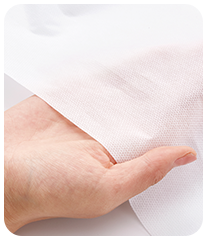
Nonwoven fabrics are sheet or web structures made by bonding fibers together mechanically, thermally, or chemically, rather than by weaving or knitting threads. Fibers can be natural or synthetic, and bonding methods range from heat and pressure to needle punching, chemical adhesives, or high-pressure water jets. Because there's no woven structure, nonwovens can be engineered with specific properties — softness, strength, absorbency, filtration efficiency — by adjusting fiber type, web formation method, and bonding process independently of each other.
Types of Non Woven Fabrics
Spunbond
Continuous filaments are extruded, laid into a web, and thermally bonded — strong, durable, and cost-effective, common in bags, agricultural covers, and packaging.
Meltblown
Fine microfibers are extruded and rapidly cooled into a fine, low-strength web with excellent filtration properties — the core material in medical masks and filter media.
Needle Punched
Fibers are mechanically interlocked using barbed needles, producing a thick, durable fabric used in carpeting, geotextiles, and automotive interiors.
Spunlace (Hydroentangled)
High-pressure water jets entangle fibers without adhesives or heat, producing a soft, cloth-like fabric common in wipes and medical dressings.
Airlaid
Fibers are air-deposited into a web and bonded, producing a bulky, absorbent material suited to hygiene products and tabletop disposables.
Wet-Laid
Similar to papermaking, fibers are suspended in water and formed into a web — used for specialty and technical nonwovens requiring fine, uniform structure.
Non Woven Fabric Manufacturing Process
- Fiber preparation: Natural or synthetic fibers (polypropylene, polyester, viscose, etc.) are selected and prepared for web formation.
- Web formation: Fibers are arranged into a continuous web using a method suited to the target fabric — extrusion for spunbond/meltblown, carding or air-laying for staple-fiber webs.
- Bonding: The web is bonded using thermal (heat/pressure), mechanical (needle punching or hydroentanglement), or chemical (adhesive resin) methods, depending on the desired strength, softness, and application.
- Finishing: Treatments such as calendaring, printing, coating, or antimicrobial finishing are applied as needed for the end use.
- Slitting and winding: The finished fabric is cut to width and wound into rolls for shipment.
Spunbond vs Meltblown Non Woven Fabric
| Factor | Spunbond | Meltblown |
|---|---|---|
| Fiber structure | Continuous, relatively coarse filaments | Very fine microfibers, often sub-micron |
| Strength | High tensile strength | Lower strength on its own |
| Filtration efficiency | Lower | High — fine fiber structure traps small particles |
| Common use | Bags, agricultural fabric, packaging, outer layers | Filter media, mask middle layers, oil absorption |
The two are frequently combined into SMS (spunbond-meltblown-spunbond) laminates, pairing meltblown's filtration performance with spunbond's structural strength on either side — a construction widely used in medical and protective fabrics.
Needle Punched Non Woven Fabric Applications
Needle punching's mechanical interlocking produces a thick, textured fabric with good durability and bulk, making it well suited to demanding physical applications: automotive interior trim and carpeting, geotextiles used in road construction and erosion control, industrial felts, and insulation materials. Because no adhesive or heat bonding is required, needle punched fabric can also be produced from a wider range of fiber types, including recycled fibers, without compromising bond strength.
Spunlace Non Woven Fabric Uses
Hydroentanglement produces a fabric that feels closer to woven cloth than most other nonwoven types, without using adhesives or high heat that can stiffen the material. That soft, cloth-like drape makes spunlace the standard choice for wet wipes, medical dressings and swabs, and surgical gowns and drapes, where both softness against skin and reasonable strength are required together.
Airlaid Non Woven Fabric Applications
Airlaid fabric's bulky, highly absorbent structure makes it the standard material behind feminine hygiene products, adult incontinence products, and tabletop items like napkins and tablecloths. The air-laid process allows a high loft-to-weight ratio, meaning airlaid fabric can hold significant liquid volume relative to its material weight — a key requirement in absorbent hygiene applications.
Biodegradable Non Woven Fabrics
Biodegradable nonwovens are typically made from natural or bio-based fibers — cotton, viscose, PLA (polylactic acid), or bamboo-derived fibers — engineered to break down under composting or specific environmental conditions, unlike conventional polypropylene or polyester nonwovens which persist much longer. Biodegradability depends on the fiber source and bonding method together, since chemical adhesives or synthetic binder resins can slow or prevent full breakdown even when the base fiber itself is biodegradable — a detail worth confirming against a recognized compostability or biodegradation standard rather than assuming from the fiber type alone.
Non Woven Fabrics in Medical Applications
- Surgical gowns and drapes: Spunlace and SMS laminates offer the barrier protection and comfort needed for extended wear.
- Face masks: Meltblown layers provide filtration efficiency, typically sandwiched between spunbond outer layers for structure.
- Wound dressings: Soft, absorbent spunlace or airlaid materials are common for direct-contact dressings.
- Sterilization wrap: Nonwoven materials engineered for specific barrier and breathability properties protect sterilized instruments during storage and transport.
- Disposable drapes and covers: Lightweight, cost-effective nonwovens replace reusable woven textiles in single-use clinical settings.
Medical-grade nonwovens are typically produced and tested to specific regulatory standards for barrier performance, particle filtration, and biocompatibility, which distinguishes them from general-purpose industrial or consumer-grade nonwoven fabric of the same base construction.
Sustainable Non Woven Fabric Materials
Sustainability efforts in nonwoven fabric generally focus on three areas: switching to bio-based or recycled fiber content instead of virgin synthetic fibers, reducing or eliminating chemical binders in favor of mechanical or thermal bonding methods that don't introduce non-biodegradable adhesives, and designing fabrics for compostability or easier end-of-life processing. Recycled polyester (rPET) nonwovens and PLA-based nonwovens are two of the more established options currently used to reduce the environmental footprint of nonwoven products without significantly compromising performance for most applications.




