

 English
  русский
  Español
Understanding Cross Pattern PP Non-Woven Fabric: Properties, Applications, and Innovations
Home / News / Industry News / Understanding Cross Pattern PP Non-Woven Fabric: Properties, Applications, and Innovations
The nonwoven fabric industry is a cornerstone of modern manufacturing, providing essential materials for countless applications. Among the diverse range of nonwoven technologies, Cross Pattern PP Non-Woven Fabric stands out for its unique structural integrity and versatile performance. This specialized material, primarily made from polypropylene (PP), features a distinctive cross-laid fiber pattern that grants it superior strength and dimensional stability compared to traditional randomly laid nonwovens. For over two decades, Jiangyin Jingang Nonwoven Co., Ltd. has been at the forefront of developing and refining such advanced materials, leveraging its dual expertise in nonwoven production and proprietary machinery manufacturing to deliver high-quality, automated solutions to a global market.
Content
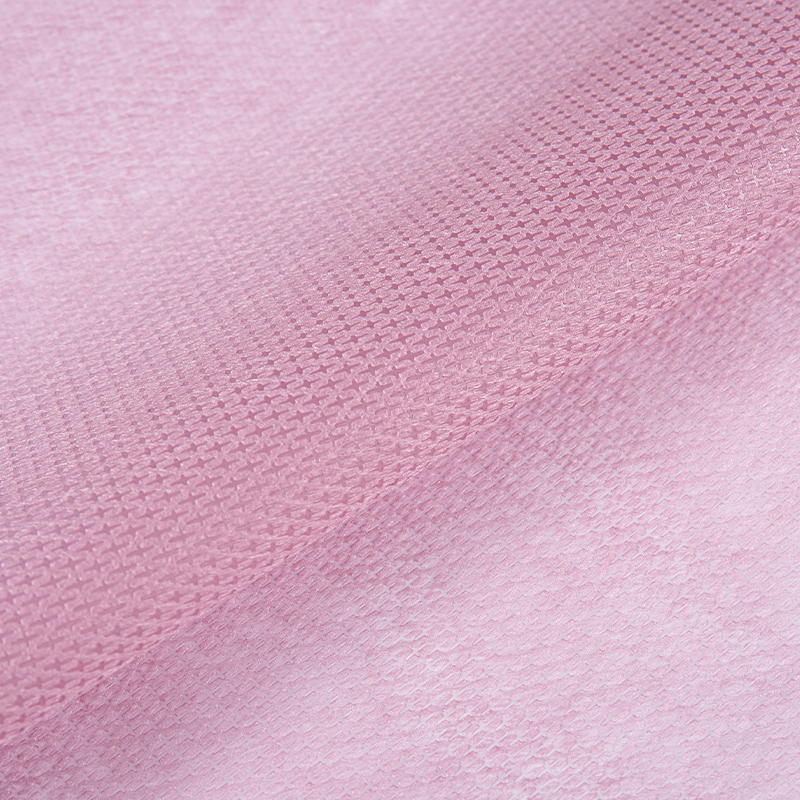
Cross Pattern PP Non-Woven Fabric is manufactured using a spunbond process where continuous polypropylene filaments are extruded, stretched, and laid down on a moving belt in a precise, crisscrossing pattern. This deliberate orientation of fibers is the key to its enhanced properties.
The cross-laid configuration is not random. It creates a more uniform and balanced web. When comparing a cross pattern fabric to a standard random-laid fabric, the difference in performance is significant. The cross pattern provides more consistent strength in both the machine direction (MD) and cross direction (CD). For instance, a standard random-laid fabric might have a tensile strength ratio (MD:CD) of 2:1 or higher, whereas a cross pattern fabric can achieve a much more balanced ratio, often closer to 1.5:1 or even 1:1, leading to better overall performance in demanding applications [1].
| Property | Cross Pattern PP Non-Woven | Standard Random-Laid PP Non-Woven |
|---|---|---|
| Tensile Strength Balance | More balanced between MD & CD | Typically stronger in MD, weaker in CD |
| Dimensional Stability | Higher resistance to stretching and distortion | More prone to elongation in one direction |
| Surface Uniformity | Exceptionally uniform, predictable surface | Can have slight variations in thickness and density |
| Tear Resistance | Generally superior due to interlocking fiber network | Good, but may propagate tears more easily in the weak direction |
The engineered structure of Cross Pattern PP Non-Woven Fabric translates into a host of tangible benefits that make it a preferred choice for technical applications.
Understanding specifications is key to selecting the right material. The properties can be tailored, but common ranges include:
The robustness and versatility of Cross Pattern PP Non-Woven Fabric open doors to a wide array of industrial and commercial uses, far beyond the capabilities of ordinary nonwovens.
In agriculture, its strength and rot-resistance are invaluable. It serves as a premium cross pattern nonwoven fabric for weed control in landscaping and farming. Compared to black plastic sheeting, this fabric allows water and nutrients to permeate to the soil while blocking sunlight, suppressing weeds effectively without harming soil health. It is also used as a protective cover for crops and as a separation and stabilization layer in geotextile applications for road construction and erosion control.
The fabric's dimensional stability makes it ideal for high strength cross pattern pp nonwoven for packaging. It is used as a reinforcing layer in flexible intermediate bulk containers (FIBCs), mailing envelopes, and durable gift bags. When compared to simple laminated papers or thinner plastics, packaging reinforced with cross pattern nonwoven fabric demonstrates superior puncture resistance and durability, ensuring contents are protected during rough handling and long-distance shipping.
Automakers utilize this material as a reliable cross pattern nonwoven fabric for automotive trunk liners and other interior components. Its advantages are clear when compared to needle-punched fabrics often used for similar purposes. The cross pattern fabric offers a smoother surface finish, better moldability into complex shapes for trunk liners and parcel shelves, and superior resistance to abrasion from cargo, all while remaining lightweight to contribute to vehicle fuel efficiency.
The controlled pore structure achieved through precise fiber laying makes it an excellent choice for liquid and air filtration. As a cross laid pp nonwoven for liquid filtration, it provides consistent particle retention and high dirt-holding capacity. In a comparative analysis with meltblown filter media, cross pattern spunbond fabric offers superior mechanical strength and can often be cleaned and reused for certain applications, whereas meltblown media, while offering finer filtration, is more disposable in nature.
Its aesthetic uniformity and strength make it suitable for various domestic applications. It is increasingly popular as a durable cross pattern fabric for furniture backing. Compared to traditional woven scrim or lightweight nonwovens, it provides a much more effective barrier against dust, offers better stability to prevent upholstery from sagging, and is easier to handle and staple during the furniture manufacturing process, leading to a cleaner finished product.
Founded in 1999, Jiangyin Jingang Nonwoven Co., Ltd. brings a unique synergy to the production of high-quality Cross Pattern PP Non-Woven Fabric. Our philosophy is rooted in vertical integration and innovation.
Our distinct advantage lies in our dual role as a machinery manufacturer. We don't just use equipment; we design and build it. This allows us to:
This integrated approach ensures that the Cross Pattern PP Non-Woven Fabric we produce is not only a high-performance material but also a product of refined and efficient manufacturing technology.
Choosing the appropriate fabric specification is critical for application success. Key selection criteria include:
Consulting with an experienced manufacturer like Jiangyin Jingang early in the design process can help navigate these variables and identify the most cost-effective and performance-optimized specification.
The future of Cross Pattern PP Non-Woven Fabric is intertwined with broader trends in sustainability and smart materials. Research is actively focused on increasing the use of recycled PP content without compromising the fabric's mechanical properties [2]. Furthermore, developments in bio-based polymers offer a pathway to reducing reliance on fossil fuels. The inherent durability and potential for recyclability of PP nonwovens already contribute to a circular economy model, especially in long-life applications like geotextiles and automotive parts. The precision of the cross pattern manufacturing process also minimizes material waste, aligning with efficient production principles.
Cross Pattern PP Non-Woven Fabric represents a significant evolution in nonwoven technology, offering a blend of strength, stability, and consistency that random-laid fabrics cannot match. Its applications span from protecting crops and reinforcing packaging to filtering liquids and finishing fine furniture. For industries seeking a reliable, high-performance material, understanding the benefits of the cross pattern structure is essential. With a commitment to integrated manufacturing—controlling both the material science and the machinery—Jiangyin Jingang Nonwoven Co., Ltd. is positioned to meet this demand, providing tailored solutions that leverage the full potential of this versatile fabric.
The key difference lies in the fiber orientation. Regular spunbond has a more random fiber layout, which can lead to unbalanced strength (stronger in the machine direction). Cross pattern fabric has fibers laid in a deliberate crisscross manner, creating a more uniform and balanced strength in all directions, along with better dimensional stability.
Yes, as a mono-material made of polypropylene, it is inherently recyclable. The technical feasibility depends on the collection system and whether the fabric is contaminated during use. For instance, a clean furniture backing is easier to recycle than a filtration media soaked with contaminants. Efforts are ongoing to incorporate post-consumer recycled PP into new nonwoven production [2].
Absolutely. Standard PP has good resistance to moisture and many chemicals, but for prolonged outdoor exposure, it is often treated with anti-UV additives during production. This treatment significantly enhances its resistance to solar degradation, making cross pattern nonwoven fabric for weed control and geotextiles viable for multi-year outdoor applications.
Basis weight, measured in grams per square meter (gsm), directly correlates with thickness, strength, and opacity. A lower gsm (e.g., 20-50) is suitable for lightweight lining, covering, or simple separation. A medium gsm (50-100) is common for packaging reinforcement and furniture backing. High gsm fabrics (100+) are used for heavy-duty applications like robust geotextiles or industrial wiping rolls.
When used as durable cross pattern fabric for furniture backing, dimensional stability prevents sagging, wrinkling, or pulling away from the frame over time. A stable fabric maintains tension and a smooth appearance, ensuring the furniture's aesthetic integrity and longevity. It also provides a consistent barrier against dust ingress.
[1] Russell, S. J. (Ed.). (2007). *Handbook of Nonwovens*. Woodhead Publishing Ltd. (Chapter on Web Formation Technologies).
[2] Mangaraj, S., & Yadav, A. (2021). "Recycling of Polypropylene Nonwovens: Challenges and Opportunities." *Journal of Industrial Textiles*, 50(5), 787-810.
Plain spunbond polypropylene fabric slides. On a high-speed bag cutting line that means off-square panels, misaligned ...
READ MOREAt a packaging plant in eastern China, switching reusable shopping-bag production from woven polypropylene to PP spunb...
READ MOREWhen a surgical mask specification requires a filtration layer that stops sub-micron particles, or an HVAC filter desi...
READ MOREAn N95 respirator and a reusable shopping bag are both made from polypropylene nonwoven, yet one captures 95 percent o...
READ MOREEvery purchase order for single-use polyethylene (PE) bags commits a facility to a waste stream that will outlive the ...
READ MORE




