

 English
  русский
  Español
What Are the Benefits of Sesame Pattern PP Non-Woven Fabric for Industrial Applications?
Home / News / Industry News / What Are the Benefits of Sesame Pattern PP Non-Woven Fabric for Industrial Applications?
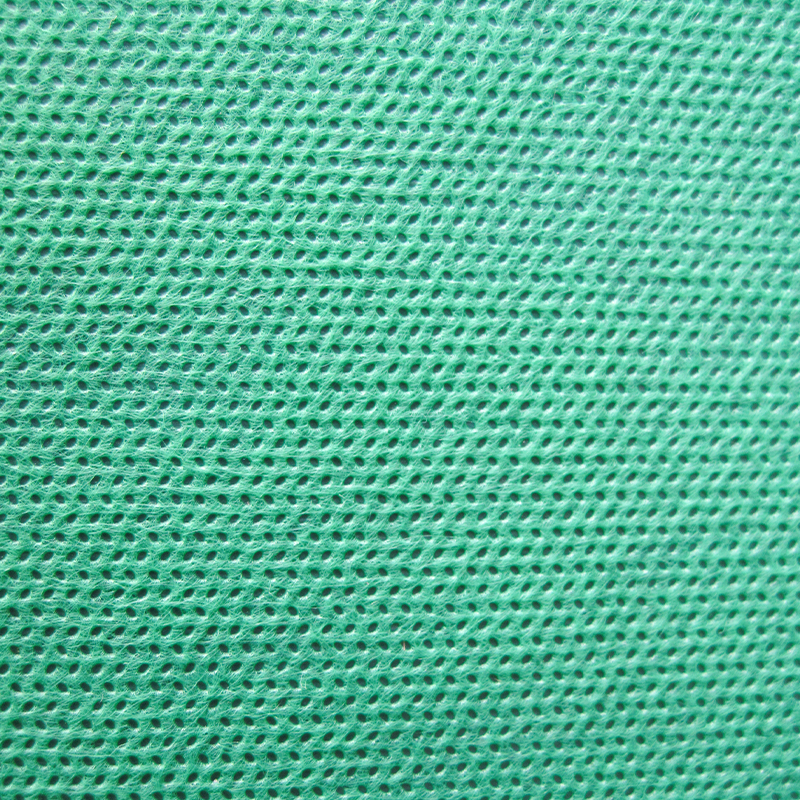
Sesame Pattern PP Non-Woven Fabric, characterized by its distinctive textured surface resembling sesame seeds, is a specialized variant of polypropylene non-woven material. Its unique manufacturing process creates a pattern that significantly enhances its functional properties, making it a standout choice for demanding industrial environments. Unlike standard smooth non-wovens, the sesame pattern provides increased surface area, improved grip, and superior liquid management capabilities. This article delves into the specific advantages of this fabric, exploring why it has become an indispensable material across sectors like automotive, filtration, agriculture, and packaging. We will examine its technical benefits, practical applications, and how it compares to other industrial textiles, providing a comprehensive guide for engineers, purchasers, and project managers.
Content
The primary advantage of Sesame Pattern PP Non-Woven Fabric lies in its exceptional durability, a direct result of its spunbond or spunlace construction combined with the embossed pattern. The raised "sesame" nodules act as a first line of defense against wear and tear, distributing stress across a wider area and preventing punctures or rips from propagating. In applications such as automotive trunk liners, geotextile separation layers, or heavy-duty carry bags, this translates to a longer product lifecycle and reduced replacement frequency. The polypropylene fibers themselves are inherently resistant to moisture, mildew, and most chemicals, ensuring the fabric does not degrade in harsh conditions. The pattern's texture also minimizes the fabric's direct contact with abrasive surfaces, further preserving its integrity. This combination of material science and structural design makes it a cost-effective solution for long-term projects.
To understand its value proposition, it’s useful to compare Sesame Pattern PP Non-Woven Fabric against common alternatives in key durability-focused applications. The following table illustrates its performance relative to other materials.
| Industrial Application | Sesame Pattern PP Non-Woven | Standard Flat PP Non-Woven | Woven Polypropylene |
| Concrete Curing Blankets | Excellent resistance to abrasion from sand/gravel; allows moisture vapor transmission. | Good moisture control but more prone to surface scuffing and fiber shedding. | High tensile strength but can fray at cut edges; less effective moisture management. |
| Automotive Interior Liners (Trunk, Door Panel) | Superior scuff resistance from luggage/tools; masks minor scratches. | Shows wear marks more easily; smoother surface offers less grip for contents. | Limited noise dampening; can produce squeaking sounds against other materials. |
| Geotextile for Soil Separation | Pattern prevents clogging (anti-clogging properties) while providing excellent separation. | Effective separation but can clog with fine silt over time. | High load-bearing but poor filtration capability, leading to potential soil mixing. |
One of the most immediate functional benefits of the sesame pattern is the dramatic improvement in surface friction. This makes non-slip pp non-woven fabric for packaging a highly sought-after specification. In logistics and storage, preventing load shift is critical for safety and product integrity. When used as interleaving sheets, pallet top sheets, or wrapping material, the textured surface creates a high-coefficient-of-friction interface between boxes, containers, or manufactured parts. This anti-slip characteristic is inherent to the material and does not rely on added chemical coatings that can wear off or contaminate sensitive products. Furthermore, the fabric’s flexibility allows it to conform to irregular shapes, providing grip on all sides. This section explores how this property mitigates risks in transportation and handling.
Beyond physical protection, Sesame Pattern PP Non-Woven Fabric excels in environmental management. Its three-dimensional structure is not just for show; it creates tiny channels and reservoirs that control the flow of liquids and particles. For breathable sesame pattern nonwoven for agriculture, this means allowing essential moisture vapor and gases (like ethylene) to escape while blocking liquid water and pests, creating a healthier microclimate for crops or soil. In industrial settings, it acts as a pre-filter or a mist/ dust wipe. The pattern traps fine particulates more effectively than a flat surface, preventing them from being easily dislodged. This dual capability—managing both liquids and aerosols—makes it versatile for maintenance, cleanup, and filtration auxiliary applications.
Selecting the correct material for filtration or barrier applications depends on the primary threat: liquid, dust, or both. Sesame Pattern PP Non-Woven Fabric offers a balanced solution. For those searching for sesame pattern fabric for air filter pre-layer, its key benefit is depth loading—capturing particles throughout its volume rather than just on the surface, which extends service life. The table below guides selection based on particulate size and liquid type.
| Target Contaminant | How Sesame Pattern Fabric Helps | Recommended Fabric Weight (gsm) | Alternative Less Suitable Material |
| Coarse Dust & Debris (>100 microns) | Pattern traps large particles; easy to shake out or vacuum for reuse. | 80-100 gsm | Lightweight needle-punch felt (particles embed, hard to clean). |
| Fine Dust & Pollen (10-100 microns) | Depth filtration within the fabric matrix; effective as HVAC pre-filter. | 100-150 gsm | Meltblown fabric (higher resistance, often disposable). |
| Water-Based Mists & Sprays | Hydrophobic polypropylene repels water; pattern spreads liquid for evaporation. | 70-120 gsm | Cotton or cellulose wipers (absorb, retain, and promote corrosion). |
| Oily Liquids & Coolants | Can be treated to be oleophilic; pattern increases holding capacity. | 120-200 gsm | Standard flat PP (lower pickup and retention rate). |
From a production and procurement standpoint, the benefits of Sesame Pattern PP Non-Woven Fabric extend to its economic and processing advantages. The fabric is typically produced in wide rolls on high-speed production lines, making it a readily available and scalable material. Its inherent strength often allows for the use of a lower weight (grams per square meter - GSM) to achieve the same performance as a heavier, flat non-woven, resulting in material savings. For lightweight sesame pattern nonwoven for crafts and industrial padding, this cost-saving is significant. Additionally, the fabric is easy to die-cut, ultrasonic weld, and sew, facilitating integration into automated manufacturing processes for products like furniture padding, medical gown components, or reusable bags.
The culmination of its properties—durability, grip, liquid management, and cost-effectiveness—makes Sesame Pattern PP Non-Woven Fabric remarkably versatile. This is why searches for water resistant sesame pattern nonwoven fabric come from industries as diverse as construction, automotive, agriculture, and furniture manufacturing. Its adaptability is a key selling point. A project manager might source it for temporary erosion control on a construction site, while a furniture manufacturer uses it as a breathable backing for sofa liners. An agricultural co-op might select it for frost protection blankets, and a logistics company standardizes it as a pallet anti-slip sheet. This cross-industry applicability ensures steady demand and widespread availability.
The primary difference lies in the embossed geometry and its functional impact. The sesame pattern features a more random, dot-like raised texture, which excels in providing omnidirectional anti-slip properties and a softer, more compressible feel. It's ideal for grip and cushioning. The diamond pattern, with its linear, grid-like embossing, often provides slightly higher tensile strength in the directions of the grid lines and is very effective for liquid drainage channeling. The choice depends on the application: Sesame Pattern PP Non-Woven Fabric is often preferred for load stabilization and surface protection, while diamond pattern might be chosen for certain filtration or drainage layers where directing fluid flow is critical.
Yes, absolutely. Sesame Pattern PP Non-Woven Fabric can be manufactured with added flame-retardant (FR) additives during the polymer extrusion process or treated with FR coatings post-production. This makes it suitable for applications in industries with strict fire safety standards, such as automotive interiors (e.g., trunk liners meeting FMVSS 302), public transportation, and certain construction materials. It's crucial to specify the required FR standard (e.g., UL94, NFPA 701) to the manufacturer to ensure the correct treatment is applied, as this will affect the fabric's properties and cost.
Polypropylene (PP) is a type of thermoplastic polymer, #5 plastic, which is technically recyclable. Sesame Pattern PP Non-Woven Fabric made from 100% polypropylene can often be recycled through specialized plastic recycling streams, provided it is clean and free of significant contamination. From an eco-perspective, its durability and potential for reuse are major advantages. Furthermore, compared to disposable materials, its long life reduces waste. For a more sustainable option, some manufacturers offer fabrics made from post-industrial recycled (PIR) polypropylene. It is not biodegradable, but its recyclability and potential for a circular economy model are significant environmental benefits.
Selecting the correct Grams per Square Meter (GSM) is critical for balancing performance and cost. Here’s a general guideline:
Always consult with the fabric supplier or technical datasheets, providing details about expected load, abrasion, and environmental exposure.
The sesame pattern directly enhances both properties in a controlled manner. For water resistant sesame pattern nonwoven fabric, the hydrophobic nature of polypropylene repels liquid water. The pattern increases the fabric's surface area and creates capillary action, which can help spread a liquid for evaporation if the fabric is used as a wipe, but it does not make the fabric more absorbent. Regarding breathability, the embossing process slightly opens the fabric's structure, often improving its air permeability and moisture vapor transmission rate (MVTR) compared to a denser, flat non-woven of the same material and weight. This is precisely why it is valued as a breathable sesame pattern nonwoven for agriculture, allowing gases to exchange while providing a physical barrier.
Plain spunbond polypropylene fabric slides. On a high-speed bag cutting line that means off-square panels, misaligned ...
READ MOREAt a packaging plant in eastern China, switching reusable shopping-bag production from woven polypropylene to PP spunb...
READ MOREWhen a surgical mask specification requires a filtration layer that stops sub-micron particles, or an HVAC filter desi...
READ MOREAn N95 respirator and a reusable shopping bag are both made from polypropylene nonwoven, yet one captures 95 percent o...
READ MOREEvery purchase order for single-use polyethylene (PE) bags commits a facility to a waste stream that will outlive the ...
READ MORE




