

 English
  русский
  Español
Mastering Meltblown Non-Woven Fabrics: Manufacturing, Applications, and Performance Insights
Home / News / Industry News / Mastering Meltblown Non-Woven Fabrics: Manufacturing, Applications, and Performance Insights
Meltblown Non-Woven Fabrics represent a crucial class of materials that have revolutionized filtration, medical, and hygiene applications worldwide. Their unique structure, characterized by extremely fine fibers and a high surface area-to-volume ratio, makes them indispensable for critical barrier and separation functions. This comprehensive guide delves into the intricacies of this material, exploring its complex manufacturing process, diverse applications, essential quality testing, and the key distinctions that set it apart from other nonwoven technologies. Understanding the science behind meltblown non-woven fabrics is the first step toward appreciating their vital role in modern protective and purification systems, ensuring performance, reliability, and safety across various industries.
Content
The manufacturing of meltblown non-woven fabrics is a sophisticated thermomechanical process that transforms polymer resin into a web of micron-sized fibers. The process is defined by its ability to create exceptionally fine fibers, often less than 10 micrometers in diameter, which is significantly smaller than fibers produced by other methods. This fineness is key to the material's superior filtration and barrier properties. The entire operation is highly sensitive to variations in temperature, air pressure, and polymer flow rate, requiring precise control to maintain consistent fiber structure and web uniformity. A successful meltblown process yields a product with high porosity and a randomized fiber orientation, maximizing the fabric's efficiency. The continuous and high-speed nature of the production line allows for the cost-effective creation of large volumes of high-performance material.
The production of high-quality Meltblown Non-Woven Fabrics follows a distinct sequence of stages, each critical to the final material properties. The primary raw material is typically a thermoplastic polymer, most commonly polypropylene, which must be carefully selected and prepared. The precision required at each stage—from the polymer’s journey through the extruder to its final collection as a nonwoven web—determines the fabric’s ultimate integrity and performance characteristics, such as thickness, basis weight, and pore size distribution. Understanding these steps illuminates the complexity and technological innovation inherent in creating this advanced material.
The quality and performance of Meltblown Non-Woven Fabrics are inextricably linked to the precise control of various processing parameters during manufacturing. Variations in these factors can drastically alter the fiber diameter, web uniformity, and ultimately, the material's filtration efficiency and barrier properties. For instance, the polymer melt temperature directly affects the viscosity, which in turn influences the ease of fiber attenuation. Similarly, the velocity and temperature of the hot air stream determine the extent of fiber drawing and the final fiber fineness. Manufacturers must meticulously manage these variables to meet stringent industry standards, especially when producing materials for critical applications like medical face masks or high-efficiency air filters. This level of control is what differentiates premium meltblown non-woven fabrics from lower-grade alternatives.
Key parameters and their effects are summarized below:
| Parameter | Impact on Fabric Quality | Primary Result of Adjustment |
| Melt Temperature | Controls polymer viscosity and flow rate consistency. | Influences fiber fineness and uniformity. |
| Hot Air Velocity | Determines the degree of fiber attenuation (stretching). | Directly controls fiber diameter (finer fibers = better filtration). |
| Die-to-Collector Distance (DCD) | Affects the cooling time before fiber deposition. | Impacts web structure, loft, and bond strength. |
| Polymer Throughput Rate | The amount of material processed per unit time. | Determines basis weight (g/m²) and fabric thickness. |
The versatility and high performance of materials derived from the meltblown process, primarily polypropylene meltblown nonwoven uses, position them as indispensable components in a multitude of industrial and consumer products. Polypropylene (PP) is the polymer of choice due to its excellent combination of low cost, chemical resistance, ease of processing, and inherent hydrophobic properties. These fabrics are not merely inert barriers; their complex micro-denier structure allows them to efficiently capture microscopic particles while maintaining necessary air or liquid flow. This duality makes them foundational to applications demanding both high efficiency and breathability, such as in specialized protective apparel and sophisticated environmental control systems. The ongoing development of new PP resins and process enhancements continues to expand the scope of polypropylene meltblown nonwoven uses, solidifying its status as a key high-tech textile.
One of the most critical and widespread applications of Meltblown Non-Woven Fabrics is in filtration. The fabric’s characteristic fine-fiber web structure provides a highly tortuous path for air or liquid flow, enabling the efficient capture of particles through a combination of mechanisms including interception, impaction, diffusion, and electrostatic attraction. This makes them ideal for various filter media. In air filtration, they are the functional core of HEPA-type filters, automotive cabin filters, and furnace filters, where they remove dust, pollen, mold, and airborne bacteria. For liquid filtration, they are used in oil absorption booms, industrial process fluid clarification, and water purification cartridges. The high-performance capability in both dry and wet environments showcases the material's adaptability, provided the correct polymer grade and fiber structure are specified for the intended medium and particle size.
The medical and hygiene sectors rely heavily on Meltblown Non-Woven Fabrics for their critical barrier and fluid management properties. The dense yet breathable structure is essential for creating effective protective barriers against biological aerosols and fluid penetration. This is particularly evident in the construction of surgical masks and respirators, where the meltblown layer is the primary filtration element, stopping pathogens and fine dust. Beyond filtration, the fabric is used in surgical gowns and drapes to prevent the transmission of fluids between the patient and medical staff. In the hygiene sector, its superior wicking and absorption properties—or conversely, its fluid repellency—are utilized in absorbent core materials and outer covers for diapers and feminine care products. The combination of softness, lightness, and functional performance makes polypropylene meltblown nonwoven uses indispensable for products demanding both safety and comfort.
Applications and their required properties:
| Product Category | Meltblown Function | Required Property |
| Surgical Masks/Respirators | Core filtration layer | High filtration efficiency, good breathability. |
| Surgical Gowns/Drapes | Fluid barrier layer | Hydrostatic pressure resistance (fluid repellency). |
| Diapers/Incontinence Products | Acquisition/Distribution Layer (ADL) or outer cover | Rapid wicking or high fluid repellency. |
| Wipes (Medical/Industrial) | Substrate material | High surface area for absorption/entrapment of debris. |
Ensuring the integrity and performance of Meltblown Non-Woven Fabrics necessitates rigorous and standardized quality control, with meltblown fabric filtration efficiency testing being the most crucial assessment. This testing process quantifies the material's ability to capture airborne or liquid-borne particles of a specific size, often using controlled aerosol challenges. For medical and protective applications, this is not merely a quality check but a regulatory requirement that validates the product's safety claims. The accuracy of these tests relies on specialized equipment, precise particle generation, and consistent flow rates. Achieving certification often depends on demonstrating high efficiency (e.g., >95%) against a highly penetrating particle size, typically around 0.3 micrometers. An in-depth understanding of the testing standards is essential for manufacturers to optimize their processes and for end-users to confidently select materials that meet their protective needs.
Various international standards govern the methodology for meltblown fabric filtration efficiency testing, ensuring results are reproducible and comparable across different laboratories and manufacturers. The choice of testing method depends on the material's intended application—air or liquid filtration. For air filtration, particularly in the medical field, methods like the use of sodium chloride (NaCl) aerosol or paraffin oil mist are common, often regulated by standards such as EN 149, ASTM F2100, or NIOSH protocols. These standards dictate the aerosol concentration, flow rate, and the specific particle size range targeted for measurement. Furthermore, barrier performance is often coupled with assessments of pressure drop (breathability), which must be balanced with the high filtration efficiency. Strict adherence to these protocols is fundamental to validating the material's fitness for critical applications.
While meltblown fabric filtration efficiency testing is paramount, a comprehensive assessment of the material’s quality involves several other Key Performance Indicators (KPIs). These supplementary metrics provide a complete picture of the fabric’s functional integrity and end-use suitability. For instance, pressure drop is a vital KPI, as a highly efficient filter is unusable if it creates excessive breathing resistance in a mask. Hydrostatic pressure resistance measures the fabric's ability to resist liquid penetration, which is crucial for surgical gowns and drapes. Other KPIs include basis weight uniformity, tensile strength, and air permeability. The optimization of the meltblown process often involves a delicate trade-off between maximizing filtration efficiency (which typically increases density and pressure drop) and maintaining acceptable mechanical and comfort properties. A superior Meltblown Non-Woven Fabric achieves a perfect balance across all relevant KPIs.
Comparison of key material performance indicators:
| KPI | Description | Relevance to End-Use |
| Filtration Efficiency | Percentage of particles removed (e.g., against 0.3 µm NaCl). | Direct measure of barrier/protection capability (e.g., in masks). |
| Pressure Drop (Pa) | Airflow resistance across the fabric. | Measure of breathability and comfort for the user. |
| Basis Weight (g/m²) | Mass per unit area of the fabric. | Influences material cost, strength, and overall thickness. |
| Hydrostatic Head (cm H₂O) | Resistance to liquid penetration under pressure. | Crucial for barrier layers in medical apparel (fluid resistance). |
Understanding the difference between spunbond and meltblown nonwoven is fundamental to selecting the correct material for a given application, as the two represent the most significant classes of nonwoven fabrics. Although both processes utilize thermoplastic polymers and involve the creation of continuous filaments or fibers, the methods of fiber formation and attenuation are distinct, resulting in vastly different structural and functional properties. Spunbond fabrics are characterized by their strong, coarse continuous filaments that are primarily responsible for the material's excellent mechanical strength (tensile and tear). Meltblown fabrics, in contrast, feature much finer, micro-denier, discontinuous fibers, which provide superior filtration and barrier capabilities. In many high-performance products, such as medical masks and industrial filters, these two materials are combined (e.g., in an SMS structure) to leverage the strength of spunbond with the filtration power of meltblown, creating a material that is both robust and highly functional.
The core difference between spunbond and meltblown nonwoven lies in their fiber morphology and subsequent web structure. Spunbond fibers are stretched mechanically or aerodynamically while still in a molten state to create long, continuous filaments that are then thermally or chemically bonded. This gives the spunbond fabric high inherent strength and durability, making it suitable for outer layers or structural components. Meltblown fibers, however, are attenuated using high-velocity hot air jets, resulting in much finer, shorter, and highly entangled fibers. This fine, chaotic web structure leads to a smaller average pore size, higher surface area, and superior filtration efficiency but generally lower mechanical strength compared to spunbond. This distinction dictates their typical placement within a multi-layer composite: spunbond for strength and meltblown for filtration/barrier.
In many advanced applications, the limitations of the individual spunbond and Meltblown Non-Woven Fabrics are overcome by combining them into a single, multilayer composite structure. The most common example is the SMS (Spunbond-Meltblown-Spunbond) composite. In this configuration, the outer layers of spunbond provide the necessary tensile strength, abrasion resistance, and dimensional stability, protecting the inner, highly efficient meltblown layer. The inner meltblown layer is responsible for the critical filtration and barrier functions. This synergistic approach allows the final product to achieve an optimal balance of protection, durability, and comfort, which is especially important for protective apparel like surgical gowns and high-end respirators. The ability to customize the basis weight and properties of each layer allows manufacturers to precisely tailor the SMS fabric to meet specific performance criteria for various critical end-uses.
Functional comparison of the two main nonwoven types:
| Feature | Spunbond Nonwoven | Meltblown Nonwoven |
| Fiber Structure | Continuous filament | Discontinuous microfiber |
| Fiber Diameter | Relatively Coarse | Very Fine (Micro-denier) |
| Mechanical Strength | High Tensile and Tear Strength | Low Tensile and Tear Strength |
| Filtration Efficiency | Lower (Larger Pore Size) | Higher (Smaller Pore Size) |
| Typical Use | Structural layers, outer covers, durable applications | Filter media, barrier layers, absorbents |
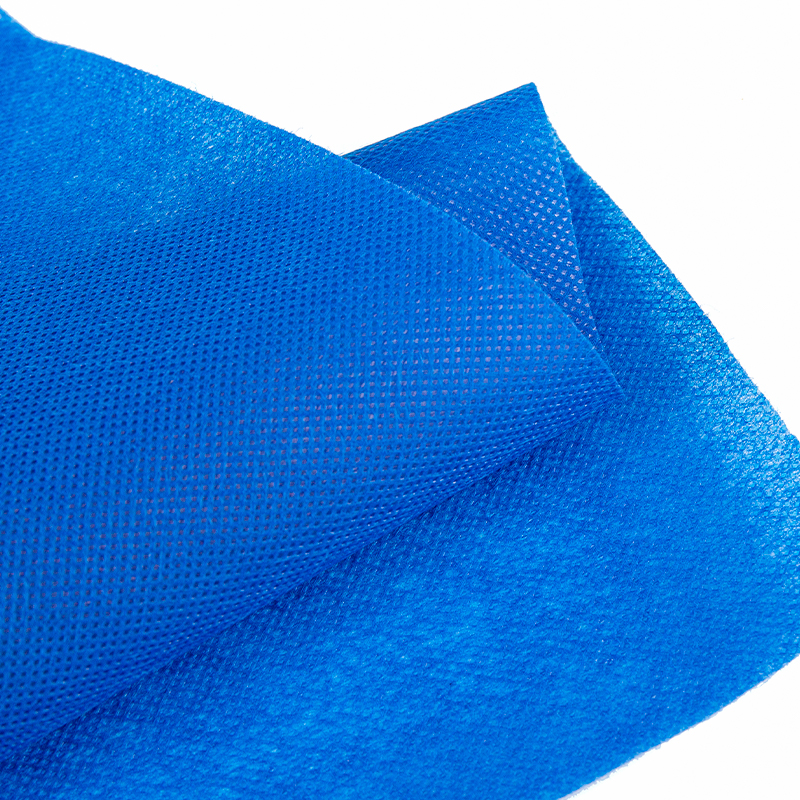
The primary advantages of meltblown nonwoven material for masks stem directly from its unique micro-fiber structure and the application of specialized treatments. In the context of facial protection, the core requirement is achieving high filtration efficiency against airborne particulates, including biological aerosols, while maintaining low breathing resistance. Meltblown Non-Woven Fabrics excel here because their web structure naturally creates a highly dense yet porous network, trapping particles both mechanically and, more importantly, electrostatically. This material forms the functional backbone of nearly all high-efficiency respirators and surgical masks. The subsequent application of electret charging technology further supercharges this performance, enabling the material to capture particles that are much smaller than its physical pores, thus maximizing protection without significantly sacrificing comfort.
One of the most significant advantages of meltblown nonwoven material for masks is its compatibility with electret charging technology. Electret treatment involves subjecting the fabric to a strong electric field during or after the manufacturing process, resulting in the fibers acquiring and retaining a long-lasting electrostatic charge. This internal electric field dramatically enhances the material's filtration performance by attracting and capturing oppositely charged or neutral particles from the air stream. Critically, this electrostatic mechanism allows the filter media to maintain high efficiency even when using a more open-pore structure, which, in turn, keeps the pressure drop low (improving breathability). Without electret charging, a filter would need to be physically much denser, leading to unacceptably high breathing resistance. Therefore, the successful integration of electret technology is a hallmark of high-performance Meltblown Non-Woven Fabrics used in N95/FFP2-type masks.
The constant challenge in designing protective masks is achieving the optimal balance between barrier function (high filtration efficiency) and breathability (low pressure drop). The inherent structure of Meltblown Non-Woven Fabrics, especially when combined with electret technology, provides the best solution to this trade-off. By utilizing electrostatic capture, manufacturers can reduce the density of the fiber web compared to a purely mechanical filter. A filter that is too dense has high efficiency but low comfort, making it unsuitable for extended wear. Conversely, a highly breathable but low-efficiency filter offers insufficient protection. High-grade meltblown nonwoven material for masks is engineered to sit precisely at the point on the performance curve where the mandated efficiency is met (e.g., 95% or 99%) while ensuring the breathing resistance remains below regulatory limits (e.g., 35 mm H₂O), making the product both safe and wearable for the end-user.
Performance trade-off visualization:
| Parameter Adjustment | Effect on Efficiency (Barrier) | Effect on Pressure Drop (Breathability) |
| Finer Fibers Used | Increases | Increases significantly |
| Higher Basis Weight | Increases | Increases significantly |
| Applied Electret Charge | Increases (Without large physical change) | Increases minimally or stays constant |
| Lower Air Permeability | Generally Increases | Increases |
The main function of the electret treatment is to endow the meltblown nonwoven material for masks with a long-lasting electrostatic charge. This charge creates an internal electric field that significantly enhances the material's filtration efficiency by attracting and capturing airborne particles—even those much smaller than the physical pores of the fabric—through electrostatic adsorption. This crucial non-mechanical capture mechanism allows the filter to achieve high efficiency (e.g., >95%) against the Most Penetrating Particle Size (MPPS, typically ~0.3 µm) while maintaining a low pressure drop. This balance of high filtration and excellent breathability is what makes electret-charged Meltblown Non-Woven Fabrics the standard for N95/FFP2 respirators and high-grade surgical masks, directly addressing the key requirements discovered in recent high-volume user searches for effective respiratory protection.
The results of meltblown fabric filtration efficiency testing are influenced by a convergence of material properties and testing conditions. Material properties are paramount, primarily including the fiber diameter (finer fibers generally increase efficiency), basis weight (higher weight typically increases efficiency), and the level and stability of the electret charge. The uniformity of the web structure is also critical; inconsistencies can lead to 'pinholes' and reduced efficiency. Testing conditions also play a significant role, particularly the type of aerosol used (e.g., NaCl, paraffin oil), the particle size distribution of the challenge aerosol, and the face velocity (flow rate) of the air passing through the material during the test. For instance, testing at a higher face velocity can often reveal a lower efficiency. Manufacturers must control all these factors precisely to ensure their Meltblown Non-Woven Fabrics consistently meet the performance metrics required by regulatory standards and consumer expectations.
Yes, while medical and filtration applications are the most prominent, polypropylene meltblown nonwoven uses extend into several other specialized fields due to its unique characteristics. The high surface area and fine fiber structure make it excellent for thermal insulation, where the trapped air within the web provides significant thermal resistance. Furthermore, its inherent softness, drapability, and uniform appearance lend it to specialized apparel interlinings and padding. In the environmental sector, its strong hydrophobic nature (repelling water while absorbing oil) makes it an ideal material for oil spill cleanup booms and absorbent pads. While filtration and medical barriers represent the largest market segments, the material's adaptability, driven by the properties of PP and the meltblown process, ensures its continued application in innovative, non-traditional textile and composite uses.
Plain spunbond polypropylene fabric slides. On a high-speed bag cutting line that means off-square panels, misaligned ...
READ MOREAt a packaging plant in eastern China, switching reusable shopping-bag production from woven polypropylene to PP spunb...
READ MOREWhen a surgical mask specification requires a filtration layer that stops sub-micron particles, or an HVAC filter desi...
READ MOREAn N95 respirator and a reusable shopping bag are both made from polypropylene nonwoven, yet one captures 95 percent o...
READ MOREEvery purchase order for single-use polyethylene (PE) bags commits a facility to a waste stream that will outlive the ...
READ MORE




