

 English
  русский
  Español
Woven vs Non Woven Fabric: Key Differences and Uses
The fundamental difference between woven and non woven fabrics lies in their structure. Woven fabric is constructed by interlacing two sets of yarns at right angles on a loom, while non woven fabric is an engineered sheet of fibers bonded directly together without spinning into yarns. This distinction in manufacturing creates dramatic differences in performance, cost, and application. A woven gauze, for instance, has a regular grid structure with superior strength and reusability, while a non woven gauze is smoother, more absorbent for single use, and leaves no lint in wounds. Put simply, if you need durability and drape, choose woven; if you require cost-effective disposability, barrier properties, or specific filtration, choose non woven.
Content
Meaning of Non Woven Fabric
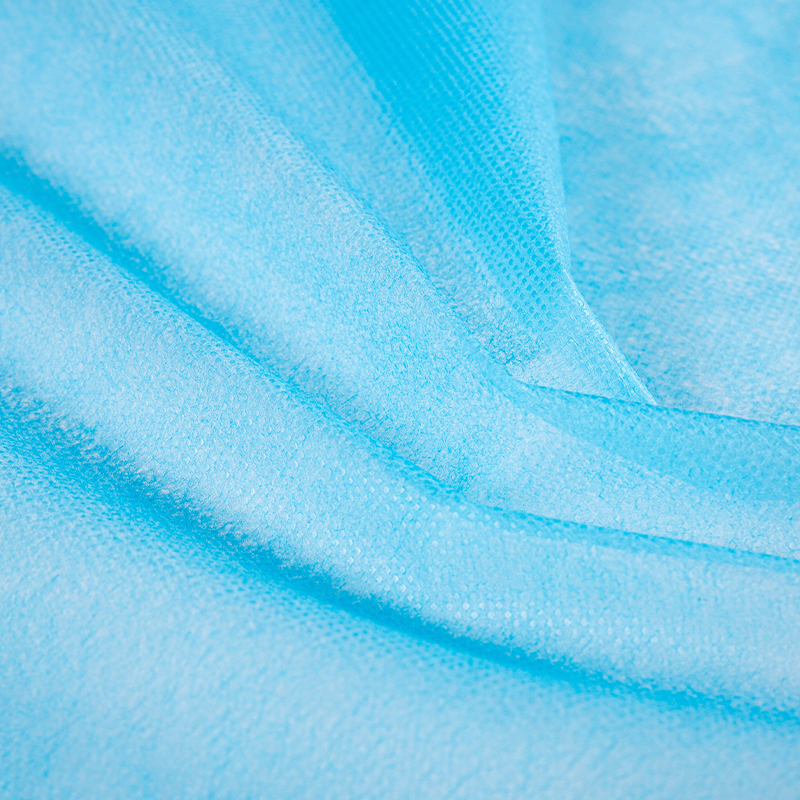
The meaning of non woven fabric is embedded in its name: it is a textile structure created without weaving or knitting. Technically, as defined by ISO 9092, a nonwoven is a manufactured sheet, web, or batt of directionally or randomly oriented fibers, bonded by friction, cohesion, or adhesion. The fibers, which can be staple fibers or continuous filaments, are directly converted into a fabric-like material. This eliminates the spinning and weaving stages, making production speeds up to 600 meters per minute compared to roughly 10 meters per minute for conventional weaving.
There is often confusion about whether materials like felt qualify. Felt, made by matting animal fibers under heat and pressure, is technically a non woven because it does not use interlaced yarns. However, paper made from cellulose pulp is generally excluded from the non woven textile definition because the fibers are not textile fibers by origin or length. The core concept is that a non woven fabric is an engineered textile sheet where the bonding of fibers replaces the interlacing of yarns.
Core Manufacturing Differences
The primary distinction begins on the production line. Woven fabrics require yarn spinning as a critical intermediate step, followed by warping, sizing, and finally weaving on a loom. Non woven fabrics bypass yarn formation entirely, converting raw polymer or fiber directly into a web that is then bonded. This process simplification yields significant economic and functional differences. For example, a square meter of spunbond polypropylene non woven typically costs 50 to 80 percent less to produce than a comparable woven polypropylene fabric because of the high-speed, continuous nature of the non woven process.
The bonding methods used for non wovens are diverse, including needlepunching, hydroentanglement, thermal bonding, and chemical binding. Each method imparts distinct properties. Hydroentangled non wovens, where high-pressure water jets entangle the fibers, create fabrics with high softness and absorbency ideal for wipes. In contrast, woven fabrics achieve their structure purely through the geometric interlacement of yarns, and their properties are adjusted primarily through yarn type, thread count, and weave pattern like plain, twill, or satin.
Woven Fabric vs Non Woven Fabric: Key Property Comparison
Selecting between the two depends on understanding their distinct performance profiles. The table below provides a direct comparison of critical properties that influence material choice in practical applications.
| Property | Woven Fabric | Non Woven Fabric |
|---|---|---|
| Structure | Regular interlaced yarn grid | Random or directional fiber web |
| Strength to Weight | High, especially in yarn directions | Lower, often isotropic |
| Drape and Feel | Excellent, soft hand | Variable, often stiffer or papery |
| Durability to Washing | High, reusable many times | Low to medium, often single-use |
| Linting | Moderate to high lint risk | Can be engineered lint-free |
| Barrier Property | Low unless coated | Engineered for filtration/barrier |
| Cost Efficiency | Higher production cost | Very high, low cost per area |
Difference Between Woven and Non Woven Gauze
The difference between woven and non woven gauze is a critical consideration in medical and wound care settings. Woven gauze is made from 100 percent cotton yarns in an open plain weave, typically with a thread count around 44 by 36 per inch. Its grid-like structure provides high tensile strength and the ability to be cut without unravelling, but it also produces loose thread fragments and lint that can contaminate wound beds and cause foreign body reactions.
Non woven gauze is manufactured from hydroentangled polyester or polyester-rayon blends, creating a smooth, flat fabric with no yarn grid. This structure is virtually lint-free, highly absorbent, and softer on granulating tissue. It wicks fluid efficiently and does not fray at cut edges. However, it is less strong when wet and is designed primarily for single-use application. Clinical practice often reserves woven gauze for packing wounds requiring high wet strength and non woven gauze for cleansing, covering, and debridement where fiber contamination must be avoided.
Practical Applications Across Industries
The distinct properties of each fabric type steer them toward different commercial and industrial uses. The following list outlines where each material excels and why.
- Woven fabrics dominate in apparel because their yarn structure provides drape, breathability, and resistance to repeated laundering. A cotton shirt must withstand over 50 wash cycles, a condition few non wovens can meet.
- Non wovens control the hygiene market, including baby diapers, feminine care items, and adult incontinence products. Their fluid management properties and low manufacturing cost make them indispensable in disposables.
- In filtration, meltblown non wovens form the active layer in N95 respirators and HVAC filters. Their random fiber matrix can be engineered with pore sizes below 5 microns to capture bacteria and fine dust, a precision unattainable with woven structures.
- Geotextiles are almost exclusively non woven, either needlepunched or spunbond. They provide soil separation, drainage, and reinforcement under roads and embankments where high strength and puncture resistance are crucial.
- Reusable shopping bags commonly use both types: cheap giveaways are spunbond non woven polypropylene with a papery feel, while premium bags are woven polypropylene for long-term reuse.
How to Choose Between Woven and Non Woven
Making the right selection depends on clearly defining the application priorities. If the fabric must endure mechanical stress, repeated use, and cleaning, a woven construction is almost always the better choice. Woven fabrics offer predictable directional strength, proven durability, and a tactile quality that non wovens still struggle to replicate in durable goods. If the priority is barrier protection, sterilization compatibility, low cost per use, or engineered porosity, non woven fabric provides solutions that weaving cannot achieve without expensive coatings or laminations. In some modern applications, such as medical sterile field protection, the two are used together: a non woven layer provides fluid repellency while a woven layer adds strength and comfort. Understanding the structural origin of each fabric enables you to match the material properties to the functional need precisely.




