

 English
  русский
  Español
Hydrophilic vs Hydrophobic Nonwovens: Surface Treatment for Hygiene, Ag, Medical
Home / News / Industry News / Hydrophilic vs Hydrophobic Nonwovens: Surface Treatment for Hygiene, Ag, Medical
A converter running 500,000 metres of PP spunbond per day for surgical drapes, mulch film, and absorbent hygiene liners faces the same question in every production meeting: which surface treatment is actually needed for the end use? Hydrophilic and hydrophobic nonwoven fabrics are often treated as two clean categories, but the decision depends on measurable properties: water contact angle, wicking rate, fluid barrier, and treatment durability.
Jiangyin Jingang Non-Woven Co., Ltd., a nonwovens manufacturer based in Jiangyin, China, has spent 26 years producing PP spunbond fabrics and the production lines that make them. In our experience, the hydrophilic-vs-hydrophobic choice is rarely one-size-fits-all. It is an application-specific decision that changes with the product's failure mode. This article maps the chemistry and surface treatment options to hygiene, agriculture, and medical uses, so you can specify the right web the first time.
Content
Hydrophilic and hydrophobic nonwoven fabrics are distinguished by one number: the water contact angle. Any web with a contact angle below 90 degrees is hydrophilic, meaning water spreads and wicks through the structure. A web with a contact angle above 90 degrees is hydrophobic, meaning water beads and resists penetration.
Hydrophilic nonwoven fabric is a PP spunbond or meltblown web whose fiber surface has been treated so water wets and moves through the capillary network. Hydrophobic nonwoven fabric is the same base web with a water-repellent finish that keeps liquid from entering the pores. The base polymer is identical in many cases; the surface treatment creates the distinction.
For PP spunbond, the polymer chemistry does not change. A standard polypropylene resin is already hydrophobic by nature. The water-repellent state is the default. Making a hydrophilic nonwoven fabric requires an additional wetting agent, while making a hydrophobic nonwoven fabric may require nothing at all or a boost with a fluoropolymer, silicone, or paraffin-based finish.
This difference is not cosmetic. In hygiene products, a hydrophilic top sheet wicks urine or menstrual fluid away from the skin, while a hydrophobic back sheet prevents leakage. In agriculture, a hydrophobic mulch film holds soil moisture, while a hydrophilic crop cover lets rain through. In medical fabrics, the same web can be a fluid barrier or an absorbent layer depending on which side is treated. The chart below shows how the two treatments score across the three application areas.
The treatment method determines how long the hydrophilic or hydrophobic effect survives. Topical finishes are the cheapest but weakest; melt additives are the most durable but require the right production line configuration.
| Treatment method | How it works | Durability | Best suited for |
| Topical finish | Aqueous or solvent-based wetting agent applied to the finished web | Low; drops after laundering or friction | Disposable wipes, single-use hygiene liners |
| Melt additive | Hydrophilic or hydrophobic masterbatch dosed into PP resin before spinning | High; survives washing, abrasion, and field exposure | Medical drapes, reusable covers, agricultural film |
| Plasma or corona treatment | Surface activation changes polar groups on the fiber | Medium; can fade with age unless combined with a finish | Lamination, coating pre-treatment, printing |
| Calendering or embossing | Mechanical densification changes pore structure without chemistry | High; no chemical to wash off | Medical barrier fabrics, filtration |
Melt additive is the most interesting option for converters who own a spunbond line. A hydrophilic masterbatch can be fed inline into the extruder, so the entire roll is treated from the fibre stage. Topical finish, by contrast, adds a wet-out and drying step after the web is formed, which increases cost and can create consistency issues across the width.
For a 2.4m PP spunbond non-woven fabric production line, inline dosing is a standard configuration. Once the masterbatch is specified, the surface treatment is baked into every metre of cloth, which is why we recommend melt additives for any product expected to be washed or used in the field for more than a month.
Hygiene webs are the one category where both treatments work inside the same product. The winning construction is a hydrophilic inner layer that wicks fluid away from the skin and a hydrophobic outer layer that locks it inside.
The requirements vary within hygiene. Baby diapers need a fast-wicking top sheet and a very high-barrier back sheet. Feminine care products need slower absorbency to avoid leakage once pressure is applied. Adult incontinence products require a larger absorption zone and a surface that stays dry for longer. Each of these designs calls for a different contact angle target.
The practical lesson is to specify surface treatment by layer. A single hydrophilic web cannot prevent leakage, and a single hydrophobic web cannot absorb. For converters who supply both layers, the same PP spunbond base can be run through separate finishing lines to create the two-sided performance that hygiene products need.
In agriculture, the best surface treatment is the one that matches local rainfall and the crop's root zone. Hydrophobic mulch film is not the answer for every field.
Blocks evaporation, keeps soil warm, suppresses weeds. Best in arid regions where water loss is the main constraint. A contact angle above 90 degrees holds water on the soil side.
Allows rain to infiltrate, wicks moisture downward, prevents runoff on compacted or sloping soils. Best in regions with heavy rainfall and high clay content.
There is also a dosage question. A hydrophilic treatment can be tuned to a specific contact angle, so a cover can be made to absorb water slowly rather than letting it all through at once. This controlled release is useful for seedling trays and turf mat applications.
Hydrophobic mulch film can reduce irrigation demand by roughly 15-30 percent in dry climates, primarily by stopping evaporation from the soil surface. A hydrophilic crop cover has the opposite effect: it improves infiltration and can reduce runoff on compacted land. The right choice depends on whether the failure mode is drought or waterlogging.
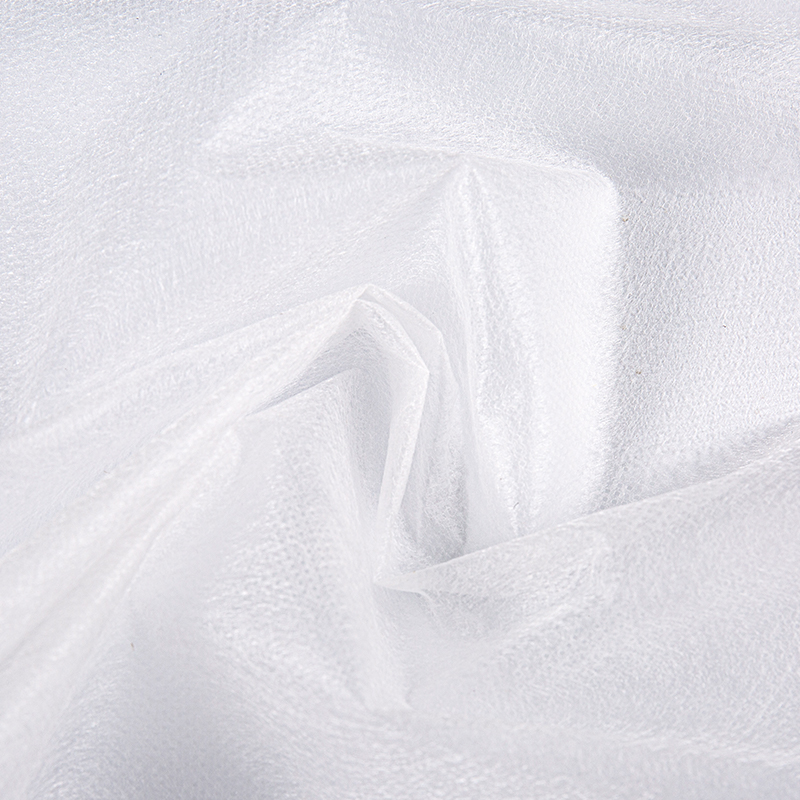 Spunbond PP Checkered Nonwoven Fabric for Agricultural FilmThis checkered nonwoven film combines breathability and water permeability, offering a stable physical barrier for crops. Its roll form allows controlled surface finish, making it a practical choice for managing soil moisture and temperature in farming applications.View Product →
Spunbond PP checkered nonwoven fabric for agricultural film is produced in rolls with a controlled surface finish, so converters can specify the contact angle range before the film reaches the field.
Medical nonwovens are the most demanding category because the surface treatment must create a fluid barrier without trapping heat around the patient. In surgical gowns, the outer layer is typically hydrophobic and the inner layer may be hydrophilic for patient comfort.
A surgical mask needs a hydrophobic outer layer that resists droplets and a hydrophilic inner layer that absorbs moisture from exhaled breath. The same PP spunbond that produces a checkered medical mask fabric can be finished to meet both requirements with a two-sided treatment.
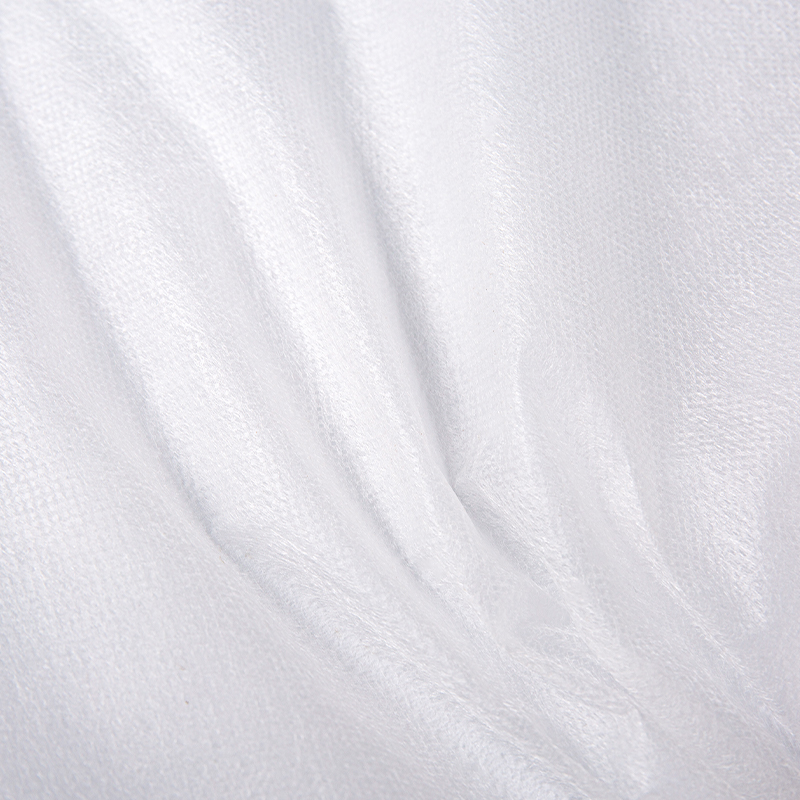 Checkered Spunbond PP Nonwoven Fabric for Medical MasksThis fabric provides a durable structure for masks, with high strength and breathability. Its properties support both hydrophobic and hydrophilic finishes, helping meet dual requirements for droplet resistance and moisture absorption in medical settings.View Product →
Infection control adds a complication: any surface treatment must not interfere with antimicrobial or antistatic functions. A hydrophilic finish that migrates to the surface can bind to a quaternary ammonium antimicrobial and reduce its efficacy. This is why melt additive chemistries are becoming the default for medical webs that need a durable barrier and a stable antimicrobial layer.
ASTM F1670 requires synthetic blood penetration resistance at a contact angle typically above 120 degrees. An embossed hydrophobic web can meet this without a fluorochemical finish, which keeps the fabric easier to sterilize.
Breathability is maintained through the pore structure rather than through chemical treatment, so an embossed hydrophobic web can block fluid while still allowing air exchange. This is the same design logic used in the PP spunbond nonwoven fabric properties guide on our site, which covers how web weight and pore size affect fluid resistance.
Choose the treatment by drawing a line from the failure mode you most need to prevent. The sequence below works for any converter specifying nonwoven surface treatments.
The manufacturing route matters too. A converter who owns a spunbond line can use inline masterbatch dosing to lock in the surface treatment, which is more consistent than a separate finishing step. A converter who buys rolls off the shelf has to rely on the supplier's surface finish specification.
Both are needed in most hygiene products. A hydrophilic top sheet wicks fluid away from skin, and a hydrophobic back sheet prevents leakage. The two layers are often the same PP nonwoven base with different surface treatments.
Yes, with a two-sided treatment. The top surface can be finished to be hydrophilic while the bottom is hydrophobic, which is common in medical drapes and absorbent hygiene products.
It depends on the method. Topical finishes last a few wash cycles, while melt-additive treatments retain 80-95 percent of their performance after five laundering cycles. For single-use products, 3-5 percent add-on is typical.
A hydrophobic nonwoven fabric has a water contact angle above 90 degrees. For blood barrier applications in medical use, the target is usually above 120 degrees to meet ASTM F1670/F1671 standards.
A converter running 500,000 metres of PP spunbond per day for surgical drapes, mulch film, and absorbent hygiene liner...
READ MOREWhat Is a Non Woven Fabric? The Direct Definition What is a non woven fabric? A non woven fabric is a sheet or web of f...
READ MOREWhat Is Non Woven Fabrics: The Material Definition That Matters The question what is non woven fabrics is best answered...
READ MORENon-woven fabric's ability to be engineered for specific properties — strength, absorbency, filtration, softness — thro...
READ MOREWhat Is Non-Woven Fabric Non-woven fabric is a sheet material made by bonding or interlocking fibers together directly...
READ MORE




