

 English
  русский
  Español
Every purchase order for single-use polyethylene (PE) bags commits a facility to a waste stream that will outlive the building that ordered them. A standard low-density PE film can remain structurally intact in a landfill for up to 300 years, shedding microplastics into groundwater the whole time. Spunbond polypropylene (PP) nonwoven fabric follows a different timeline: when modified with a pro-degradant additive and produced through the spunbond route, it has demonstrated significant disintegration within a 90-day accelerated test window. That 90-day versus 300-year gap is not a marketing slogan; it is a measurable specification that changes landfill capacity planning, regulatory exposure, and the true unit cost of a single-use product.
Material buyers tend to compare PP nonwovens and PE films on price per kilogram. A more useful metric is price per year of environmental burden. Once the persistence difference is written into a procurement specification, the decision framework changes.
Content
- 1 The 300-Year PE Life Cycle Is a Measurable Specification
- 2 What a 90-Day Biodegradation Window Really Requires
- 3 Performance Benchmarks: PP Spunbond vs PE in Single-Use Applications
- 4 The Waste Stream Math: 90 Days vs 300 Years at Scale
- 5 Practical Steps for Switching from PE to PP Nonwovens
- 6 Frequently Asked Questions
The 300-Year PE Life Cycle Is a Measurable Specification
Conclusion first: polyethylene's 300-year persistence is the dominant parameter in any single-use comparison, because it determines what happens after the product's useful life ends.
PE Film in a Standard Landfill
300-year persistence. Progressive fragmentation into microplastics with no defined endpoint. Long-term liability beyond any financial model.
PP Nonwoven with Pro-Degradant Additive
90-day accelerated degradation window. Controlled chain scission with a defined disposal pathway. Measurable verification via test reports.
A PE film bag discarded in 2026 will still be structurally present in the year 2326 if it lands in a typical landfill. UV radiation, heat cycles, and mechanical stress gradually fracture the film into smaller fragments. These microplastics migrate into soil and water, where they are difficult to remove and may persist for decades. The same durability that makes PE useful in long-life products becomes a liability when the actual service life is measured in hours.
In this context, a single-use PP nonwoven can deliver the required strength and barrier performance for its brief lifespan, then enter a disposal pathway measured in months rather than centuries.
What a 90-Day Biodegradation Window Really Requires
Conclusion first: a 90-day biodegradation result is achievable, but only with the right additive system, the right process, and a supplier who can keep the additive loading consistent.
Polypropylene is intrinsically inert. Its polymer backbone resists microbial attack in the same way PE does. The 90-day window emerges when a pro-degradant additive is blended into the PP resin before spinning. Under accelerated conditions that combine heat, moisture, UV exposure, and microbial activity, the additive triggers controlled chain scission. The PP molecular weight drops, and the fragmenting polymer becomes digestible for microorganisms.
This is why the 90-day figure is a verification data point, not an intrinsic property of the fabric. A manufacturer that controls its own resin dosing and process parameters can guarantee the result more reliably than a supplier buying finished fabric on the open market.
Key verification points before accepting a 90-day claim:
- Additive type and loading rate in the resin
- Test protocol and sheet number that supports the result
- Process consistency during fiber spinning
- Finished fabric GSM tolerance
Performance Benchmarks: PP Spunbond vs PE in Single-Use Applications
Conclusion first: PP spunbond nonwovens meet or exceed PE film on the properties that matter for short-lived products, while removing the 300-year afterlife.
| Attribute | PP Spunbond Nonwoven | PE Film |
| Basis weight range | 10-120 gsm | 15-60 gsm |
| Tensile strength | 8-30 N per 5 cm | 6-20 N per 5 cm |
| Puncture resistance | High, multi-fiber structure | Moderate, film can tear |
| Breathability | High | Low |
| Printability | Excellent | Moderate |
| Recycling code | 5 (PP) | 4 (LDPE) |
| Degradation with additive | 90-day window | 300+ years |
| Cost per single-use unit | Comparable at equal weight | Baseline |
Note the breathability and printability rows. For packaging that must allow airflow, such as agricultural films or medical protective goods, PP nonwovens outperform smooth films. For retail bags, the higher tensile and puncture resistance allows a lighter fabric to replace a heavier film. That material reduction directly lowers the carbon footprint per bag.
For a deeper look at spunbond structure and application ranges, consult our polypropylene nonwoven fabric guide.
The Waste Stream Math: 90 Days vs 300 Years at Scale
Conclusion first: the degradation ratio is one of the cheapest cost levers in the single-use supply chain, because it reduces future liabilities without changing product performance.
At a landfill, the cost of accepting waste is measured per ton. A PE bag that weighs 10 g and persists for 300 years requires monitoring and environmental controls for a period beyond any financial model. A PP nonwoven bag that weighs 10 g and degrades in 90 days under accelerated conditions does not carry the same extended liability.
The global recycling rate for plastics remains under 10%, so most single-use PE film ends in landfills or uncontrolled environments. Some municipalities and extended producer responsibility schemes now factor expected persistence into disposal fees. The move to a material with a defined degradation pathway reduces exposure to those surcharges before they become standard.
Practical Steps for Switching from PE to PP Nonwovens
Conclusion first: switching from PE to PP nonwoven is a specification and procurement change, not an equipment change.
Start with the product's real requirements: weight, size, barrier need, print, and closure method. Then select a fabric pattern and finish that matches the application. After that, verify the additive system and request the test report. Finally, run a pilot roll to confirm downstream handling.
- Define the application requirements (GSM, width, print, barrier).
- Choose the appropriate fabric pattern: cross for bags, checkered for agricultural and medical, printed for packaging.
- Confirm the pro-degradant additive and test protocol.
- Run a pilot order before converting the full line.
- Verify logistics: roll width, packaging, and supply continuity.
In our production at Jiangyin Jingang Non-Woven Co., Ltd., we control the PP spunbond process from resin to finished fabric. We also manufacture the PP nonwoven production line itself, which gives customers a single source for machinery and fabric.
Products suitable for a direct switch from PE film include:
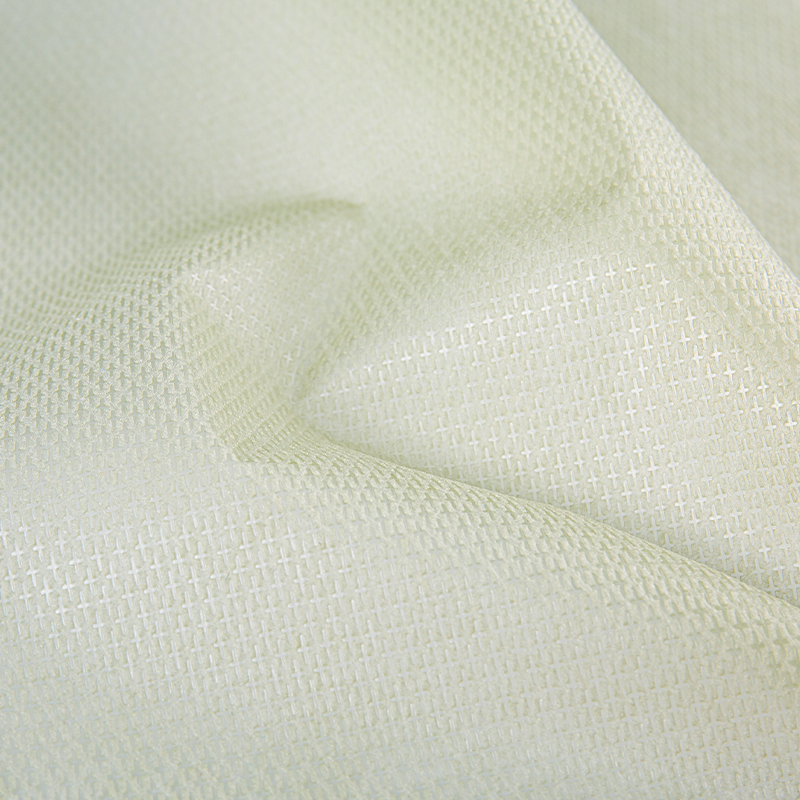 Cross Cambrella PP Spunbonded Non-woven Fabric for Eco-friendly BagsThis fabric offers a sustainable alternative to PE film, featuring a unique cross-grain design and durable, breathable properties, making it ideal for eco-friendly bag production.View Product →
 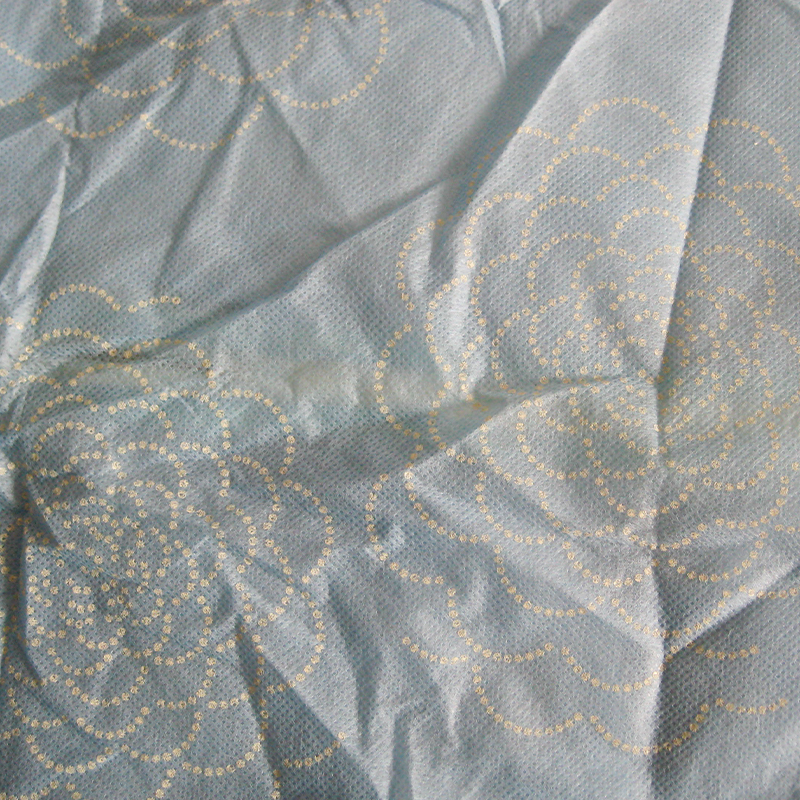 Printed Disposable PP Non-Woven Fabric Roll for Shopping BagsThis printed polypropylene non-woven roll provides a vibrant, customizable option for shopping bags, combining durability and eco-friendliness to replace traditional PE film.View Product →
 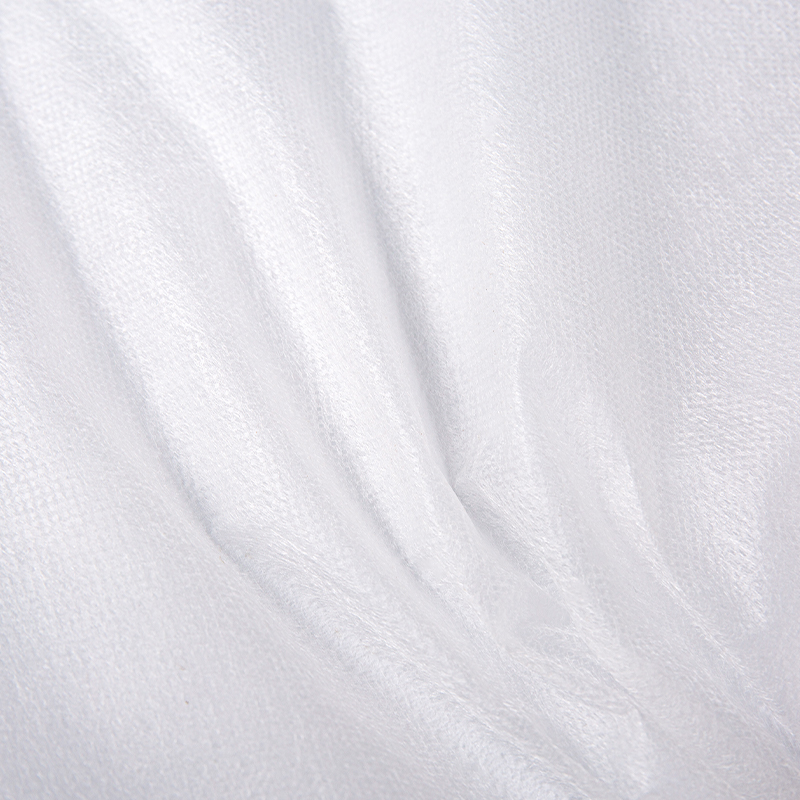 Checkered Spunbond PP Nonwoven Fabric for Medical MasksThis checkered spunbond polypropylene fabric offers strength, breathability, and filtration, making it a reliable material for medical masks, suitable for healthcare and public use.View Product →
All three are produced with the same spunbond capability, so the fabric structure stays consistent across applications. A custom test roll is the fastest way to confirm the correct weight and finish before a full-scale order.
Frequently Asked Questions
Is PP nonwoven truly biodegradable in 90 days?
Only when a specific pro-degradant additive is included and the test conditions match the standard. Standard PP nonwoven is not biodegradable. Always ask for the test report that supports the 90-day figure.
Does PP nonwoven have the same water resistance as PE film?
No. PP spunbond nonwoven is breathable and has a lower barrier than PE film. For water-tight applications, use a coated or laminated PP construction, or select a heavy GSM fabric.
Can PP nonwoven single-use products be recycled?
Yes. PP is a thermoplastic with recycling code 5. Clean, single-polymer PP fabric can be reprocessed into pellets. PE carries code 4, but the 300-year persistence makes recycling more urgent.
How does the cost of PP nonwoven compare with PE film?
PP nonwoven usually carries a small premium per unit. The gap narrows when thinner constructions replace heavier films and when long-term disposal liability is factored into the total cost.




