

 English
  русский
  Español
Spunbond vs Meltblown Nonwoven: Key Differences and How to Choose the Right One
Home / News / Industry News / Spunbond vs Meltblown Nonwoven: Key Differences and How to Choose the Right One
Content
Spunbond nonwoven starts as polypropylene chips. The chips are melted, extruded through a spinneret, drawn by high-velocity air, and laid onto a moving conveyor as continuous filaments. Heated calendar rollers then bond the filaments at contact points. The finished fabric has fiber diameters of 15-35 micrometers and typical basis weights of 10-150 grams per square meter (gsm). That structure produces high tensile strength, abrasion resistance, and dimensional stability.
Meltblown nonwoven follows a different route. Molten polymer is extruded through a die with hundreds of fine orifices while jets of hot air attenuate the polymer into microfibers of 1-5 micrometers. The microfibers collect on a drum or belt and bond to each other as they cool. Meltblown webs run from 8 to 200 gsm and are defined by fine pores, high surface area per gram, and low mechanical strength.
Before writing a specification, buyers need the same core metrics: fiber diameter, strength, pore structure, basis weight, filtration performance, and cost. The table below compares spunbond and meltblown across those criteria.
| Property | Spunbond Nonwoven | Meltblown Nonwoven |
| Production method | Continuous filament extrusion, laydown, thermal calendering | Melt-blown microfiber attenuation, self-bonding on collector |
| Fiber diameter | 15-35 micrometers | 1-5 micrometers |
| Tensile strength | High; carries load independently | Low; needs carrier support |
| Pore structure | Open and coarse | Fine and uniform |
| Typical basis weight | 10-150 gsm | 8-200 gsm |
| Filtration efficiency | Coarse screening only | Submicron particle capture |
| Relative cost | Lower per square meter | Higher per square meter |
The production process decides the mechanical profile before the fabric reaches the winder. In spunbonding, filament orientation in the machine direction plus calendering between heated rollers creates a fabric that survives repeated tensile load. An 80 gsm spunbond fabric supports several times the load of an 80 gsm meltblown web before it tears. Its open structure lets air and moisture vapor pass, which is why greenhouses and breathable packaging favor spunbond.
Meltblown microfibers deliver up to ten times more surface area per gram than spunbond filaments. That surface area intercepts particles through mechanical sieving, inertial impaction, and electrostatic attraction, which is why meltblown is the functional filter layer in respirators. The tradeoff is structural: a meltblown web has low cohesive strength, abrades easily, and compresses under tension. Designers therefore combine meltblown with spunbond carriers in composite structures.
The chart below rates both fabrics on five selection criteria that matter in industrial practice.
Fiber and performance profile: spunbond vs. meltblown
Ratings on a 0-10 scale for material selection. Meltblown leads in filtration-related criteria; spunbond leads in mechanical and economic criteria.
The pattern holds across product categories. When meltblown wins on pore fineness, filtration, and softness, the application values surface area. When spunbond wins on tensile strength and cost, the application values structure and economy.
Choose spunbond when the fabric must carry a load, resist puncture, or survive repeated handling. Choose meltblown when the function is filtering particles, absorbing liquid, or blocking airborne contaminants. In practice, the decision rarely requires a full lab series; it requires matching the failure mode of the application to the property profiles above.
Furniture manufacturers specify spunbond sofa lining at 60-80 gsm because it bridges the requirements for stiffness, breathability, and a non-fraying edge. A checkered or cross surface pattern improves grip between the lining and foam layers, and the material survives repeated compression without delamination.
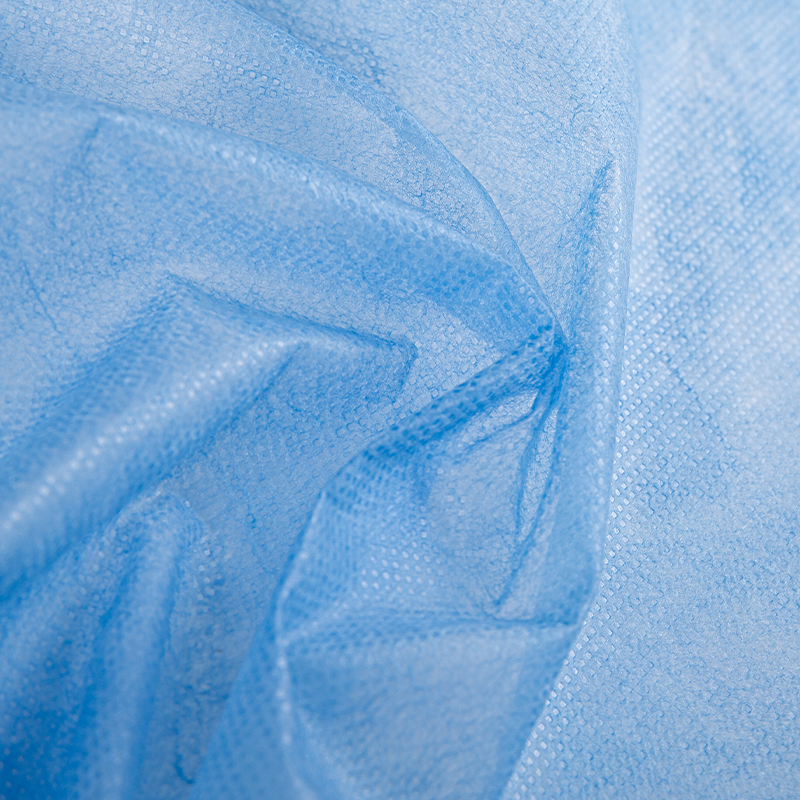 Checkered PP Spunbond Nonwoven Sofa Lining FabricThis checkered spunbond polypropylene fabric provides stiffness and breathability for sofa linings, with a grid pattern that improves grip and resists tearing during repeated use.View Product →
Agricultural buyers choose spunbond row covers and ground films at 17-30 gsm. UV-stabilized spunbond transmits light and irrigation water while blocking insects, and its open structure prevents condensation from pooling on crops. The fabric is removed, folded, and reused across multiple seasons, which demands the tear resistance that meltblown cannot provide.
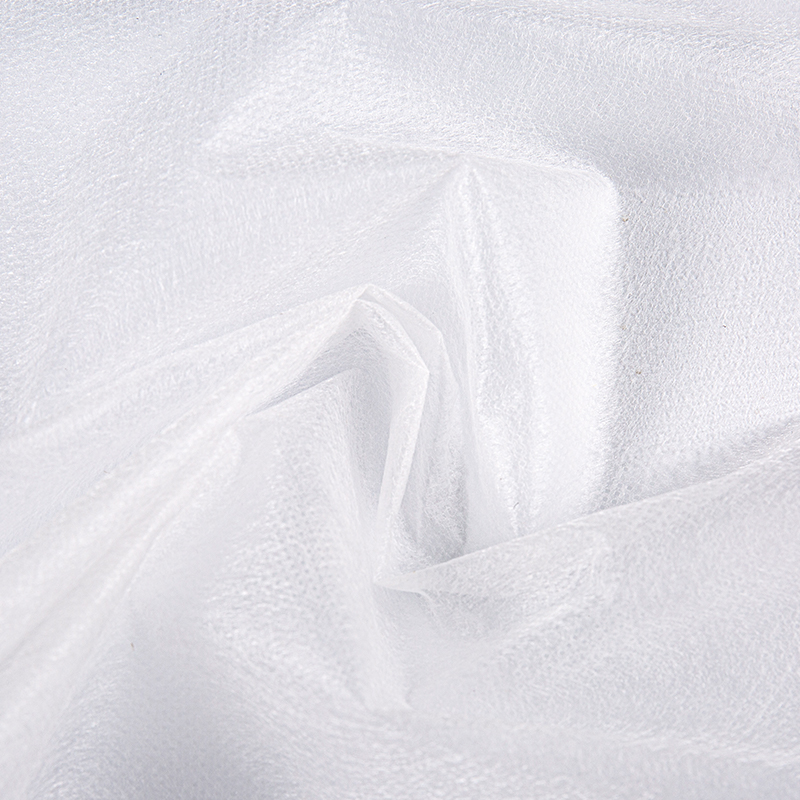 Spunbond PP Checkered Nonwoven Agricultural FilmThis UV-stabilized spunbond polypropylene film with a checkered pattern offers breathability and water permeability for crop covers, providing insect protection while allowing light and moisture through.View Product →
Meltblown territory is filtration. A surgical mask filter layer of 20-25 gsm meltblown typically achieves bacterial filtration efficiency above 98 percent. For process parameters, basis weights, and performance testing, see our meltblown manufacturing and performance guide.
Sorbent products also favor meltblown. A meltblown polypropylene pad can absorb several times its own weight in oil while repelling water, which is why spill kits and industrial wipes rely on it.
The best specification is often neither spunbond nor meltblown but a composite of both. SMS stands for spunbond-meltblown-spunbond: a meltblown core sandwiched between two spunbond layers. The spunbond layers carry the mechanical load; the meltblown core filters. Medical masks, surgical gowns, and hygiene products use SMS at 25-60 gsm.
A typical face mask composite stacks a 15-20 gsm spunbond outer layer, a 20-25 gsm meltblown core, and a 15-20 gsm spunbond inner layer. The stack meets filtration standards while remaining breathable and comfortable. In mask production, a checkered-pattern spunbond outer layer adds stiffness and improves pleating behavior on automated lines.
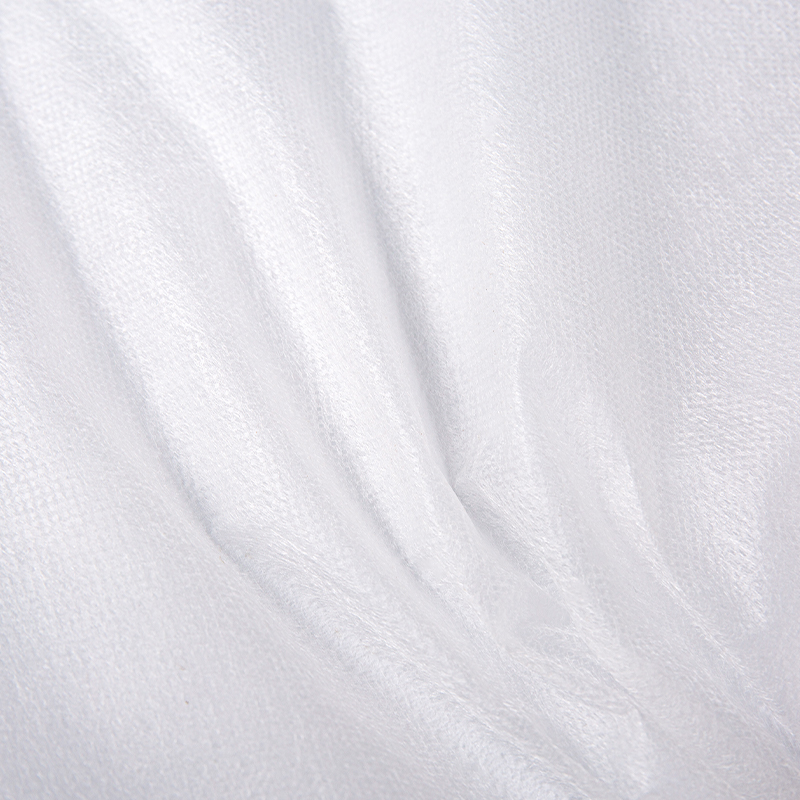 Checkered Spunbond PP Nonwoven Fabric for Medical MasksDesigned as an outer layer in face masks, this checkered spunbond polypropylene fabric adds stiffness for pleating and provides breathability, helping maintain mask structure and comfort during use.View Product →
When ordering SMS, request three data points from your supplier: the basis weight of each layer, the meltblown filtration efficiency tested at 0.3 micron, and the bonding pattern. Specify layer weights, not just total mass. If the supplier cannot provide per-layer data, that is a supply-chain risk worth investigating. For converters planning in-house production, our PP spunbond nonwoven fabric making machines overview compares line widths and configurations.
Spunbond. Continuous filament orientation and thermal bonding give spunbond much higher tensile strength and tear resistance. Meltblown webs have low mechanical strength and normally need a supporting carrier layer.
Only in applications without mechanical stress, such as static filter media or sorbent pads. In most products, meltblown is laminated between spunbond layers to prevent abrasion and tearing.
Decide by failure mode. If the product tears or distorts under load, use spunbond. If particles or liquid must be stopped or absorbed, use meltblown. If both apply, specify an SMS composite.
SMS is a three-layer composite: two outer spunbond layers and one inner meltblown layer. The outer layers provide strength; the inner layer filters. SMS is the standard structure for medical masks, surgical gowns, and hygiene products.
An N95 respirator and a reusable shopping bag are both made from polypropylene nonwoven, yet one captures 95 percent o...
READ MOREEvery purchase order for single-use polyethylene (PE) bags commits a facility to a waste stream that will outlive the ...
READ MOREPolypropylene spunbond nonwovens are the default cover material in agriculture and construction, but their outdoor lif...
READ MOREA converter running 500,000 metres of PP spunbond per day for surgical drapes, mulch film, and absorbent hygiene liner...
READ MOREWhat Is a Non Woven Fabric? The Direct Definition What is a non woven fabric? A non woven fabric is a sheet or web of f...
READ MORE




