

 English
  русский
  Español
Is Checkered PP Non-Woven Fabric Suitable for Packaging, Agriculture, or Furniture Applications?
Home / News / Industry News / Is Checkered PP Non-Woven Fabric Suitable for Packaging, Agriculture, or Furniture Applications?
Checkered PP Non-Woven Fabric is a polypropylene-based nonwoven material engineered with a structured grid or checkered pattern that enhances multidirectional tensile strength, tear resistance, and dimensional stability. Compared with plain PP nonwoven fabrics, the checkered structure improves load distribution and mechanical consistency, making it increasingly relevant for industrial applications that require durability and process stability.
Founded in 1999, Jiangyin Jingang Nonwoven Co., Ltd. is a professional enterprise specializing in the research, development, and manufacturing of nonwoven materials and supporting equipment. Located in Jiangyin, Jiangsu Province, China, the company supplies PP spunbond and meltblown nonwovens widely used in packaging, agriculture, automotive, and industrial processing. With over 26 years of technological development, Jingang has continuously improved material performance through advanced production systems and strict quality management.
Content
From a materials engineering perspective, Checkered PP Non-Woven Fabric combines the inherent properties of polypropylene—such as chemical resistance, low moisture absorption, and thermal stability—with a reinforced structural layout. This combination enables consistent performance across variable environmental and mechanical conditions.
According to the latest industry analysis by Allied Market Research, the global nonwoven fabrics market reached approximately USD 58.4 billion in 2023 and is projected to exceed USD 104 billion by 2033, driven by expanding use in packaging, agriculture, and industrial manufacturing. The growth of PP-based nonwovens is particularly notable due to their balance of strength, process efficiency, and recyclability.
Source: Allied Market Research – Nonwoven Fabrics Market
In parallel, Future Market Insights reports that PP nonwovens continue to gain market share between 2024 and 2025 due to improvements in spunbond technology, web uniformity, and customizable fabric specifications, supporting applications that demand both mechanical performance and cost control.
Source: Future Market Insights – PP Nonwovens Market
In packaging scenarios, materials must withstand handling stress, stacking pressure, and environmental exposure while remaining cost-efficient. Checkered PP Non-Woven Fabric packaging material meets these requirements by offering improved load-bearing performance compared to plain nonwoven structures.
According to industry projections, the nonwoven packaging segment is expected to surpass USD 3 billion by 2025, with PP nonwovens accounting for a significant portion due to their mechanical reliability and scalable production.
Source: Future Market Insights – Nonwoven Packaging Market
Compared with flat nonwoven fabrics, checkered PP structures distribute tensile stress more evenly, reducing deformation under load. This makes them suitable for reusable packaging layers, protective wraps, and industrial liners.
| Performance Aspect | Packaging Requirement | Checkered PP Non-Woven Fabric |
| Tensile Strength | Resistance to tearing during transport | Higher due to grid reinforcement |
| Moisture Resistance | Protection against humidity | Stable polypropylene structure |
| Cost Efficiency | Large-volume production compatibility | Consistent and scalable |
Agricultural use places emphasis on durability, breathability, and environmental exposure resistance. Checkered PP non-woven fabric for agricultural mulch and crop covers benefits from controlled permeability while maintaining structural integrity throughout growing cycles.
Compared with traditional woven alternatives, nonwoven PP fabrics offer more uniform airflow and moisture regulation. The checkered structure further improves resistance to tearing caused by wind, soil contact, and repeated handling.
| Performance Aspect | Agricultural Requirement | Checkered PP Non-Woven Fabric |
| Breathability | Gas and moisture exchange | Controlled and uniform |
| UV Stability | Outdoor exposure tolerance | Improved with stabilizing additives |
| Durability | Seasonal reuse potential | Higher than plain nonwovens |
Furniture manufacturing requires backing and support layers that maintain dimensional stability under continuous stress. Checkered PP non-woven fabric upholstery backing offers improved tear resistance compared with flat nonwoven fabrics, particularly in seating and panel reinforcement zones.
While plain PP nonwovens are commonly used as dust covers or light backing, the checkered variant performs better in applications requiring structural reinforcement. However, surface treatments may be required for flame retardancy or acoustic performance depending on regulatory requirements.
| Performance Aspect | Furniture Requirement | Checkered PP Non-Woven Fabric |
| Tear Resistance | High-stress upholstery zones | Improved structural integrity |
| Dimensional Stability | Shape retention | Consistent under load |
| Surface Adaptability | Compatibility with lamination | Requires secondary processing |
Through flexible production systems, custom checkered pp non-woven fabric specifications can be tailored by adjusting GSM, bonding strength, pattern density, and functional additives. Jiangyin Jingang Nonwoven Co., Ltd. integrates material manufacturing with independently designed production equipment, enabling consistent quality control and rapid specification adjustment.
Strict multi-stage inspection systems and adherence to international quality management standards ensure material stability across batch production, supporting long-term supply reliability for global customers.
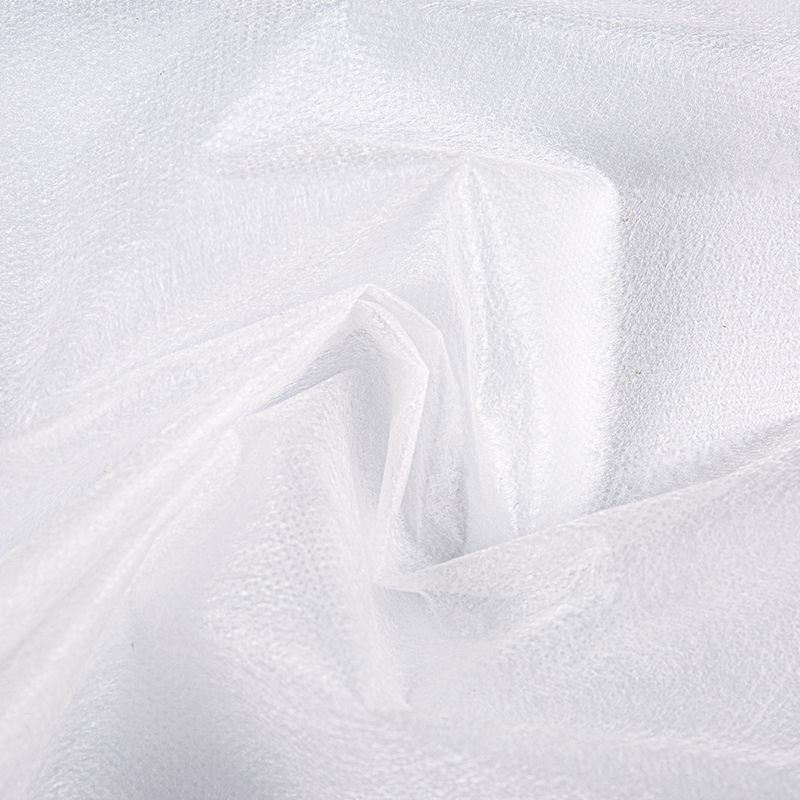
From an engineering and procurement standpoint, durable checkered pp non-woven fabric for outdoor use demonstrates clear suitability across packaging, agriculture, and furniture applications. Its reinforced structure delivers measurable advantages in tensile strength, durability, and process consistency, while retaining the cost and scalability benefits of polypropylene nonwovens. Selection should be based on application-specific performance requirements, environmental exposure, and regulatory standards.
Checkered PP Non-Woven Fabric features a reinforced grid or patterned structure that distributes mechanical stress in multiple directions. Compared with plain PP non-woven fabric, the checkered structure improves tensile strength, tear resistance, and dimensional stability, especially under repeated loading or uneven force conditions. This structural difference makes it more suitable for applications requiring higher durability rather than basic coverage.
Yes. Checkered PP non-woven fabric packaging material is suitable for reusable and medium to heavy-duty packaging applications where improved load-bearing capacity and resistance to deformation are required. The reinforced structure reduces tearing during handling, stacking, and transportation, making it applicable for industrial packaging layers, protective wraps, and reusable packaging systems.
When used as agricultural mulch or crop cover, checkered pp non-woven fabric for agricultural mulch provides controlled breathability and moisture regulation while maintaining structural integrity. The checkered reinforcement improves resistance to wind stress and soil contact. For long-term outdoor exposure, UV stabilizers can be incorporated during production to extend service life under sunlight.
Checkered pp non-woven fabric upholstery backing is suitable for furniture applications that require higher tear resistance and dimensional stability, such as seating support layers and panel reinforcement. Compared with flat nonwoven backing, the checkered structure performs better under continuous tension. Additional treatments may be required to meet specific flame-retardant or acoustic standards depending on the furniture market and regulatory requirements.
When defining custom checkered pp non-woven fabric specifications, key technical parameters include basis weight (GSM), pattern density, bonding method, tensile strength requirements, and environmental resistance. Application conditions such as load level, exposure to moisture or UV light, and regulatory compliance should guide specification selection to ensure performance stability and cost efficiency.
Yes. Durable checkered pp non-woven fabric for outdoor use is made from polypropylene, which is recyclable under appropriate recycling streams. Recycling feasibility depends on contamination level, additives used, and local recycling infrastructure. In controlled industrial environments, PP nonwoven waste can be collected and reprocessed efficiently.
Plain spunbond polypropylene fabric slides. On a high-speed bag cutting line that means off-square panels, misaligned ...
READ MOREAt a packaging plant in eastern China, switching reusable shopping-bag production from woven polypropylene to PP spunb...
READ MOREWhen a surgical mask specification requires a filtration layer that stops sub-micron particles, or an HVAC filter desi...
READ MOREAn N95 respirator and a reusable shopping bag are both made from polypropylene nonwoven, yet one captures 95 percent o...
READ MOREEvery purchase order for single-use polyethylene (PE) bags commits a facility to a waste stream that will outlive the ...
READ MORE




