

 English
  русский
  Español
How Does Printed PP Non Woven Fabric Compare to Other Non Woven Materials in Durability and Cost?
Home / News / Industry News / How Does Printed PP Non Woven Fabric Compare to Other Non Woven Materials in Durability and Cost?
Content
The world of non-woven fabrics is vast and diverse, offering a spectrum of materials each with unique properties tailored for specific applications. From hygiene products to agricultural covers, geotextiles to shopping bags, the choice of material significantly impacts performance, aesthetics, and budget. Among these options, polypropylene (PP) non-woven fabric, especially when enhanced with printing, has carved out a significant niche. This article delves into a detailed comparative analysis, focusing on the durability and cost-effectiveness of printed PP non-woven fabric when measured against other common non-woven materials such as Spunbond, Meltblown, Spunlace, and needle-punch variants. By examining factors like tensile strength, resistance to environmental stressors, lifespan, and overall cost structure, we aim to provide a comprehensive guide for making an informed material selection. A key area of inquiry, for instance, is understanding the durability of printed non woven fabric for reusable shopping bags, a common application where material performance is paramount.
Printed PP non-woven fabric is primarily manufactured using the spunbond process, where polypropylene granules are melted, extruded through spinnerets to form continuous filaments, laid down on a conveyor belt, and then bonded together thermally. The printing is typically applied using flexographic or digital printing techniques, adding decorative or informational graphics without significantly compromising the base fabric's integrity. The inherent strengths of PP polymer form the bedrock of this material's profile.
The durability of printed PP non-woven stems from several key chemical and physical properties of polypropylene. Firstly, PP is known for its excellent chemical resistance. It is highly inert and does not react with most acids, alkalis, and solvents, making printed PP fabrics suitable for environments where exposure to chemicals is possible. Secondly, it has good abrasion resistance, meaning the surface can withstand scraping and rubbing to a considerable degree before showing wear, which is crucial for items like durable tote bags. Furthermore, PP is hydrophobic—it repels water. This characteristic prevents the fabric from absorbing moisture, which in turn inhibits the growth of mold and mildew and prevents the material from weakening when wet, a clear advantage over cellulose-based materials. However, it is essential to note that PP is susceptible to UV degradation when exposed to prolonged sunlight, which can lead to embrittlement. This is often mitigated during manufacturing by adding UV stabilizers, especially for outdoor applications. The question of best printing methods for vibrant designs on non woven material is directly linked to durability, as a well-applied print should not crack or peel during the fabric's functional life.
From a cost perspective, printed PP non-woven fabric enjoys significant advantages. The raw material—polypropylene—is a widely produced commodity plastic, making it relatively inexpensive and readily available. The spunbond manufacturing process is highly efficient, continuous, and fast, allowing for high output volumes that drive down unit costs. The printing process, particularly flexographic printing for large runs, is also cost-effective for adding value. This combination results in a material that offers a very favorable balance between performance and price. For high-volume, short-to-medium lifespan applications like promotional items, event banners, or disposable medical gowns, the cost-effectiveness is unrivaled. When evaluating the cost comparison of PP non woven vs polyester non woven for banners, the PP option often emerges as the more economical choice for standard indoor or short-term outdoor use, though polyester may win on long-term outdoor durability.
To truly assess the position of printed PP non-woven, a direct comparison with other prevalent non-woven materials is essential. We will break down the comparison by focusing on key durability metrics and cost implications.
Durability is not a monolithic trait but a combination of strength, elongation, and resistance to various environmental factors.
Spunlace non-wovens, made by entangling fibers with high-pressure water jets, are known for their softness, drape, and cloth-like feel. They are often made from viscose (rayon) or polyester (PET).
| Durability Metric | Printed PP Non-Woven | Spunlace (Viscose) | Spunlace (PET) |
|---|---|---|---|
| Dry Tensile Strength | High | Moderate to Low | High |
| Wet Tensile Strength | High (Unaffected) | Very Low | High (Unaffected) |
| Abrasion Resistance | Good | Fair | Good |
| Hydrophobic Property | Yes | No (Hydrophilic) | Yes |
Needle-punch non-wovens are mechanically bonded by barbed needles, creating a dense, felt-like fabric often used for geotextiles, automotive interiors, and carpet backing.
The cost differential is driven by raw material prices, manufacturing complexity, and production speeds.
| Material Type | Relative Material Cost | Key Cost Drivers | Best Value Proposition |
|---|---|---|---|
| Printed PP Spunbond | Lowest | Inexpensive resin, high-speed production, efficient printing. | High-volume, cost-sensitive applications needing moisture resistance and decent strength. |
| Spunlace (Viscose) | Moderate to High | Cost of wood pulp/viscose, energy-intensive water-jet process. | Applications demanding exceptional softness, absorbency, and drape. |
| Spunlace (PET) | Moderate | Polyester chip cost, energy-intensive process. | High-strength applications needing softness and liquid resistance. |
| Needle-Punch (PET/PP) | Moderate | Fiber cost, slower mechanical bonding process, potential for higher basis weight. | Technical applications requiring extreme durability, filtration, or insulation. |
| Meltblown (Often PP) | High | Complex process, lower production yield, fine fiber production. | Specialized filtration (e.g., SMS for medical masks), barrier layers. |
As the table illustrates, printed PP spunbond consistently holds the low-cost position. The UV resistant printed non woven fabric for outdoor use would involve PP with added stabilizers, increasing its cost slightly but generally keeping it below the cost of a comparable outdoor-rated polyester non-woven, which starts from a higher base material cost.
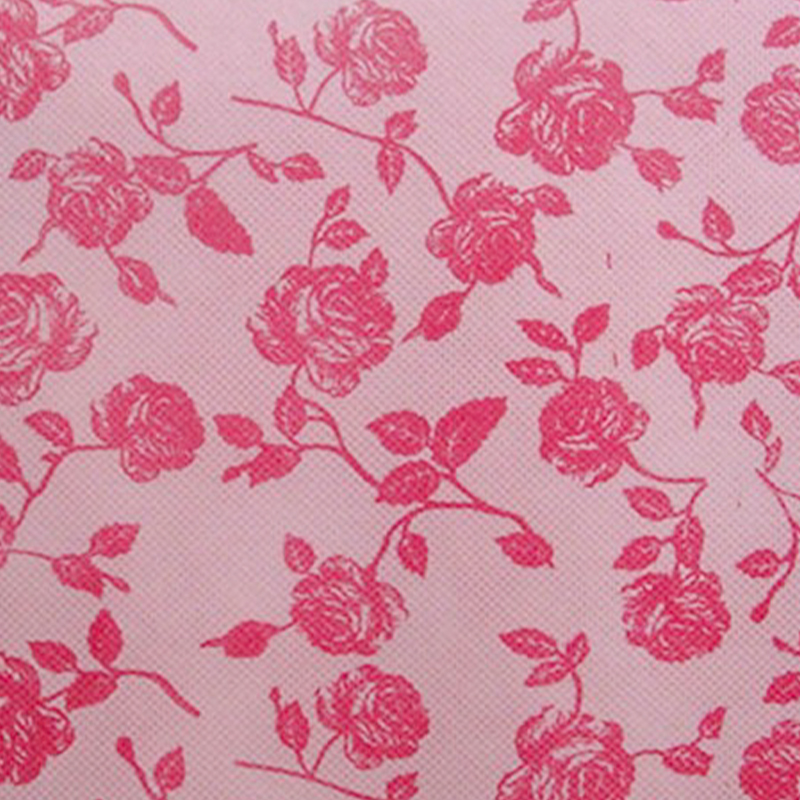
Choosing the right material is a strategic decision that balances durability requirements against budget constraints. Printed PP non-woven fabric is not always the absolute strongest nor the forever-lasting option, but it frequently represents the optimal compromise.
The analysis of printed non woven fabric for custom tote bags and durability perfectly encapsulates this decision matrix: for a reusable bag expected to last for dozens of uses under typical conditions, printed PP is the industry-standard, optimal choice. For a bag meant to carry heavy tools daily for years, a woven or heavy needle-punch fabric might be necessary.
In the grand scheme of non-woven materials, printed PP non-woven fabric establishes itself as the quintessential balanced performer. It delivers a reliable package of good mechanical durability, excellent moisture and chemical resistance, and outstanding cost-efficiency. Its weakness to UV degradation is a known variable that can be engineered around for specific uses. While other materials may surpass it in specific attributes—like the supreme softness of spunlace, the immense toughness of needle-punch, or the long-term UV stability of polyester—they do so at a higher cost. For the vast majority of applications where a sturdy, printable, moisture-resistant, and economically viable fabric is needed—from the ubiquitous reusable shopping bag to disposable medical textiles and promotional banners—printed PP non-woven remains the default and often the most rational choice. Understanding its properties in comparison to alternatives, as outlined in this detailed comparison, empowers buyers and specifiers to make confident, data-driven decisions that align material performance with project goals and budgetary realities.
Plain spunbond polypropylene fabric slides. On a high-speed bag cutting line that means off-square panels, misaligned ...
READ MOREAt a packaging plant in eastern China, switching reusable shopping-bag production from woven polypropylene to PP spunb...
READ MOREWhen a surgical mask specification requires a filtration layer that stops sub-micron particles, or an HVAC filter desi...
READ MOREAn N95 respirator and a reusable shopping bag are both made from polypropylene nonwoven, yet one captures 95 percent o...
READ MOREEvery purchase order for single-use polyethylene (PE) bags commits a facility to a waste stream that will outlive the ...
READ MORE




