

 English
  русский
  Español
Cross Pattern PP Non-Woven Fabric: Complete Guide
Cross pattern PP non-woven fabric is a polypropylene spunbond or thermally bonded non-woven material distinguished by its diamond or cross-shaped embossed bonding pattern, which gives it superior tensile strength in both machine and cross directions, enhanced tear resistance, and a softer hand feel compared to plain-bonded PP non-wovens — making it the preferred choice for hygiene products, medical drapes, agricultural covers, geotextiles, and reusable bags where balanced directional strength and fabric integrity under stress are essential. The cross (or diamond) bonding pattern is not merely decorative — it is a structural engineering decision that fundamentally changes how the fabric distributes and resists applied loads, and understanding this distinction is critical for specifying the right non-woven fabric for any demanding application.
Content
- 1 What Cross Pattern PP Non-Woven Fabric Is and How It Is Made
- 2 Physical and Mechanical Properties of Cross Pattern PP Non-Woven Fabric
- 3 Cross Pattern vs Other Bonding Patterns: What the Difference Means in Practice
- 4 Surface Treatments and Functional Finishes Applied to Cross Pattern PP Non-Woven
- 5 Primary Applications of Cross Pattern PP Non-Woven Fabric
- 6 Quality Standards and Test Methods for Cross Pattern PP Non-Woven Fabric
- 7 Specifying Cross Pattern PP Non-Woven Fabric: Key Decisions
What Cross Pattern PP Non-Woven Fabric Is and How It Is Made
Polypropylene (PP) non-woven fabric is produced by extruding continuous filaments of polypropylene polymer, laying them randomly onto a moving conveyor belt to form a web, and then bonding the fibers together to create a coherent fabric sheet. The bonding step is where the cross pattern comes in — and it is the single most important process variable determining the fabric's mechanical character.
The Thermal Calendering Process and Pattern Embossing
In thermal calendering — the dominant bonding method for spunbond PP non-wovens — the fiber web passes between two heated steel rollers under controlled pressure. One roller (the engraved roller) carries a raised pattern on its surface; the other (the smooth roller) provides a flat backing. Where the raised pattern contacts the fiber web, localized heat and pressure fuse the polypropylene fibers together into discrete bonded points, while the unbonded areas between the points remain as free fibers that contribute to the fabric's softness and porosity.
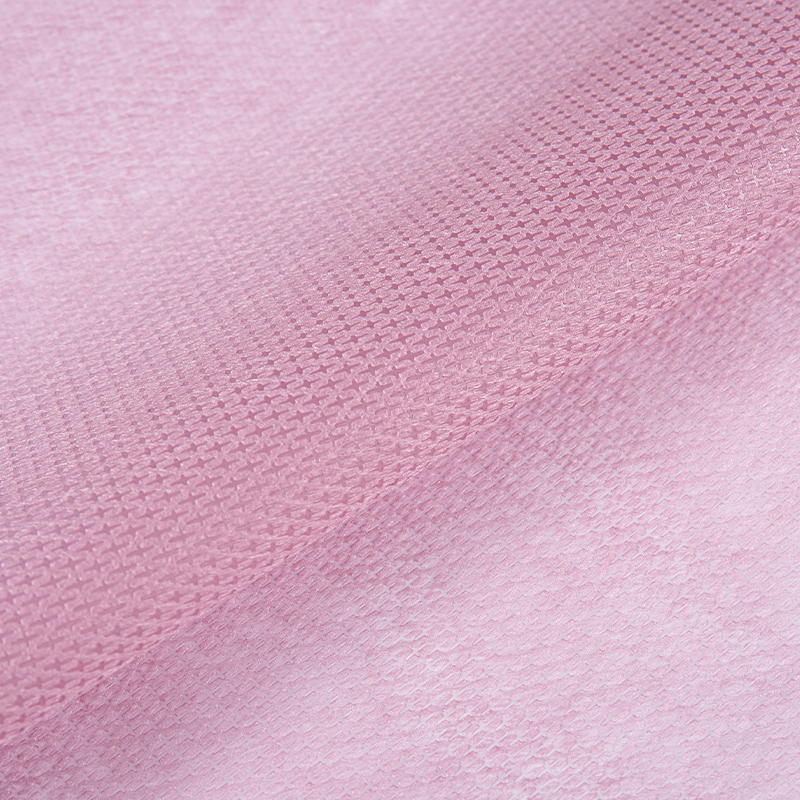
The cross or diamond pattern roller has its raised bonding points arranged in a regular diagonal grid — each bonding point is a small rhombus or elongated diamond shape, and the overall array creates a repeating cross or diamond lattice across the fabric surface. Typical cross pattern bonding parameters include:
- Bonding area: Approximately 16% to 24% of total fabric surface is thermally bonded at the point contacts; the remainder is free fiber. This ratio is critical — too high and the fabric becomes stiff and brittle; too low and tensile strength is insufficient.
- Point density: Typically 28 to 36 bonding points per cm² for standard cross pattern PP non-wovens used in hygiene and medical applications.
- Calendering temperature: 140°C to 165°C for standard polypropylene, adjusted for GSM (grams per square meter) and line speed.
- Nip pressure: 40 to 80 N/mm linear pressure between the rollers, calibrated to produce complete fiber fusion at bond points without crushing the free fiber regions.
Why the Pattern Shape Matters Mechanically
The diagonal orientation of the cross/diamond pattern is the key to the fabric's balanced strength profile. When tensile or tear stress is applied in the machine direction (MD) or cross direction (CD), the diagonal array of bonding points distributes the load across bonded points oriented at approximately 45° to both principal axes. This means that neither the machine direction nor the cross direction has a preferential weak plane along which cracks can propagate — unlike square or round bonding arrays, which create straight rows of unbonded fiber that can tear in a zipper-like fashion under directional stress.
In practical testing, cross pattern PP spunbond fabric at 30 GSM typically achieves MD/CD tensile strength ratios of 1.2:1 to 1.5:1 — very close to isotropic — compared to 2:1 or higher ratios for some round-dot bonded fabrics of the same weight. This near-isotropic strength is the defining commercial advantage of the cross pattern.
Physical and Mechanical Properties of Cross Pattern PP Non-Woven Fabric
The properties of cross pattern PP non-woven fabric span a wide range depending on GSM, fiber fineness (measured in denier or dtex), and the specific bonding parameters used. The following table provides representative specifications for standard cross pattern spunbond PP across the most common weight grades:
| GSM | MD Tensile Strength | CD Tensile Strength | MD Elongation | Air Permeability | Typical Application |
|---|---|---|---|---|---|
| 10–15 GSM | 45–70 N/5cm | 30–50 N/5cm | 50–80% | 400–700 mm/s | Hygiene topsheet, lightweight medical cover |
| 20–25 GSM | 90–130 N/5cm | 65–95 N/5cm | 45–70% | 300–500 mm/s | Surgical drapes, diaper backsheet, wipes substrate |
| 30–40 GSM | 150–200 N/5cm | 110–160 N/5cm | 40–65% | 200–380 mm/s | Reusable bags, agricultural mulch, geotextile cover |
| 50–70 GSM | 260–350 N/5cm | 190–270 N/5cm | 35–55% | 100–250 mm/s | Construction wrap, furniture backing, industrial covers |
| 80–120 GSM | 400–600 N/5cm | 300–480 N/5cm | 30–50% | 50–150 mm/s | Geotextile separation, heavy-duty bags, roofing underlay |
Key Intrinsic Properties of Polypropylene as a Base Fiber
Beyond the structural contribution of the cross bonding pattern, the polypropylene polymer itself provides several inherent properties that make it the dominant material for non-woven fabric production globally:
- Chemical inertness: PP is resistant to most acids, alkalis, and organic solvents at ambient temperature, making it suitable for agricultural chemical environments and industrial applications involving cleaning agents.
- Hydrophobicity: Untreated PP fibers do not absorb water — moisture wicks to the surface and passes through rather than being retained in the fiber matrix. This keeps the fabric light when wet and prevents microbial growth in the fiber structure. Hydrophilic finishes can be applied for absorbent applications.
- Low density: Polypropylene has a density of only 0.91 g/cm³ — lower than water and lower than any other common textile fiber — resulting in a fabric that provides structural performance at lower weight per unit area than polyester or nylon alternatives.
- UV degradability without stabilization: Unstabilized PP degrades under UV exposure within months. However, UV stabilizer packages (HALS — hindered amine light stabilizers) added during fiber extrusion can extend outdoor service life to 12 to 60 months depending on UV intensity and stabilizer loading.
- Recyclability: PP is a thermoplastic — cross pattern PP non-woven fabric can be melted and reprocessed back into PP pellets, giving it a clear end-of-life recycling pathway compared to multi-component or blended fiber non-wovens.
Cross Pattern vs Other Bonding Patterns: What the Difference Means in Practice
Multiple bonding patterns are used in PP spunbond non-woven production, and the choice between them is a meaningful engineering decision rather than merely an aesthetic one. The cross/diamond pattern competes primarily with round dot, oval, and sesame (fine multi-dot) patterns.
| Bonding Pattern | MD/CD Strength Balance | Softness | Tear Resistance | Typical Use |
|---|---|---|---|---|
| Cross / Diamond | Excellent (near-isotropic) | Good | High | Hygiene, medical, bags, agriculture |
| Round Dot | Moderate (MD bias) | Moderate | Moderate | General packaging, furniture |
| Sesame (Fine Multi-dot) | Good | Excellent (softest) | Moderate | Baby hygiene, skin-contact medical |
| Oval / Ellipse | Good (directional bias) | Good | Good | Wipes, napkins, coverstock |
| Line / Bar | Poor (strong MD bias) | Low (stiffer) | Low in CD | Geotextile, roofing, industrial filtration |
The cross pattern's combination of near-isotropic strength and good softness explains its dominance in hygiene and medical applications, where the fabric must resist tearing from multi-directional stresses during use while remaining comfortable against skin. The sesame pattern is softer but less tear-resistant; the round dot pattern is stronger in the machine direction but weak across the width — a critical failure mode in bags and drapes that experience lateral stress.
Surface Treatments and Functional Finishes Applied to Cross Pattern PP Non-Woven
The base cross pattern PP non-woven fabric is typically hydrophobic and non-treated. For most applications, however, one or more functional finishes are applied either inline during production or as a separate post-processing step to add specific performance properties:
Hydrophilic Finish
A surfactant-based or durable hydrophilic finish is applied to the fiber surface to make the fabric wettable and allow fluid strike-through in absorbent hygiene products (diaper topsheets, sanitary napkin coverstock). The finish reduces the contact angle of water on PP from approximately 90° (hydrophobic) to below 30° (hydrophilic). Durable finishes maintain this wettability through multiple wetting cycles — critical for reusable medical drapes and wipes.
Antistatic Treatment
Polypropylene is inherently an electrical insulator and builds static charge readily during processing and use. An antistatic finish — typically a quaternary ammonium compound or hygroscopic surfactant — reduces surface resistivity from >10¹³ Ω/sq (untreated PP) to 10⁹ to 10¹¹ Ω/sq, preventing dust attraction and discharge sparks in electronic component packaging and cleanroom gowning applications.
UV Stabilization
For agricultural covers, geotextiles, and outdoor construction wraps, UV stabilizer packages (typically 0.3% to 1.5% HALS by fiber weight) are incorporated into the PP melt before extrusion. The stabilizer level is calibrated to the required outdoor service life — a 12-month agricultural crop cover requires less UV protection than a 36-month geotextile installation, allowing cost-optimized stabilizer loading for each application.
Flame Retardant Treatment
PP is inherently flammable (LOI of approximately 18%). Flame retardant (FR) finishes or FR masterbatch additions reduce flammability to meet standards such as EN 13501-1 Class C or D for building applications, or NFPA 701 for flame spread in tents and temporary structures. Halogen-free FR systems are increasingly specified for medical and consumer applications.
Primary Applications of Cross Pattern PP Non-Woven Fabric
The cross pattern PP non-woven fabric's combination of balanced strength, light weight, chemical resistance, and processability makes it one of the most widely used industrial fabrics globally. Its applications span multiple industries with markedly different performance requirements:
Hygiene and Personal Care Products
- Diaper topsheet and backsheet: 10 to 20 GSM cross pattern spunbond PP with hydrophilic finish is used as the body-facing topsheet layer; hydrophobic 15–25 GSM fabric serves as the leak-proof backsheet. The cross pattern ensures the fabric does not tear during manufacturing or while worn.
- Feminine hygiene coverstock: Soft, hydrophilic 15–20 GSM cross pattern PP allows rapid fluid acquisition while maintaining intact surface structure under compression.
- Adult incontinence products: Higher GSM fabrics (25–35 GSM) provide the structural integrity needed for larger, heavier absorbent products subjected to greater mechanical stress during use.
Medical and Surgical Applications
- Surgical drapes and gowns: 20 to 45 GSM cross pattern PP spunbond — often in SMS (spunbond-meltblown-spunbond) laminate configuration — is the standard material for disposable surgical draping. The cross pattern outer layers provide tear resistance; the meltblown middle layer provides bacterial barrier properties.
- Sterilization pouches and wraps: PP non-woven allows steam and ethylene oxide (EtO) sterilization to penetrate the package while maintaining a microbial barrier — a combination that neither film nor woven fabric can achieve.
- Wound care and medical bed pads: Soft, skin-compatible cross pattern PP forms the outer layers of multi-layer wound dressings and disposable bed protection pads.
Agriculture and Horticulture
- Crop protection covers (row covers): UV-stabilized 17 to 30 GSM cross pattern PP spunbond is laid directly over crops to protect from frost, insect pests, and excessive UV. Its air and water permeability allows gas exchange and irrigation penetration without removal.
- Weed suppression mulch: Heavier 50 to 100 GSM UV-stabilized fabric blocks sunlight to weed seeds while allowing water and air movement. The cross pattern's tear resistance prevents damage from garden tools and foot traffic over extended growing seasons.
- Nursery growing media covers: Permeable PP non-woven lining in plant containers prevents soil loss while allowing root air-pruning — a technique that produces compact, fibrous root systems ideal for transplanting.
Bags, Packaging, and Retail
- Reusable shopping bags: 70 to 120 GSM cross pattern PP spunbond is the standard material for promotional and retail reusable bags. The cross pattern is essential here — bags experience stress from corner loading and handle pull in both principal directions simultaneously.
- Packaging liners and pouches: PP non-woven dust bags for vacuum cleaners, air filters, and postal padding bags rely on the fabric's balanced strength and particle-retention properties.
Construction and Geotechnical Applications
- House wrap and roofing underlay: 60 to 100 GSM cross pattern PP non-woven laminated with a breathable microporous film provides a water-resistant, vapor-permeable building envelope membrane — the cross pattern resists nail-pull-through forces and wind uplift during construction before cladding is installed.
- Geotextile separation and filtration: Heavier 100 to 200 GSM grades separate aggregate layers in road construction, retaining walls, and drainage systems while allowing water migration — preventing fines migration while maintaining long-term drainage performance.
Quality Standards and Test Methods for Cross Pattern PP Non-Woven Fabric
Specifying cross pattern PP non-woven fabric for critical applications requires referencing recognized test standards to ensure reproducible, verifiable performance. The following standards are most commonly applied:
- ISO 9073-1: Determination of mass per unit area (GSM). The fundamental weight specification test — all other properties are normalized to GSM for meaningful comparison between fabrics.
- ISO 9073-3 / EN 29073-3: Tensile strength and elongation at break. Strips of defined width (50mm) are pulled in tension in both MD and CD to measure breaking force and extension — the primary test for cross pattern bonding effectiveness.
- ISO 9073-4: Resistance to tearing — measures propagation of a tear through the fabric body, directly relevant for bags, drapes, and agricultural covers where puncture and tear propagation resistance is critical.
- ISO 9073-15 / EN ISO 9237: Air permeability — the volume of air passing through unit area per unit time under defined pressure differential. Determines breathability and filtration characteristics.
- EN 13795: Performance requirements for surgical drapes, gowns, and clean air suits — the primary regulatory standard for medical non-woven performance in European markets.
- ISO 10605 / IEC 61340-4-1: Electrostatic properties — for antistatic treated PP non-wovens used in electronics packaging or cleanroom gowning.
Specifying Cross Pattern PP Non-Woven Fabric: Key Decisions
When sourcing or specifying cross pattern PP non-woven fabric, a complete specification should address the following parameters to ensure the supplied material matches the application's requirements:
- GSM and GSM tolerance: Specify the target weight and the acceptable tolerance — typically ±5% to ±8% for standard commercial grades. Tighter tolerances (±3%) are available at premium cost for high-consistency applications such as hygiene product components.
- Fiber fineness (denier or dtex): Finer fibers (1.5–2.5 denier) produce softer fabrics with higher bonding point density; coarser fibers (3–6 denier) produce stiffer, more abrasion-resistant fabrics. Match fiber fineness to the application's softness and durability requirements.
- Minimum tensile strength (MD and CD): Always specify both directions — a strength specification in MD only does not ensure adequate cross-direction performance even in cross pattern fabrics.
- Surface treatment: Specify hydrophilic, antistatic, UV-stabilized, or flame-retardant treatment as required. Confirm with the supplier whether the treatment is durable (permanent) or exhaustible (depletes with use).
- Color: Standard is white (titanium dioxide brightened) or natural (off-white). Custom colors — blue, green, black, and others — are available in production quantities typically above 2,000 to 5,000 kg per color.
- Roll dimensions: Standard roll widths range from 1.6m to 3.2m; roll lengths vary by GSM and core size. Confirm slit width capability if narrow widths are needed for converting operations.




