

 English
  русский
  Español
What Are Non Woven Fabrics? Definition, Materials & Examples Explained
Home / News / Industry News / What Are Non Woven Fabrics? Definition, Materials & Examples Explained
Content
A non woven fabric is a sheet or web of fibers bonded together through mechanical, thermal, or chemical means — without being woven, knitted, or otherwise interlaced. The formal industry definition, established by INDA (the Association of the Nonwoven Fabrics Industry) and aligned with ISO 9092, describes a nonwoven as: a manufactured sheet, web or batt of directionally or randomly oriented fibers, bonded by friction, cohesion, or adhesion, excluding paper and products made by weaving, knitting, tufting, stitch-bonding, or wet-laying using textile fibers.
The critical distinction is in the production method. In woven and knitted textiles, individual yarns are mechanically interlaced in a repeating pattern to create the fabric structure. In a non woven, the fiber web itself is the fabric — fibers are laid down as a mass and then consolidated using one or more bonding processes. There is no yarn formation step, and often no need for spinning at all, which is why nonwovens can be produced at significantly higher speeds and lower cost per square meter than conventional textiles.
This manufacturing approach gives nonwovens a uniquely flexible performance profile: by adjusting fiber type, fiber orientation, basis weight, and bonding method, manufacturers can engineer fabrics that are stiff or drapable, absorbent or repellent, strong or soft, biodegradable or highly durable — often in the same production line with minor process adjustments.
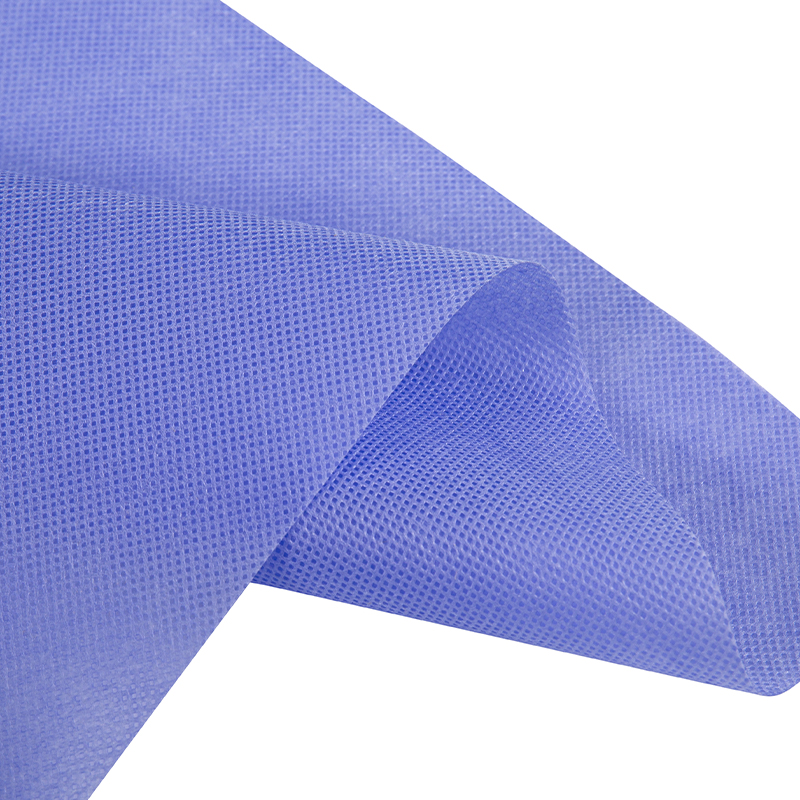
Non woven materials can be produced from an exceptionally wide range of fiber and polymer inputs. The choice of raw material directly determines the end product's mechanical strength, chemical resistance, thermal behavior, biodegradability, and cost. The main categories are:
The majority of global nonwoven production by volume uses synthetic fibers, primarily:
Natural fiber nonwovens account for a smaller but growing share of the market, driven by sustainability and biodegradability requirements:
Bicomponent (bico) fibers contain two polymers in a single filament — typically a higher-melting-point core surrounded by a lower-melting-point sheath. When thermally bonded, the sheath melts and fuses adjacent fibers while the core retains its structural integrity. This enables high-loft, resilient nonwovens used in filtration, insulation, and wadding without the need for chemical binders. Specialty options include glass fibers for high-temperature filtration, carbon fibers for composite preforms, and biodegradable PLA (polylactic acid) fibers for sustainable packaging and agricultural applications.
The bonding and web-formation method determines the physical character of the finished nonwoven as much as the fiber choice does. The main industrial processes are:
Nonwovens are among the most pervasive engineered materials in modern manufacturing. Their applications span from single-use disposables to infrastructure materials with 50-year service lives. The following examples illustrate the breadth of the category:
| Industry | Product Example | Nonwoven Type | Key Property Required |
|---|---|---|---|
| Hygiene | Baby diaper topsheet | PP spunbond | Softness, liquid strike-through |
| Medical | Surgical gown / drape | SMS (spunbond-meltblown-spunbond) | Barrier protection, sterility |
| Filtration | N95 respirator filter layer | Electrostatic meltblown PP | Sub-micron particle capture |
| Construction | House wrap / weather barrier | HDPE spunbond | Breathability, water resistance |
| Geotechnical | Road separation geotextile | PET needlepunch | Tensile strength, puncture resistance |
| Automotive | Trunk liner / door panel | PET needlepunch or thermobonded | Dimensional stability, acoustics |
| Agriculture | Crop protection cover | PP spunbond (UV stabilized) | Light transmission, frost protection |
| Wipes | Wet wipe / facial cleansing pad | Spunlace (viscose/PET blend) | Absorbency, softness, wet strength |
| Packaging | Reusable shopping bag | PP spunbond | Tear resistance, printability |
For purchasing managers and product developers evaluating whether a woven or non woven material is appropriate for a given application, the performance trade-offs are well established:
For sourcing decisions, buyers should define the critical performance parameters — basis weight (gsm), tensile strength (MD and CD), elongation at break, liquid handling behavior, and any regulatory certifications (OEKO-TEX, ISO 10993 for medical, EN 14683 for face masks) — before requesting samples. Reputable nonwoven suppliers will provide full technical data sheets and, for medical or food-contact applications, the relevant third-party test reports as standard documentation.
Every purchase order for single-use polyethylene (PE) bags commits a facility to a waste stream that will outlive the ...
READ MOREPolypropylene spunbond nonwovens are the default cover material in agriculture and construction, but their outdoor lif...
READ MOREA converter running 500,000 metres of PP spunbond per day for surgical drapes, mulch film, and absorbent hygiene liner...
READ MOREWhat Is a Non Woven Fabric? The Direct Definition What is a non woven fabric? A non woven fabric is a sheet or web of f...
READ MOREWhat Is Non Woven Fabrics: The Material Definition That Matters The question what is non woven fabrics is best answered...
READ MORE




