

 English
  русский
  Español
Non Woven Fabric Guide: Definition, Medical Uses & PP Spunbond Examples
Home / News / Industry News / Non Woven Fabric Guide: Definition, Medical Uses & PP Spunbond Examples
Non woven fabric is a textile material created by bonding fibers together through chemical, mechanical, or thermal processes without weaving or knitting. Unlike traditional fabrics that use interlaced yarns, non woven materials form cohesive sheets directly from loose fibers. This manufacturing approach produces lightweight, cost-effective materials with customizable properties including breathability, liquid resistance, and filtration capability. PP Spunbond Non Woven Fabric represents one of the most widely used types, manufactured from 100% polypropylene fibers that are extruded into continuous filaments and thermally bonded for high tensile strength and durability.
Content
Non woven fabric refers to sheet materials made from fibers bonded together through physical or chemical means rather than traditional textile construction. The term encompasses any fibrous web structure where fibers are held together by friction, cohesion, or adhesion rather than by interlacing yarns as seen in woven or knitted fabrics.
The fundamental distinction lies in the manufacturing process. Woven fabrics require converting fibers into yarn, then interlacing those yarns on a loom in repeating patterns. Non woven fabrics skip the yarn stage entirely, arranging fibers directly into a web and bonding them through methods such as thermal bonding, chemical adhesion, needle punching, or hydroentanglement. This direct fiber-to-fabric approach eliminates weaving steps, reduces production time, and allows for greater engineering flexibility.
While woven fabrics typically offer higher structural strength due to their interlaced construction, non woven fabrics compensate through layered bonding or backing reinforcement. The absence of yarn twist and weave pattern also means non woven materials can achieve properties impossible with traditional textiles, such as controlled porosity for filtration or specific liquid barrier characteristics for medical applications.
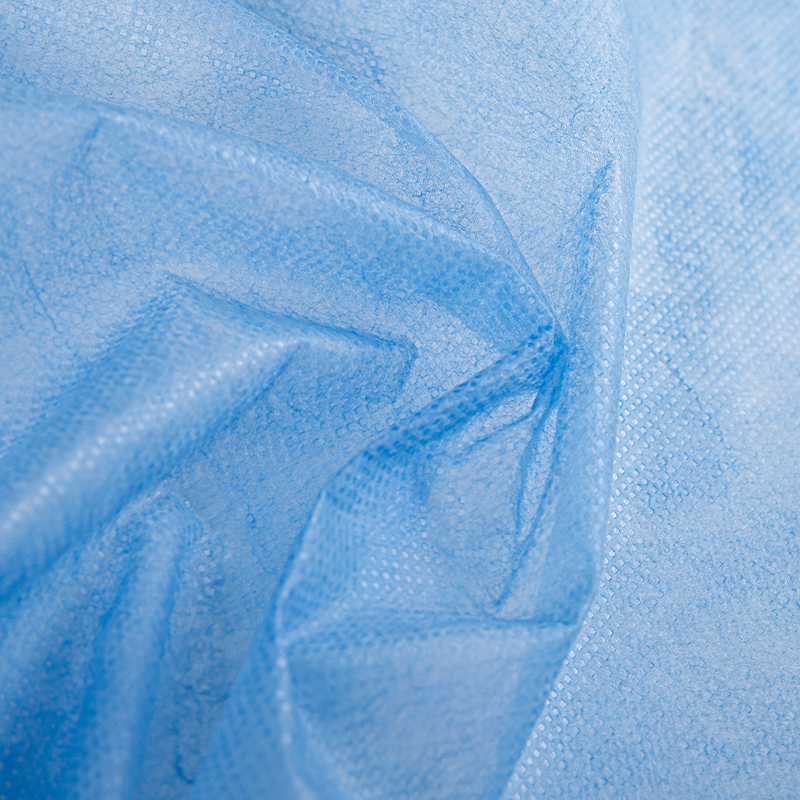
Spunbond manufacturing creates continuous filaments that are laid into webs and thermally bonded. This process produces fabrics with excellent strength-to-weight ratios, making them ideal for applications requiring durability without excessive weight. During production, polymer pellets are melted at 230-250 degrees Celsius and extruded through spinnerets with hole diameters as small as 0.2-0.5 millimeters. High-speed hot air stretches these filaments 5-10 times their original length, creating molecular orientation that delivers tensile strength 2-3 times greater than traditional non woven materials.
The meltblown process creates ultra-fine fibers using high-speed hot air to draw molten polymer into microfibers. This technology produces soft, dense materials with exceptional filtration properties, capturing particles as small as 0.3 microns. The electrostatically charged fibers in meltblown layers act as primary filters in medical masks and respirators, achieving bacterial filtration efficiency exceeding 95 percent for particles 5 microns and larger.
Spunlacing uses high-pressure water jets to entangle fibers mechanically, creating soft, drapable fabrics without chemical binders. This process preserves fiber purity while achieving structural integrity, making it ideal for products requiring direct skin contact. The resulting materials offer high absorbency, low linting, and gentle texture suitable for medical wipes and wound dressings.
Needle punched non wovens are created by mechanically entangling fibers using barbed needles that pierce the fiber web repeatedly. This method produces dense, durable textures suitable for geotextiles, insulation materials, and industrial applications requiring substantial thickness and strength.
Non woven fabrics have become indispensable in healthcare due to their unique combination of sterility, breathability, barrier protection, and cost-effectiveness. Unlike traditional woven textiles, non woven materials are engineered for single-use applications, significantly reducing cross-contamination risks and eliminating laundering costs. The medical sector relies on specific non woven types tailored to distinct functional requirements.
Medical-grade masks utilize multi-layered non woven construction. A typical three-ply surgical mask combines an outer spunbond layer for fluid resistance, a middle meltblown layer for filtration, and an inner spunlace layer for skin comfort. N95 respirators employ enhanced meltblown filters within non woven shells, achieving filtration efficiency of 99 percent or higher for particles 0.3 microns and above while maintaining air resistance below 30 Pascals.
SMS (Spunbond-Meltblown-Spunbond) composite fabrics dominate surgical gown manufacturing, providing strength, fluid resistance, and breathability simultaneously. These multi-layer composites meet ANSI/AAMI PB70 standards for liquid barrier performance while allowing moisture vapor transmission to reduce heat stress during lengthy procedures. Disposable gowns prevent pathogen transmission between patients and eliminate reprocessing costs associated with reusable textiles.
Spunlace and porous adhesive non wovens serve as primary materials for bandages and wound dressings. These fabrics allow oxygen permeability that promotes faster healing while managing wound exudate and maintaining moist wound environments. Hypoallergenic properties minimize skin trauma during application and removal, particularly important for patients with fragile or irritated skin.
SMS non woven fabrics function as sterilization wraps for surgical instruments, offering microporous structures that block microorganisms while allowing steam or ethylene oxide penetration. These wraps comply with ISO 11607 standards and can maintain instrument sterility for up to 180 days depending on storage conditions, making them critical for inventory management and surgical readiness.
Spunlaced non wovens are used for antiseptic wipes, surface disinfectants, and lens cleaners due to their high absorbency and lint-free nature. Bed liners and underpads made from spunbond polypropylene resist tearing while remaining gentle on sensitive skin, supporting incontinence management and post-operative care protocols.
| Application | Primary Fabric Type | Key Properties | Common Standards |
|---|---|---|---|
| Surgical Masks | Spunbond-Meltblown-Spunbond | Filtration, Fluid Resistance | ASTM F2100, EN 14683 |
| Surgical Gowns | SMS or SMMS Composite | Liquid Barrier, Breathability | ANSI/AAMI PB70 |
| Wound Dressings | Spunlace or Adhesive Nonwoven | Hypoallergenic, Flexible | ISO 10993 |
| Sterilization Wraps | SMS Nonwoven | Microporous Barrier | ISO 11607 |
| Medical Wipes | Spunlace | Absorbency, Low Linting | ISO 9001 |
PP Spunbond Non Woven Fabric is manufactured from 100% polypropylene fibers bonded through heating and pressing processes. This material has become a cornerstone of industrial and medical applications due to its exceptional balance of performance characteristics and economic advantages.
PP Spunbond fabrics demonstrate high tensile strength that exceeds traditional non woven materials by a factor of 2 to 3. The oriented molecular chains created during the stretching process resist tearing and deformation under load. These fabrics remain lightweight despite their strength, with typical weights ranging from 10 to 150 grams per square meter depending on application requirements. The material is waterproof yet breathable, allowing air permeability exceeding 100 liters per square meter per second while blocking liquid penetration.
Polypropylene exhibits chemical inertness to most acids, alkalis, and organic solvents, making spunbond fabrics suitable for harsh environments and medical disinfection protocols. The material resists degradation from UV exposure and maintains performance across temperature ranges typical of industrial and healthcare settings. However, polypropylene has a melting point of approximately 160 degrees Celsius, limiting use in high-temperature applications above 120 degrees Celsius.
PP Spunbond Non Woven Fabric offers significant cost advantages over woven alternatives due to continuous production processes that reduce labor and material waste. The manufacturing consumes less energy and water compared to traditional textile production. Additionally, polypropylene is recyclable, supporting sustainability initiatives. Recent developments have introduced biodegradable variants using modified polypropylene blended with plant-based fibers that degrade within 12 to 18 months in soil environments, addressing traditional concerns about the 200 to 400 year degradation timeline of standard polypropylene.
Non woven fabrics appear in numerous everyday products across diverse sectors, demonstrating their versatility and functional adaptability. The following examples illustrate the breadth of non woven material applications.
Medical-grade non woven fabrics must meet stringent regulatory standards to ensure patient safety and clinical effectiveness. Key performance metrics include bacterial filtration efficiency, particulate filtration efficiency, hydrostatic pressure resistance for liquid barriers, and air permeability for breathability requirements. Manufacturers must comply with standards such as ASTM F2100 for surgical masks, ANSI/AAMI PB70 for protective apparel, and ISO 11607 for sterilization packaging.
When selecting non woven materials for specific applications, engineers and procurement professionals should evaluate fiber composition, basis weight, tensile strength in both machine and cross directions, tear resistance, and burst strength. For medical applications, additional considerations include biocompatibility testing under ISO 10993, sterility validation, and compliance with FDA or CE marking requirements. The choice between spunbond, meltblown, spunlace, or composite structures should align with intended functional requirements rather than cost alone.
Plain spunbond polypropylene fabric slides. On a high-speed bag cutting line that means off-square panels, misaligned ...
READ MOREAt a packaging plant in eastern China, switching reusable shopping-bag production from woven polypropylene to PP spunb...
READ MOREWhen a surgical mask specification requires a filtration layer that stops sub-micron particles, or an HVAC filter desi...
READ MOREAn N95 respirator and a reusable shopping bag are both made from polypropylene nonwoven, yet one captures 95 percent o...
READ MOREEvery purchase order for single-use polyethylene (PE) bags commits a facility to a waste stream that will outlive the ...
READ MORE




