

 English
  русский
  Español
The Ultimate Guide to Nonwoven Fabric Making Machines
Welcome to the definitive resource on nonwoven fabric making machines. This guide is designed for manufacturers, industry professionals, and anyone seeking a deep understanding of the technology that turns polymer granules into versatile nonwoven fabrics. We'll explore the core processes, compare key technologies, and delve into specific machine types that cater to diverse industrial needs, providing you with the knowledge to make informed decisions for your production line.
Content
- 1 Understanding the Fundamentals of Nonwoven Fabric Production
- 2 Comparing Spunbond and Meltblown Technologies
- 3 Exploring Key Machine Types for Specific Applications
- 4
- 5 Choosing the Right Machine: Factors for Decision-Making
- 6 The Role of Integrated Manufacturing Expertise
- 7 Frequently Asked Questions (FAQs)
- 7.1 1. What is the main difference between a spunbond and a meltblown machine?
- 7.2 2. Can one production line make both spunbond and meltblown fabric?
- 7.3 3. What are the advantages of using a needle punch felt manufacturing machine?
- 7.4 4. How important is automation in a modern nonwoven fabric making machine?
- 7.5 5. What should I look for in medical grade meltblown fabric equipment?
Understanding the Fundamentals of Nonwoven Fabric Production
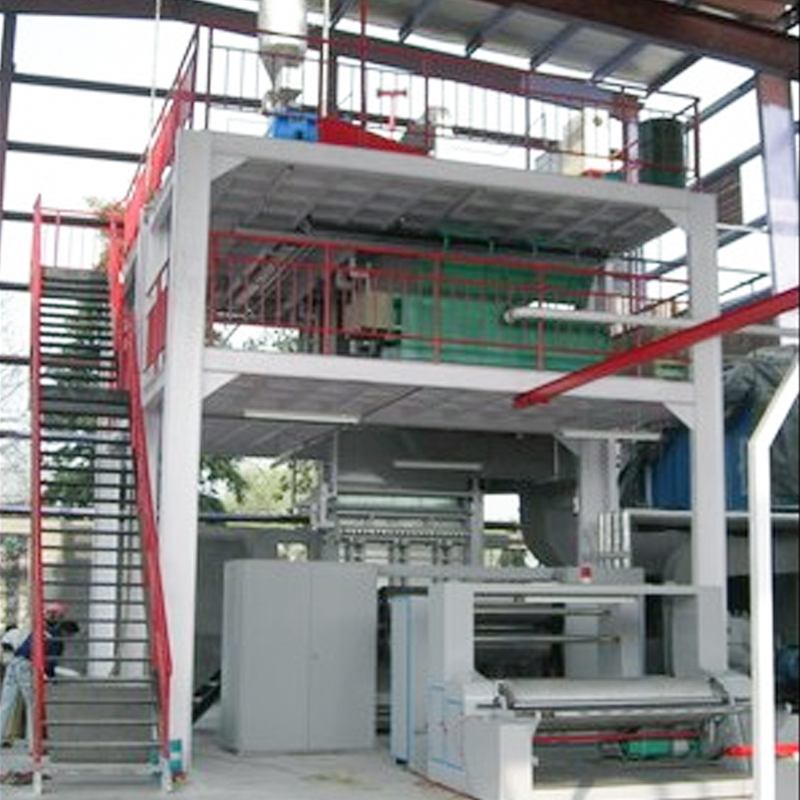
At its core, a nonwoven fabric making machine is an integrated production line that automates the transformation of raw polymers into finished fabric without weaving or knitting. The process typically involves three sequential stages: polymer feeding and extrusion, web formation, and web consolidation. Each stage is critical in determining the final fabric's characteristics, such as weight, strength, softness, and functionality. Mastering these fundamentals is the first step toward optimizing production efficiency and product quality.
Core Components of a Production Line
A standard line comprises several key units working in harmony.
- Extruder: Melts and homogenizes the polymer resin (e.g., PP).
- Spin Beam/Die Assembly: Forms continuous filaments or meltblown microfibers.
- Web Forming Section: Lays down the filaments into a uniform web, often using air suction or a moving belt.
- Bonding Unit: Consolidates the web through thermal, mechanical, or chemical means.
- Winding Station: Rolls the finished fabric for storage and shipment.
Comparing Spunbond and Meltblown Technologies
Spunbond and meltblown are the two most prevalent technologies, often used independently or in combination (SMS composites). The choice between them fundamentally alters the fabric's properties and end-use applications. While spunbond processes create strong, durable fabrics by extruding and drawing continuous filaments, meltblown technology produces ultra-fine fibers that result in superior barrier and filtration properties. Understanding their differences is crucial for selecting the right nonwoven fabric making machine for your target market.
Key Differences Between Spunbond and Meltblown
The following table contrasts the essential characteristics of each technology.
| Feature | Spunbond Technology | Meltblown Technology |
| Fiber Diameter | 15-40 microns (Larger, continuous) | 1-5 microns (Ultra-fine, discontinuous) |
| Fabric Strength | High tensile and tear strength | Lower strength, more delicate |
| Primary Function | Durability, Covering, Reinforcement | Filtration, Absorption, Barrier |
| Typical Applications | Geotextiles, Agriculture, Furniture, Hygiene coverstock | Medical masks, Air/ liquid filters, Oil sorbents, Wipes |
| Production Speed | Generally higher | Generally slower |
Exploring Key Machine Types for Specific Applications
The versatility of nonwovens demands specialized machinery. Different industries require fabrics with unique specifications, driving the development of targeted production solutions. From high-speed lines for disposable products to precision systems for technical textiles, the right machine configuration is paramount. Let's examine some critical machine types that address specific market needs, including solutions for producing high-barrier medical fabrics and robust materials for construction.
1. High-Speed Spunbond PP Nonwoven Machine
This machine type is the workhorse for producing polypropylene nonwovens at exceptional speeds for cost-sensitive, high-volume markets. It's ideal for applications where coverage and durability are prioritized over extreme fineness.
- Core Advantage: Maximizes output and minimizes per-unit cost for standard-grade fabrics.
- Typical Output: Fabrics ranging from 10 gsm to 150 gsm.
- Industry Focus: Hygiene products (diapers, sanitary napkins), agriculture coverings, and furniture lining.
2. Reusable Nonwoven Bag Making Machine
As sustainability becomes a global priority, the demand for reusable shopping bags made from durable nonwovens has surged. A dedicated reusable nonwoven bag making machine automates the entire process from fabric roll to finished bag, enhancing efficiency for eco-conscious manufacturers. This specialized equipment integrates cutting, handle forming, and ultrasonic welding or sewing in a single line, ensuring consistent quality and high production rates for this growing market segment.
3. Medical Grade Meltblown Fabric Equipment
The pandemic underscored the critical importance of high-filtration materials. Medical grade meltblown fabric equipment is engineered to produce the ultra-fine microfiber webs that form the essential filtering layer in surgical masks, N95 respirators, and sterile medical wraps. This equipment prioritizes precise control over fiber diameter, basis weight uniformity, and electrostatic charging to ensure the fabric meets stringent bacterial filtration efficiency (BFE) and breathability standards.
4. SMS Composite Nonwoven Production Line
An SMS (Spunbond-Meltblown-Spunbond) line combines the best of both technologies. It layers a meltblown web between two spunbond layers, creating a fabric that is both strong and an effective barrier. This is a prime example of an advanced, integrated nonwoven fabric making machine.
- Key Benefit: Achieves a balance of liquid repellency, filtration, and fabric strength.
- Dominant Application: High-end medical gowns, drapes, and premium hygiene products like baby diapers.
5. Needle Punch Felt Manufacturing Machine
For applications demanding thickness, density, and structural integrity, needle punching is the go-to technology. A needle punch felt manufacturing machine uses thousands of barbed needles to mechanically entangle a dry-laid web of fibers, creating dense felt fabrics. This process is distinctly different from thermal bonding and is crucial for producing technical textiles used in automotive interiors, geotextiles, and synthetic leather substrates. The machinery focuses on needle density, stroke frequency, and web feeding precision.
Choosing the Right Machine: Factors for Decision-Making
Selecting a nonwoven fabric making machine is a significant capital investment. The decision should be based on a thorough analysis of both technical requirements and business objectives. It's not just about the initial purchase price; factors like raw material flexibility, energy consumption, operational complexity, and the potential for future upgrades play a vital role in the long-term return on investment. A careful evaluation ensures the chosen line aligns perfectly with your production goals.
Critical Considerations for Your Investment
When comparing different machine options, focus on these key parameters.
| Factor | Why It Matters | Key Questions to Ask |
| Target Fabric & End-Use | Defines the required technology (spunbond, meltblown, needlepunch). | What are the specific weight, strength, and barrier properties needed? |
| Production Capacity | Directly impacts business scalability and unit cost. | What is the required annual output in tons or square meters? |
| Raw Material Flexibility | Affects ability to switch products or use cost-effective resins. | Can the machine process different polymer types or grades (e.g., PP, PET)? |
| Automation & Control Level | Determines labor costs, consistency, and waste reduction. | How integrated is the PLC system? Does it offer real-time monitoring and adjustment? |
| Energy Efficiency | A major component of ongoing operational expenses. | What are the specific power consumption rates for the extruder and bonding systems? |
The Role of Integrated Manufacturing Expertise
True optimization in nonwoven production often comes from a holistic approach where material science and equipment engineering are deeply intertwined. Companies that master both domains can develop highly synergistic solutions. For instance, at Jiangyin Jingang Nonwoven Co., Ltd., our experience since 1999 in both manufacturing PP spunbond/meltblown fabrics and independently designing production machinery allows us to create systems where the machine parameters are precisely tuned for the intended material performance. This integrated expertise is invaluable for clients seeking a complete, optimized, and automated production solution tailored to their specific product portfolio, from automotive components to agricultural covers.
Frequently Asked Questions (FAQs)
1. What is the main difference between a spunbond and a meltblown machine?
The core difference lies in how they form fibers. A spunbond machine draws continuous filaments to create a strong web, while a meltblown machine uses high-velocity air to attenuate the polymer into ultra-fine, micro-diameter fibers, resulting in fabrics with superior filtration and absorption properties.
2. Can one production line make both spunbond and meltblown fabric?
Typically, they are separate lines due to different technological principles. However, a composite SMS (Spunbond-Meltblown-Spunbond) line integrates both processes sequentially on a single line to produce multilayer fabrics with combined properties.
3. What are the advantages of using a needle punch felt manufacturing machine?
Needle punching creates thick, dense, and bulky fabrics with high structural integrity and porosity. It's ideal for applications requiring resilience and three-dimensional structure, such as automotive trunk liners, geotextiles, and insulation, which are difficult to achieve with thermal-bonded fabrics.
4. How important is automation in a modern nonwoven fabric making machine?
Extremely important. High-level automation ensures consistent fabric quality, reduces human error and labor costs, increases overall equipment efficiency (OEE), and allows for precise real-time control of key parameters like basis weight and temperature, directly impacting profitability.
5. What should I look for in medical grade meltblown fabric equipment?
Focus on precision and control. The equipment must reliably produce webs with extremely uniform fiber diameter distribution and basis weight. It should also support integrating an electrostatic charger (for electret media) and be constructed with materials that allow for easy cleaning and maintenance to meet hygienic production standards.




