

 English
  русский
  Español
Non Woven Fabric: Definition, Raw Materials, Examples & Uses
Non woven fabric is a sheet or web structure bonded together by entangling fibers or filaments mechanically, thermally or chemically, without weaving or knitting. It is an engineered material made directly from fibers rather than yarns, and polypropylene accounts for over 60 percent of the global non woven raw material consumption. From disposable surgical masks and baby wipes to durable geotextiles and automotive interiors, non woven fabrics are defined by their manufacturing process rather than a specific composition. This article clearly explains what defines a non woven material, its raw materials, the most common examples and where they are used in practical applications.
Content
What Defines a Non Woven Fabric
The technical definition from ISO 9092 states that a non woven is a manufactured sheet, web or batt of directionally or randomly oriented fibers, bonded by friction, cohesion or adhesion. The key distinction is that no yarns are interlaced as in weaving or knitting. Instead, fibers are directly converted into a textile-like structure. This allows for high production speeds and a wide range of engineered properties. Non woven fabrics can be made lightweight and disposable, or tough and durable like traditional textiles, but they all share the characteristic of being assembled directly from fibers.
There is often confusion about whether materials like felt or paper are non wovens. Felt, which is made by matting animal fibers under heat and moisture, is technically a non woven, but paper made from cellulose pulp is generally not classified as a non woven fabric under the textile definition because the fibers are not textile fibers. The critical concept is that the material must be a textile-based sheet formed without yarn preparation.
Raw Material of Non Woven Fabric
The most widely used raw material for non woven fabrics is polypropylene, specifically isotactic polypropylene in granule form, which accounts for over 60 percent of the global non woven market by weight. Its dominance stems from low cost, chemical inertness, and the ease of processing it into spunbond and meltblown webs. Polyester is the second major fiber, valued for higher strength, temperature resistance and recyclability, often used in durable applications like roofing and automotive fabrics. Other significant raw materials include:
- Rayon (viscose) for softness and absorbency in wet wipes and medical gauze.
- Polyethylene for soft, cloth-like feel in hygiene products.
- Cotton and other natural fibers, often used in blends for absorbent products and sustainable options.
- Bi-component fibers with a low-melting sheath that act as thermal binders, enabling binder-free web bonding.
The choice of raw material directly dictates the fabric's properties and end-use. Polypropylene non wovens, for example, are inherently hydrophobic and ideal for barrier products, while rayon non wovens are naturally hydrophilic and suited for liquid absorption.
Examples of Non Woven Fabrics
Non wovens are not a single product but a broad category differentiated by the web formation and bonding method. The table below provides clear, practical examples of common types, how they are made and where you encounter them daily.
| Non Woven Type | Production Method | Common Products |
|---|---|---|
| Spunbond Polypropylene | Continuous filaments extruded and bonded by heat | Reusable shopping bags, surgical gowns, agricultural covers |
| Meltblown | Microfibers blown onto a collector and self-bonded | Filtration media, face mask filter layers, oil absorbents |
| Spunlace (Hydroentangled) | High-pressure water jets entangle fibers | Baby wipes, cosmetic masks, medical cleaning cloths |
| Needlepunch | Barbed needles mechanically interlock fibers | Geotextiles, automotive carpets, mattress felt |
| Thermal Bonded | Heat fuses thermoplastic fibers or binder fibers | Hygiene top sheets, insulation, filtration support layers |
Non Woven Textile Products
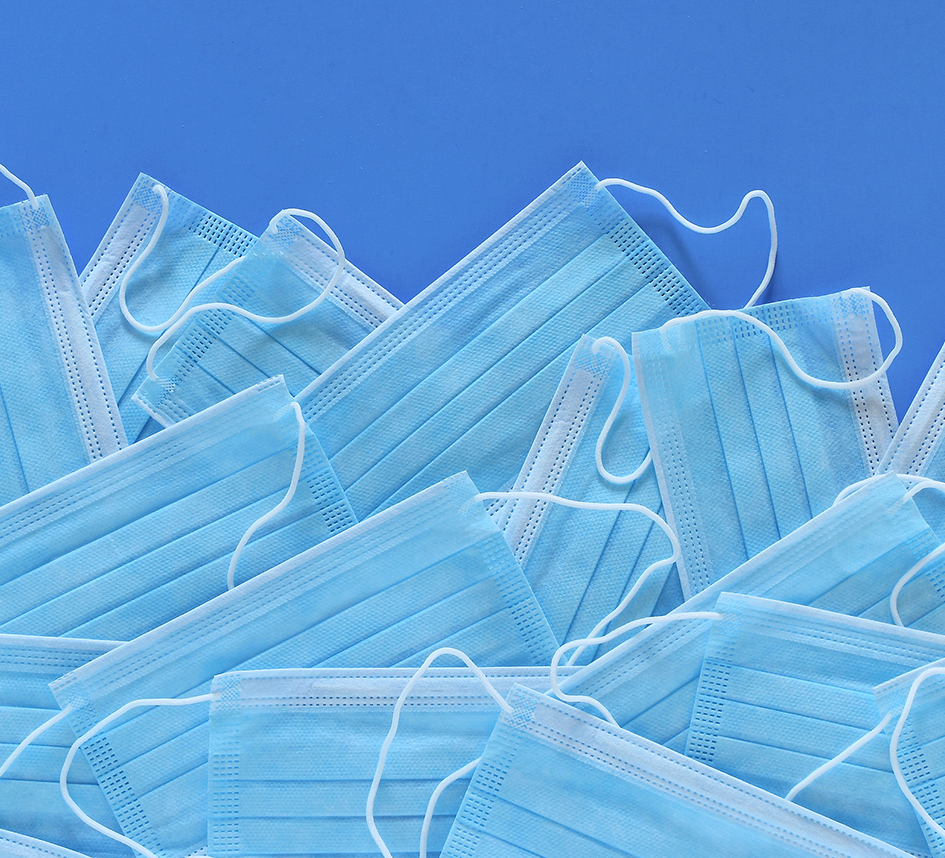
Non woven textile products span disposable and durable markets. In the hygiene sector, non wovens are the essential component of diapers, feminine care and adult incontinence items, where they deliver fluid acquisition, distribution and barrier properties. The global hygiene non woven market consumed over 3.5 million tonnes in 2023. In medical applications, products include surgical gowns, drapes, sterilization wraps and face masks; the COVID-19 pandemic highlighted the critical role of meltblown non woven layers in N95 respirators, with mask production exceeding 100 billion units globally in 2020.
Durable non woven products are equally widespread. Geotextiles made from needlepunched polyester or polypropylene stabilize roads, prevent soil erosion and filter drainage. Automotive non wovens appear in headliners, trunk liners and seat covers, with a typical passenger car containing over 20 kilograms of non woven materials. In home textiles, non wovens are used for mattress ticking, furniture underlay, carpet backing and insulation. Filtration products, from HVAC filters to vacuum cleaner bags, rely on precisely engineered non woven media with graded fiber sizes to capture particles.
Non Woven Fabric Uses Across Industries
The versatility of non woven fabrics is best illustrated by mapping their uses to specific requirements. Below is a practical breakdown by industry and the key property driving selection.
- Medical and healthcare: Barrier protection, sterilization capability, lint-free. Uses include surgical drapes, isolation gowns, wound dressings, and face masks.
- Hygiene and personal care: Softness, fluid management, skin compatibility. Found in baby diapers, wet wipes, sanitary napkins and adult incontinence products.
- Agriculture: Light transmission, breathability, UV resistance. Examples include crop covers, mulch mats, greenhouse shading and seed blankets.
- Construction and civil engineering: High tensile strength, puncture resistance, filtration. Geotextiles for soil separation, drainage composites, roofing underlayments and insulation facing.
- Packaging: Lightweight, tear resistance, printability. Reusable shopping bags, protective wrap, desiccant packets and food packaging absorbent pads.
- Automotive: Acoustics, moldability, durability. Headliners, door panels, cabin air filters, wheel arch liners and battery separators.
- Filtration: Controlled pore size, high efficiency, low pressure drop. HVAC filters, water filtration, vacuum bags and industrial dust collection.
How Non Woven Fabric Differs from Woven and Knitted Textiles
Understanding the distinction helps clarify why certain applications demand non wovens. A woven fabric consists of interlaced warp and weft yarns, a knitted fabric is formed by interlooping yarns, while a non woven eliminates the yarn stage entirely. This fundamental difference brings key practical advantages: non wovens can be produced at speeds up to 600 meters per minute, compared to roughly 10 meters per minute for weaving. The cost to produce a square meter of spunbond polypropylene is typically 50 to 80 percent lower than a comparable woven polypropylene fabric. Moreover, non wovens can be engineered with specific pore sizes for filtration or designed to be uniformly breathable while blocking liquids, a combination that woven fabrics struggle to achieve without additional coatings.
The trade-off is that non wovens usually have lower drape and are often less durable to repeated laundering, which is why they dominate in disposable and limited-use applications. However, advanced needlepunch and spunbond fabrics with high denier fibers are now finding use in long-life applications including automotive and construction, closing the durability gap significantly.




