

 English
  русский
  Español
Non Woven Fabric Making Machine and Glass Processing Equipment Guide
Content
- 1 Two Pillars of Modern Industrial Manufacturing
- 2 How a Non Woven Fabric Making Machine Works
- 3 Key Technical Parameters When Selecting a Non Woven Fabric Making Machine
- 4 Overview of Glass Processing Equipment Categories
- 5 Shared Procurement Considerations Across Both Machine Categories
- 6 Evaluating Suppliers and Total Cost of Ownership
Two Pillars of Modern Industrial Manufacturing
Non woven fabric making machines and glass processing equipment represent two of the most technically demanding segments of industrial machinery. Both categories serve high-volume global industries -- textile and hygiene manufacturing on one side, construction and architectural glazing on the other -- and both require precise control over material properties, production speed, and finished product quality.
Despite serving different sectors, the selection criteria for both machine types follow a similar logic: understanding the production process, matching equipment capabilities to output requirements, and accounting for long-term operational costs. This guide covers the key machine types, technical parameters, and selection factors for both categories.
How a Non Woven Fabric Making Machine Works
A non woven fabric making machine produces fabric by bonding or interlocking fibers through mechanical, thermal, or chemical means -- without weaving or knitting. The result is a sheet-like material whose properties (strength, permeability, softness, and thickness) are directly controlled by the production method and raw material selection.
The three dominant production technologies each use a different type of machine:
Spunbond Non Woven Machines
Spunbond lines extrude molten polymer (typically polypropylene or polyester) through spinnerets to form continuous filaments, which are then laid onto a conveyor belt and thermally bonded. The process is fast, continuous, and produces a durable fabric used in medical gowns, agricultural covers, geotextiles, and hygiene products. Production speeds on modern spunbond lines reach 400 to 600 meters per minute, with fabric weight (gsm) adjustable between 10 and 150 gsm depending on application.
Meltblown Non Woven Machines
Meltblown technology uses high-velocity hot air to attenuate extruded polymer into microfibers, producing fabric with fiber diameters of 1 to 5 microns. This ultrafine structure gives meltblown fabric exceptional filtration efficiency, making it the core layer in N95 respirators, surgical masks, and air and liquid filtration media. Meltblown lines run slower than spunbond -- typically 10 to 60 meters per minute -- but the resulting fabric commands significantly higher market value.
Needle Punch and Spunlace Machines
Needle punch machines mechanically entangle fiber webs using barbed needles, producing dense, durable fabrics used in automotive interiors, flooring underlay, and filtration. Spunlace (hydroentanglement) machines use high-pressure water jets to bond fibers, producing a soft, textile-like fabric widely used in wet wipes, medical dressings, and cosmetic pads. Both technologies process staple fibers rather than continuous filaments and are more versatile in terms of raw material inputs.
Key Technical Parameters When Selecting a Non Woven Fabric Making Machine
Matching machine specifications to production requirements is critical. The following parameters define machine capability and should be confirmed before procurement:
- Working width: The effective fabric width the machine can produce, typically ranging from 1.6 meters to 4.2 meters for industrial spunbond lines. Wider machines increase output but require larger capital investment and facility footprint.
- Fabric weight range (gsm): The minimum and maximum grams per square meter the line can produce while maintaining consistent quality. A wider gsm range gives greater product flexibility.
- Production speed: Maximum line speed in meters per minute, which directly determines annual output capacity when combined with working width and uptime.
- Raw material compatibility: Whether the machine supports polypropylene (PP), polyethylene (PE), polyester (PET), biopolymers, or recycled fiber inputs. Raw material flexibility reduces supply chain risk.
- Bonding method: Thermal calendering, through-air bonding, ultrasonic bonding, or chemical bonding -- each produces different fabric hand-feel and mechanical properties.
- Automation and control systems: PLC-based control with HMI interface, automatic tension control, basis weight monitoring, and defect detection systems reduce operator error and waste in high-speed production.
Overview of Glass Processing Equipment Categories
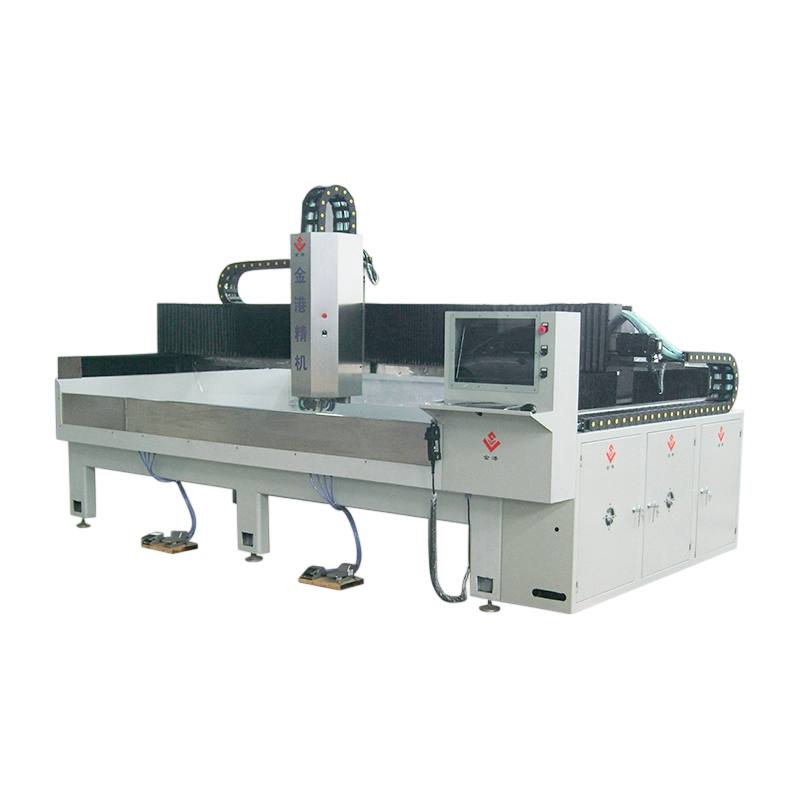
Glass processing equipment covers a broad range of machines used to transform raw flat glass into finished products for construction, automotive, solar, and specialty applications. Unlike non woven production, which follows a linear process from polymer to fabric, glass processing often involves multiple independent machine categories that can be combined in different sequences depending on the end product specification.
Glass Cutting Machines
Automated glass cutting tables use diamond or carbide scoring wheels to scribe the glass surface, after which controlled breaking separates the pane to precise dimensions. CNC-controlled cutting tables can optimize cut patterns across a standard glass sheet (typically 3210 x 2250 mm or jumbo 6000 x 3210 mm) to minimize material waste, with cutting accuracy of plus or minus 0.1 mm on modern systems. Some lines integrate automatic loading, cutting, and sorting in a single cell.
Glass Edging and Grinding Machines
After cutting, raw glass edges are sharp and structurally vulnerable. Edging machines use diamond grinding wheels to produce flat, beveled, pencil-polished, or ogee edge profiles. Single-spindle machines handle low-volume or specialty work, while double-edgers process both parallel edges simultaneously at speeds of 1 to 5 meters per minute, making them standard equipment in high-volume architectural glass fabrication.
Glass Tempering Furnaces
Tempering (toughening) furnaces heat glass to approximately 620 to 680 degrees Celsius and then rapidly quench it with high-pressure air jets. This creates compressive stress on the surface and tensile stress in the core, increasing mechanical strength by four to five times compared to annealed glass and producing a safety fracture pattern (small blunt fragments) if broken. Tempered glass is mandatory in applications including shower enclosures, glass doors, facades, and automotive side windows. Furnace capacity is defined by the maximum glass size it can process and its cycle time per load.
Insulating Glass (IG) Production Lines
Insulating glass units (double or triple glazing) are assembled on automated IG lines that apply spacer bars, fill the cavity with argon or krypton gas, apply primary and secondary sealants, and press the unit to final dimensions. The thermal performance of the finished unit (expressed as U-value in W/m2K) depends heavily on the precision of gas filling and sealant application, both of which are controlled by the IG line equipment. Modern IG lines can produce 200 to 400 units per shift in a well-organized factory.
Glass Laminating Equipment
Laminated safety glass is produced by bonding two or more glass panes with a PVB (polyvinyl butyral), EVA, or SGP interlayer under heat and pressure. The laminating process involves a pre-press (nip roller or vacuum bag) to remove air, followed by an autoclave cycle at 130 to 145 degrees Celsius and 10 to 14 bar pressure to achieve full adhesion. Laminated glass is used in windshields, skylights, structural glass floors, and hurricane-resistant facades.
| Factor | Non Woven Fabric Making Machine | Glass Processing Equipment |
|---|---|---|
| Output capacity | Defined by line speed, working width, and gsm | Defined by glass size capacity and cycle time |
| Energy consumption | High in extrusion and bonding zones | High in tempering furnaces and autoclaves |
| Automation level | Fully automated lines standard at industrial scale | Semi to fully automated depending on machine type |
| After-sales support | Spare parts availability, remote diagnostics critical | Grinding wheel supply, furnace element replacement |
| Lead time | 6 to 18 months for complete production lines | 3 to 12 months depending on machine complexity |
| Certification requirements | CE, ISO 9001, product-specific (EN 13432 for biodegradable) | CE, EN 12150 (tempered), EN 14449 (laminated) |
Evaluating Suppliers and Total Cost of Ownership
For both machine categories, the purchase price represents only a portion of the total cost of ownership over a 10 to 15 year operational lifespan. Buyers should evaluate the following cost components when comparing suppliers:
- Energy cost per unit of output: Specific energy consumption (kWh per kg of fabric or kWh per square meter of glass processed) varies significantly between machine generations and manufacturers. Newer machines with heat recovery systems, variable frequency drives, and optimized airflow design can reduce energy costs by 20 to 35 percent compared to older designs.
- Consumable and spare parts cost: Spinneret plates and die tips in non woven machines, and diamond grinding wheels and furnace rollers in glass processing equipment, are high-wear components with significant annual replacement costs. Sourcing availability and lead times for these parts should be confirmed before purchase.
- Planned downtime and maintenance intervals: Production uptime directly determines annual revenue capacity. Machines with longer mean time between failures (MTBF) and shorter planned maintenance windows offer better return on investment in continuous production environments.
- Commissioning and training: Complex production lines require on-site installation support, operator training, and process optimization assistance. The quality and duration of commissioning support varies widely between suppliers and should be specified contractually.
- Upgrade and expansion capability: Modular machine designs that allow capacity expansion or product range extension without full line replacement offer a significant advantage as market requirements evolve.
Reference visits to existing installations operated by the supplier's current customers are one of the most reliable ways to evaluate real-world machine performance, output quality consistency, and the supplier's responsiveness to technical issues after handover.




