

 English
  русский
  Español
Woven and Nonwoven Fabrics: Meaning, Examples, Materials & Suppliers
Content
What Non Woven Fabric Means — And How It Differs From Woven Textiles
Non woven fabric is an engineered sheet material made by bonding or interlocking fibers together through mechanical, thermal, or chemical processes — without weaving or knitting. The result is a flat, porous structure that behaves like a textile but is manufactured at much higher speeds and lower costs than traditional fabrics.
Woven fabrics are built from two perpendicular yarn systems — the warp and the weft — interlaced on a loom. This interlacing gives woven cloth its dimensional stability, tensile strength, and characteristic drape. Nonwoven materials, by contrast, derive their properties entirely from fiber type, bonding method, and web formation technique, not from yarn structure.
The practical difference matters for procurement. Woven textiles are ideal where strength-to-weight ratio, stretch recovery, and aesthetics are critical — apparel, upholstery, industrial belting. Nonwovens dominate where disposability, filtration, absorbency, or rapid production is more important than appearance — medical gowns, geotextiles, hygiene products, packaging liners.
| Property | Woven Fabric | Nonwoven Fabric |
|---|---|---|
| Structure | Interlaced yarns (warp × weft) | Bonded/entangled fiber web |
| Production speed | Moderate | Very high |
| Tear resistance | High | Low to moderate |
| Cost per sqm | Higher | Lower |
| Reusability | High | Often single-use |
| Typical end use | Apparel, technical textiles | Medical, hygiene, filtration |
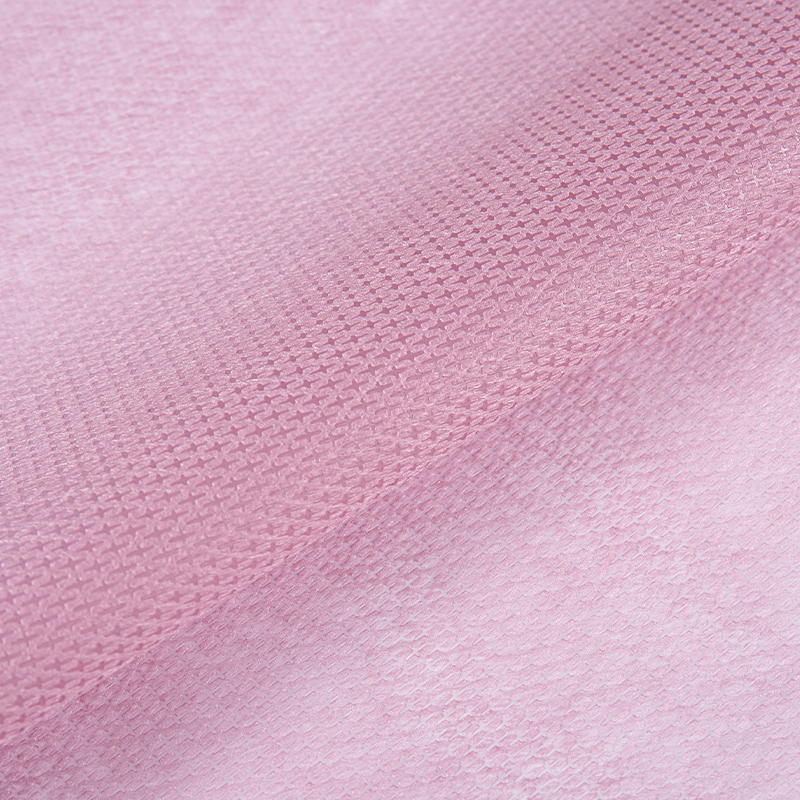
Non Woven Fabric Examples Across Industries
Nonwoven materials are found in more product categories than most buyers realize. The following examples span the major application segments where they consistently outperform woven alternatives on cost, processability, or functional performance.
Medical and Hygiene
- Surgical gowns and drapes — spunbond polypropylene (SSMMS configuration) provides bacterial barrier performance at low areal weight.
- Baby diapers and adult incontinence products — the top sheet is typically a hydrophilic spunbond or thermobond nonwoven that allows rapid fluid strike-through while remaining soft against skin.
- Wet wipes — hydroentangled (spunlace) viscose/polyester blends are the standard substrate, offering softness combined with sufficient wet strength.
- Face masks (N95/surgical) — meltblown polypropylene is the electrostatic filtration layer sandwiched between spunbond cover layers.
Construction and Geotextiles
- House wrap — breathable spunbond or SMS polyethylene/polypropylene membranes block wind and moisture while allowing vapor diffusion.
- Road base separation layers — needle-punched polyester or polypropylene geotextiles prevent aggregate mixing while allowing drainage.
- Roofing underlayment — high-loft needle-punched nonwovens provide thermal buffering and slip resistance under tiles or shingles.
Automotive and Industrial
- Cabin air filters — meltblown/spunbond laminates capture fine particulates; electrostatically charged variants target PM2.5.
- Dashboard and door panel substrates — thermally bonded glass-fiber nonwovens form the structural backing for molded interior trim.
- Sound insulation pads — recycled PET (rPET) needle-punched sheets absorb and dampen noise between body panels.
Packaging and Agriculture
- Reusable shopping bags — laminated NWPP (nonwoven polypropylene) at 80–120 gsm, often with BOPP film coating for printability.
- Crop cover fabric — lightweight spunbond PP transmits light and moisture while shielding plants from frost and pests.
- Tea and coffee bags — heat-sealable nonwoven paper or PET substrates allow infusion without fiber migration.
Non Woven Fabric Raw Material Suppliers and What to Evaluate
The performance of any nonwoven is defined before the web is ever formed — by the quality, consistency, and specification of its raw fiber input. Sourcing from the right raw material suppliers is therefore not a secondary consideration; it directly determines end-product performance, yield, and compliance.
Primary Fiber Feedstocks
Polypropylene (PP) resin is the dominant raw material for spunbond and meltblown nonwovens globally, accounting for an estimated 60–65% of nonwoven fiber consumption. Major resin suppliers include LyondellBasell, Borealis, Reliance Industries, and Sinopec. For meltblown grades specifically, melt flow rate (MFR) must be tightly controlled — filtration-grade meltblown typically requires PP with MFR above 1,200 g/10 min to achieve sub-micron fiber diameter.
Polyester (PET) staple fiber is the primary input for dry-laid and needle-punched nonwovens. Key suppliers include Toray, Huvis, Nan Ya Plastics, and Indorama Ventures. Buyers should specify denier, cut length, crimp frequency, and finish (hydrophilic vs. hydrophobic) precisely, as these variables drive web formation quality and bonding efficiency.
Viscose/rayon staple is preferred for spunlace wipes and hygiene applications because of its high absorbency and cellulosic feel. Leading suppliers include Lenzing (Austria/China), Sateri, and Aditya Birla Group. ECOVERO and other certified sustainably sourced viscose grades command a price premium of 15–25% over standard viscose but are increasingly required for European market entry.
Bicomponent (bico) fibers — typically PE/PET or PP/PE sheath-core configurations — are essential for thermally bonded nonwovens. The low-melt sheath bonds at temperatures below the core's melting point, preserving structural integrity. Suppliers include ES FiberVisions, Huvis, and Teijin.
Supplier Qualification Criteria
When qualifying non woven fabric raw material suppliers, buyers in industrial and medical segments typically assess:
- Consistency of MFI/MFR across production lots — variance above ±5% causes measurable web uniformity issues in high-speed spunbond lines.
- Certification compliance — REACH, OEKO-TEX Standard 100, ISO 9001, and where applicable FDA 21 CFR for direct skin or food contact grades.
- Delivery lead time and minimum order quantity (MOQ) — Chinese and South Asian suppliers generally offer lower MOQs (5–25 MT) versus European majors (25–100 MT).
- Technical support capability — particularly for specialty applications, the supplier's ability to co-develop fiber specifications is a meaningful differentiator.
- Price stability and contract structure — PP resin prices track crude oil derivatives; locking in quarterly pricing agreements reduces planning risk.
Non Woven Fabric Manufacturers, Cloth Suppliers, and Waterproof Options
The nonwoven supply chain splits into three distinct tiers: fiber/resin producers (upstream), roll goods manufacturers (midstream), and converters/end-product suppliers (downstream). Buyers sourcing non woven material suppliers or non woven cloth suppliers need to determine which tier they are engaging, as price, MOQ, customization flexibility, and lead time vary substantially between them.
Major Nonwoven Textile Manufacturers by Region
China is the world's largest production base for commodity and mid-grade nonwovens, led by manufacturers in Zhejiang, Guangdong, Fujian, and Shandong provinces. Companies like Jofo Group, Wonderful Nonwovens, and Far Eastern New Century have invested heavily in high-speed SMS and SMMS lines capable of producing 3–10 gsm ultralight fabrics at competitive pricing. Annual output from Chinese nonwoven textile manufacturers now exceeds 7 million metric tons, representing approximately 45% of global production.
Europe remains the center of high-performance and specialty nonwovens. Freudenberg Performance Materials, Ahlstrom, Sandler, and TWE Group produce technical nonwovens for filtration, automotive, and medical segments where tight tolerances, traceability, and regulatory documentation are non-negotiable.
North America is led by Berry Global, Avgol, and PGI (now part of Berry), focusing heavily on hygiene roll goods and spunmelt fabrics for the US and Latin American markets.
Waterproof Nonwoven Fabric: Technologies and Applications
Non woven fabric waterproof performance is achieved through several distinct mechanisms — and understanding which mechanism a supplier uses is critical, because they differ in durability, breathability, and cost:
- Lamination with PE or BOPP film — a thin polyethylene or biaxially oriented polypropylene film is bonded to the nonwoven surface. This is the most cost-effective approach, widely used in reusable bags, protective covers, and agricultural films. It blocks moisture completely but eliminates breathability.
- Hydrophobic finish treatment — fluorocarbon (C6 or C8) or silicone-based repellent chemistry is applied to fiber surfaces. Water beads and rolls off rather than penetrating the web. Hydrostatic head values of 200–1,000 mm are typical for treated spunbond fabrics used in medical drapes and protective apparel.
- Meltblown barrier layers — the inherently fine fiber diameter (0.5–5 µm) of meltblown polypropylene creates a capillary structure that resists liquid penetration under pressure. SMS/SMMS constructions combine this barrier function with the surface softness and strength of spunbond outer layers.
- ePTFE membrane lamination — expanded polytetrafluoroethylene membranes bonded to nonwoven carriers deliver waterproof yet breathable performance (MVTR > 10,000 g/m²/24h), used in high-end outdoor garments, medical implants, and filtration. This is the most expensive waterproofing option.
When specifying waterproof nonwovens with suppliers, request hydrostatic head test data (ISO 811 or EN 20811), strike-through time results (relevant for hygiene applications), and durability after repeated laundering if the product is intended for reuse. Buyers should also clarify whether fluorinated repellent chemistry is permitted under their target market's regulatory framework — C8 PFOA-based finishes are banned in the EU, and C6 alternatives are under increasing scrutiny.




