

 English
  русский
  Español
What Is PP Spunbond Nonwoven Fabric? Why It's the Most Versatile Nonwoven
Home / News / Industry News / What Is PP Spunbond Nonwoven Fabric? Why It's the Most Versatile Nonwoven
At a packaging plant in eastern China, switching reusable shopping-bag production from woven polypropylene to PP spunbond nonwoven fabric cut material cost by about 18 percent and lifted line speed by nearly half. That result is typical rather than exceptional. PP spunbond nonwoven fabric now serves industries as different as luggage manufacturing, sofa upholstery, medical masks, and agricultural ground cover, and the reason is structural: the material's versatility comes from how the polymer is processed, not from any single finishing trick.
Content
PP spunbond nonwoven fabric is a thermoplastic sheet produced by extruding molten polypropylene into continuous filaments, laying those filaments into a random web, and bonding the web with heat and pressure. The result is a fabric-like material with no yarn, no weaving, and no chemical binder.
Two words in the name matter. "Spunbond" describes the one-step forming process in which filaments are spun and bonded inline. "Polypropylene" identifies the resin, chosen because it melts cleanly, crystallizes fast, and costs less per kilogram than polyester or nylon while delivering comparable strength at equal coverage.
Most commercial PP spunbond runs between 9 and 250 grams per square meter (gsm). Below 15 gsm it handles like tissue; above 150 gsm it acts like a stiff, paper-like board. This wide basis-weight window is the first reason the material is called versatile.
PP spunbond production is a continuous five-step process that converts resin into finished fabric in roughly one minute without water, solvents, or chemical binders.
Line width is a major cost driver. Standard PP spunbond production lines are built at 1.6 m, 2.4 m, and 3.2 m widths; wider lines spread fixed costs over more square meters, which is why volume buyers usually move to the widest line their plant can feed.
PP spunbond nonwoven fabric earns its versatility through five measurable properties: tensile strength, elongation, breathability, water repellency, and thermal stability. No single property is exceptional; the combination at this price point is.
| Property | Typical Range | Why It Matters |
| Tensile strength, MD | 80-140 N/5cm | Carries load in bags and packaging |
| Tensile strength, CD | 45-75 N/5cm | Resists tearing across the roll width |
| Elongation at break | 40-70% | Allows deep folding and shaping |
| Hydrostatic pressure | 12-30 cm H2O | Repels light water in agriculture |
| Air permeability | 1,200-2,600 L/m2/s | Keeps medical and garment layers breathable |
| Softness | Pattern dependent | Determines drape in interlining |
PP spunbond nonwoven fabric appears in at least seven industrial sectors because pattern, print, color, and thickness can be changed without altering the base process.
For reusable shopping bags, cross-pattern PP spunbond adds visible texture and better grip while keeping the low weight and printability brands want.
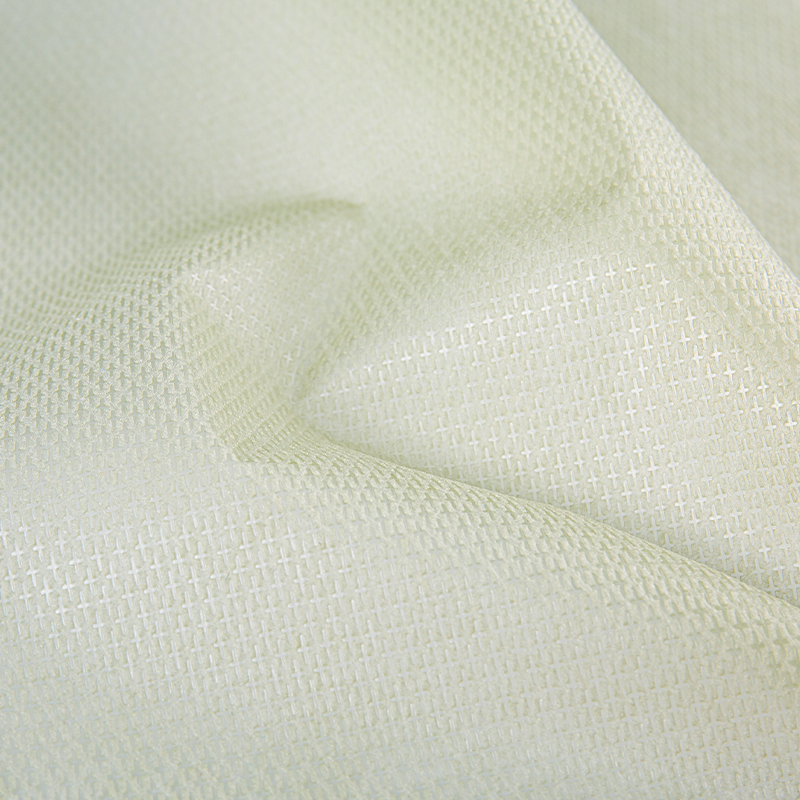 Cross-Pattern PP Spunbond Nonwoven for Eco-Friendly BagsThis fabric features a cross-grain texture that adds grip and visual depth while remaining lightweight and printable. It suits reusable shopping bags and other sustainable packaging applications, with recyclable polypropylene construction.View Product →
Luggage manufacturers specify checkered PP spunbond because the embossed grid hides scuffs and improves rigidity when the fabric is laminated to heavier substrates.
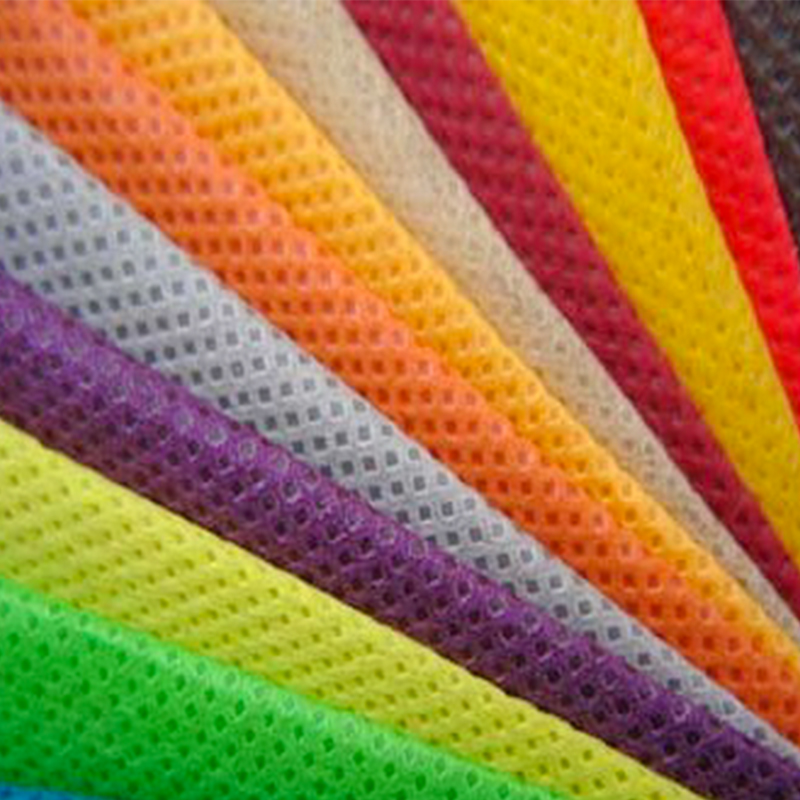 Checkered PP Spunbond Fabric for Durable Luggage UseThe embossed checkered pattern hides scuffs and increases rigidity when laminated to heavier backing, making it a practical choice for luggage and other load-bearing bag components.View Product →
Printed grades, such as PP printed spunbond rolls for gift packing, let converters add full-color branding without sacrificing tear resistance.
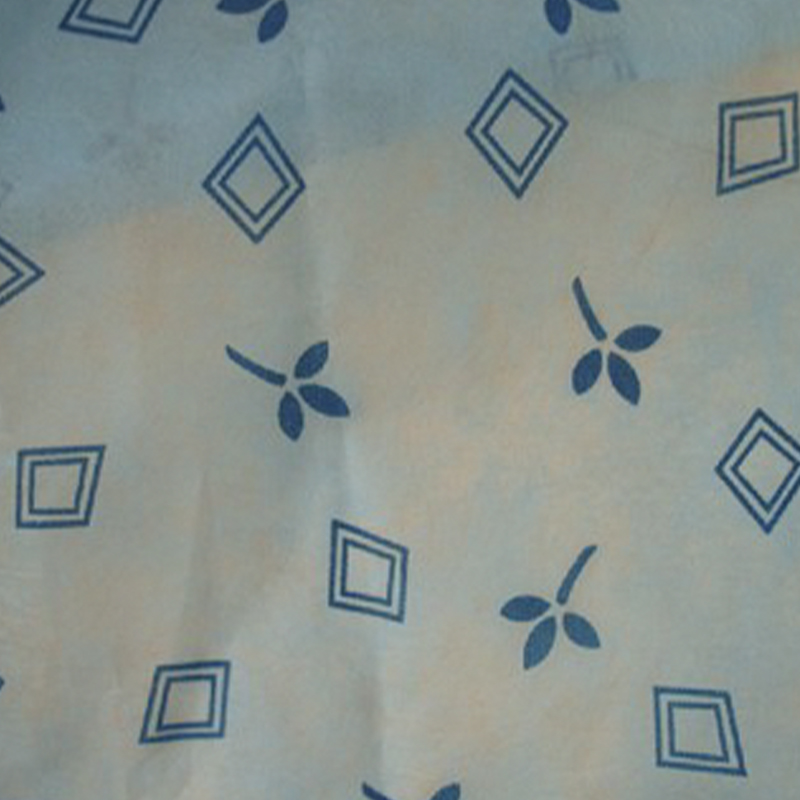 Printed PP Spunbond Roll for Gift PackagingDesigned for gift packing, this fabric supports full-color printing and maintains tear resistance. Its customizable patterns and sizes help enhance brand presentation while protecting contents during transit.View Product →
Bags, sofa lining, and agriculture dominate tonnage because the cost per square meter is lowest at 15-120 gsm.
Medical, garment interlining, and lamination require controlled finish and tighter tolerance, so they command a higher price per kilogram.
PP spunbond is the highest-volume nonwoven technology in the world, and the comparison with meltblown, spunlace, and needle-punch makes the reason clear: no other process matches its strength and coverage at the same cost per square meter.
Approximate share of global nonwoven production by manufacturing technology, compiled from EDANA and INDA industry production reports.
The chart reflects why spunbond is the default process: it produces a strong, uniform, printable sheet at the lowest capital and energy cost per square meter of any nonwoven technology.
| Process | Structure | Strength | Filtration | Relative Cost | Main Uses |
| PP spunbond | Continuous filaments, thermal bond | High | Low-moderate | Low | Packaging, agriculture, medical, furniture |
| PP meltblown | Microfibers, 1-5 um | Low | High | Medium | Filtration, masks, oil sorbents |
| Spunlace | Entangled staple fibers | Medium | Moderate | High | Wipes, hygiene, medical |
| Needle-punch | Mechanically entangled fibers | Very high | Low | Medium | Geotextiles, automotive, insulation |
To choose the right PP spunbond fabric, define the mechanical and visual requirements of the end product first, then match four variables: basis weight, surface pattern, finish, and roll format.
No. PP spunbond is water-repellent, not waterproof. A 100 gsm grade typically resists water penetration up to 12-30 cm H2O, which handles light rain and condensation but not standing water. For waterproof packaging, laminate the fabric with PE film.
Yes. Because PP spunbond is a single-polymer thermoplastic, production scrap and clean post-industrial waste can be melted and re-extruded. Many plants regrind edge trim and reject rolls directly back into the extrusion hopper.
Spunbond filaments are 15-35 micrometers thick and carry mechanical load; meltblown fibers are 1-5 micrometers and trap particles. Surgical masks combine both: meltblown filters, spunbond protects.
For a standard reusable bag carrying 5-8 kg, use 70-90 gsm PP spunbond. Below 60 gsm the bag stretches at the handles; above 100 gsm the bag becomes stiff and printing costs rise.
At a packaging plant in eastern China, switching reusable shopping-bag production from woven polypropylene to PP spunb...
READ MOREWhen a surgical mask specification requires a filtration layer that stops sub-micron particles, or an HVAC filter desi...
READ MOREAn N95 respirator and a reusable shopping bag are both made from polypropylene nonwoven, yet one captures 95 percent o...
READ MOREEvery purchase order for single-use polyethylene (PE) bags commits a facility to a waste stream that will outlive the ...
READ MOREPolypropylene spunbond nonwovens are the default cover material in agriculture and construction, but their outdoor lif...
READ MORE




