

 English
 русский
 Español

Checkered PP Nonwoven Fabric: Luggage, Medical Mask & Agriculture Uses
Home / News / Industry News / Checkered PP Nonwoven Fabric: Luggage, Medical Mask & Agriculture Uses
Content
A luggage factory that switches its partition-board lining from 150 gsm woven polyester to 90 gsm checkered polypropylene (PP) nonwoven fabric cuts roughly 55 grams from each 24-inch suitcase while keeping seam pull strength above 60 N. One floor away, an automated mask line welding 30 gsm checkered spunbond as the outer layer is using the same base material for a different job: repelling droplets, holding ultrasonic bonds, and telling the operator which side faces out. The common thread is the emboss pattern itself. This article explains how one checkered PP nonwoven fabric specification serves luggage, medical masks, and agriculture, and what to verify before you place an order.
Checkered PP nonwoven fabric is a spunbond polypropylene sheet bonded with a repeating diamond emboss pattern, and that pattern changes the material's mechanical behavior, not just its appearance.
Polypropylene pellets are melted, extruded through spinnerets, drawn into continuous filaments, laid on a moving belt, and bonded by heated calendar rollers. The checkered profile comes from an engraved roller surface. Instead of the smooth, high-temperature bond of plain spunbond, the checkered roller presses the web at discrete diamond points that usually cover 12-18 percent of the surface area. The open regions between bond points keep the fabric soft, air-permeable, and resistant to tear propagation in both the machine and cross directions.
| Property | Plain spunbond | Checkered spunbond |
| Bond pattern | Random point | Regular diamond grid |
| Typical bond area | 8-10% | 12-18% |
| Surface texture | Smooth | Tactile, slip-resistant |
| MD tear resistance (60-100 gsm) | Baseline | 10-18% improvement |
| Typical uses | Packaging, generic lining | Luggage, masks, agriculture |
For luggage and handbag manufacturers, checkered PP nonwoven functions as a structural reinforcement: it stiffens partition boards, stabilizes inner pockets, and resists the seam slippage that appears after months of heavy packing.
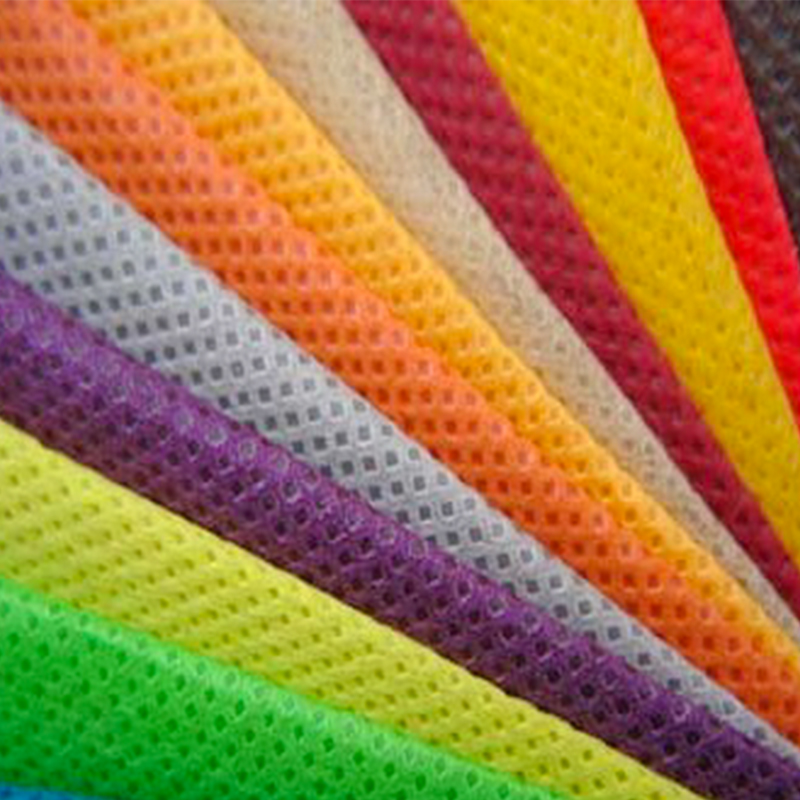 Checkered Colored PP Spunbond Nonwoven for Luggage and BagsThis reinforced polypropylene nonwoven offers tear strength and a textured surface for luggage partitions and linings, reducing material slippage during automated cutting and sewing operations.View Product →
Most luggage buyers order 60-120 gsm grades. Laptop cushions and bottom boards use the heavy end; handbag linings and pocket separators use the light end. Because the embossed surface grips better than smooth spunbond, stacked layers do not slide during cutting and high-speed sewing, which lowers rejects on automated cutting tables running thousands of panels per shift.
In a standard three-layer surgical mask, the outer layer is a 25-35 gsm hydrophobic spunbond that keeps droplets away from the meltblown filtration core, and checkered PP spunbond is a common choice for that role.
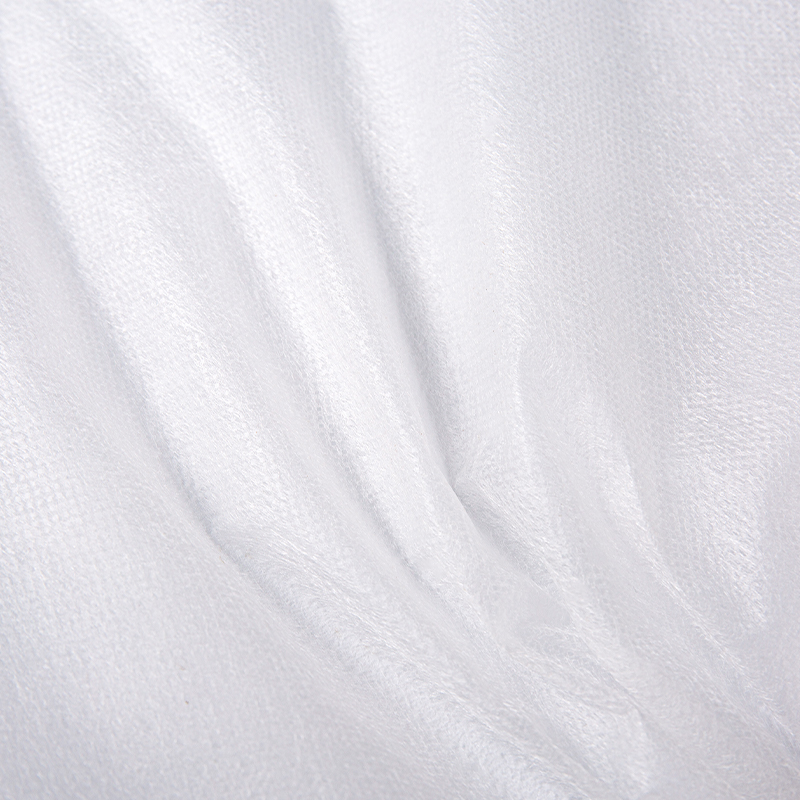 Checkered Spunbond PP Nonwoven for Medical Mask Outer LayerA hydrophobic spunbond with a distinctive checker pattern used as the mask's outer layer, providing structural stability, breathability, and a clear orientation cue for high-speed assembly lines.View Product →
The texture matters on the production line. The checkered surface gives operators and vision systems an instant cue for which side faces outward, reducing assembly errors on machines running 100-600 pieces per minute. The bond pattern keeps dimensional stability during ultrasonic welding around the nose bridge and edge seals, while the open structure between bond points limits the pressure drop added by the outer layer.
Agricultural checkered PP nonwoven blocks weed germination, stabilizes soil temperature, and lets irrigation water pass through, with 15-50 gsm grades covering most farm uses.
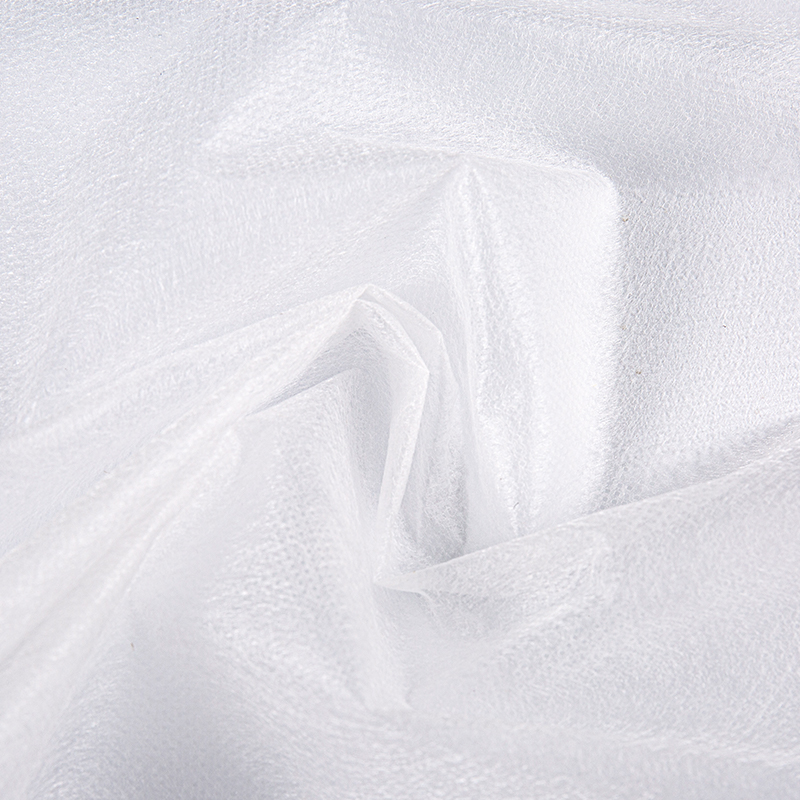 Spunbond PP Checkered Nonwoven Agricultural FilmThis durable, UV-resistant ground cover and row cover filters sunlight, blocks weeds, and allows water and air passage, with a textured face that stays flat under wind during mechanical laying.View Product →
Ground cover films in the 40-50 gsm range suppress weeds for two to three seasons when properly UV-stabilized. Floating row covers at 17-30 gsm protect seedlings from frost and insects while transmitting sunlight, air, and moisture. The checkered emboss reduces surface slip, so folded covers keep their shape during mechanical laying and stay flat on the soil instead of bunching under wind. Water moves through the open un-bonded regions, which remain the dominant flow path. Field performance depends heavily on the additive package; we examine the trade-offs in a separate discussion of whether checkered PP nonwoven fabric is suitable for packaging and agriculture.
The same production line can supply all three industries, but basis weight, additives, testing, and roll formats diverge completely by end use.
| Parameter | Agricultural film | Medical mask outer layer | Luggage lining |
| Basis weight | 15-50 gsm | 25-35 gsm | 60-120 gsm |
| Critical property | UV stability, water permeability | Hydrophobicity, low lint, weldability | MD/CD tear strength |
| Key acceptance test | Tensile strength after UV aging | Differential pressure, splash resistance | Seam slippage, puncture resistance |
| Roll width range | Up to 3.2 m | 0.9-1.6 m | 1.6-2.4 m |
The most common sourcing error is specifying only the pattern and color, leaving basis weight tolerance, bond area, additives, roll width, and color consistency open to interpretation.
For a deeper breakdown of bond geometry, tear testing, and industrial failure modes, read our technical analysis of checkered PP nonwoven fabric.
No. It is hydrophobic but breathable: water beads on the surface, but the open spunbond structure allows air and moisture vapor to pass. Agricultural grades rely on this permeability, while medical masks add a separate meltblown layer for splash resistance.
The emboss geometry differs. Checkered uses a diamond grid; cross pattern uses intersecting perpendicular bond lines. Both are spunbond polypropylene, but the orientation of the bond lines changes tear propagation and drape, so the two patterns are not interchangeable in luggage or mask applications.
Yes. Gravure and screen printing are both used on checkered spunbond for shopping bags and gift wrapping. Print sharpness depends on bond density: a denser checkered pattern gives a smoother print surface, while an open pattern produces a matte, textured result.
Request a 1-3 square meter sample roll and verify basis weight, MD/CD tear strength, and seam slippage under your own cutting and sewing conditions. For medical grades, run the same differential pressure and hydrophobicity tests used for your final mask assembly on the exact 25-35 gsm grade.
A luggage factory that switches its partition-board lining from 150 gsm woven polyester to 90 gsm checkered polypropyl...
READ MOREDuring a recent mill comparison, three different rolls of printed PP nonwoven fabric carried the same specification on...
READ MOREThe question "How is PP spunbond nonwoven fabric manufactured?" deserves a concrete answer, because the polymer-to-rol...
READ MOREIn garment production, interlining defects surface late and cost money: a collar that bubbles after fusing, a lapel th...
READ MOREPlain spunbond polypropylene fabric slides. On a high-speed bag cutting line that means off-square panels, misaligned ...
READ MORE




