

 English
  русский
  Español
Cross Pattern PP Nonwoven Fabric: Ideal for Shopping Bags and Sofa Lining
Home / News / Industry News / Cross Pattern PP Nonwoven Fabric: Ideal for Shopping Bags and Sofa Lining
Plain spunbond polypropylene fabric slides. On a high-speed bag cutting line that means off-square panels, misaligned handles and rejects that climb past five percent. Cross pattern PP nonwoven fabric was engineered to stop exactly that failure, and the same embossed diamond lattice that keeps shopping bag panels aligned is also the reason upholstery plants use it for sofa lining.
Content
Cross pattern PP nonwoven fabric is a polypropylene spunbond nonwoven with a diamond-shaped embossed grid fused into the surface during thermal calendering. No ink, coating or lamination is involved. A heated calender roll engraved with intersecting channels compresses the filament web into a dense lattice of weld points, and that physical texture drives every functional benefit of the material.
Production begins with 100 percent polypropylene pellets melted and extruded into continuous filaments, laid into a random web and bonded between calender rolls. The engraved roll welds the web wherever the raised land contacts it, covering 12 to 18 percent of the surface. That bond ratio keeps the fabric flat enough for automated conversion and soft enough to fold and drape.
Shopping bag manufacturers specify cross pattern PP nonwoven fabric because the embossed grid raises cross-direction tear strength, prevents layers from sliding during automated cutting, and gives the finished bag a woven polypropylene appearance that sells better at retail.
A bag line runs at 60 to 120 pieces per minute. Fabric drift makes gussets off-square, zipper cuts misaligned and handle attachments uneven. The cross pattern acts as a micro-scale brake between sheets, so 200-layer stacks stay registered during high-speed transfer. Handle notches benefit most: the weld points deflect tears along the diagonal instead of letting them run straight through the panel.
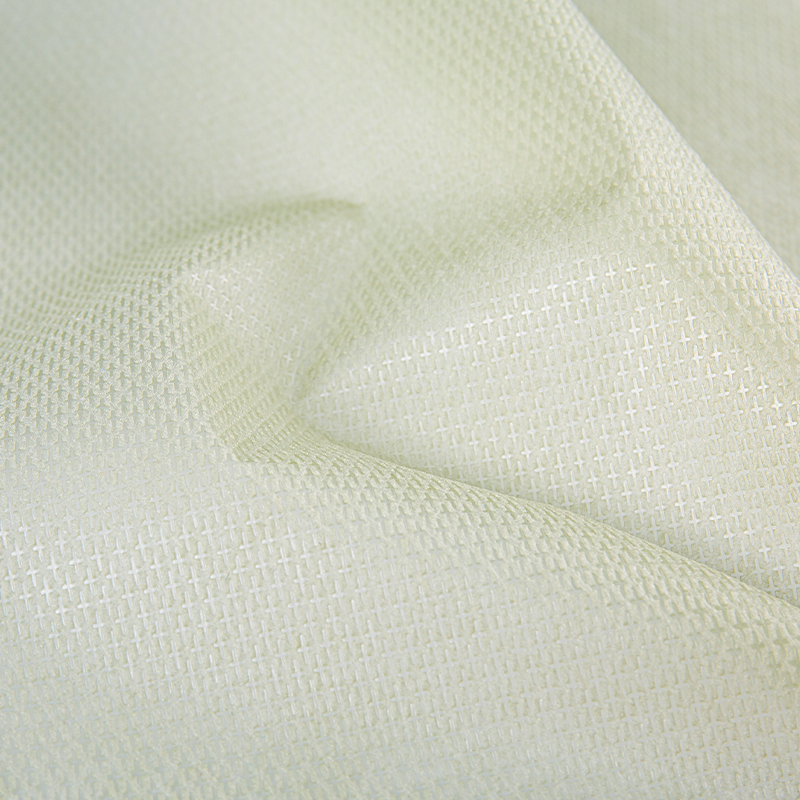 Cross-Patterned PP Spunbond Nonwoven Fabric for Durable Eco-BagsThis roll features a mechanical cross-grain texture that improves ink adhesion and tear deflection, keeping bag edges clean and weld points strong during high-speed production. Its degradable polypropylene base suits sustainable packaging needs.View Product →
Print quality is another measurable gain. The textured surface gives screen and flexographic inks a structure to key into, so edges stay clean instead of pearling on a glossy film. Because the pattern is mechanical rather than pigmented, it survives repeated folding and washing without fading or flattening.
Fig. 1. Typical basis weight windows for cross pattern PP nonwoven fabric applications, in grams per square meter.
Cross pattern PP nonwoven fabric performs as sofa lining because its weld lattice produces an opaque, low-fuzz surface that hides frame hardware, resists abrasion from spring edges and holds dimensions while the sofa is flexed repeatedly.
Sofa lining closes the underside of seat decks, back spring panels and arm interiors. It must do three jobs plain spunbond cannot handle. First, hide what is underneath: bond points compress filaments and scatter light, so plants drop from 120 gsm smooth fabric to 90 gsm cross pattern without springs showing through. Second, resist abrasion: fused weld islands stop filament pullout, so the surface does not fuzz when spring coils and foam blocks press against it. Third, resist creep: the diagonal lattice limits stretch in both directions, keeping the lining registered while workers staple it down.
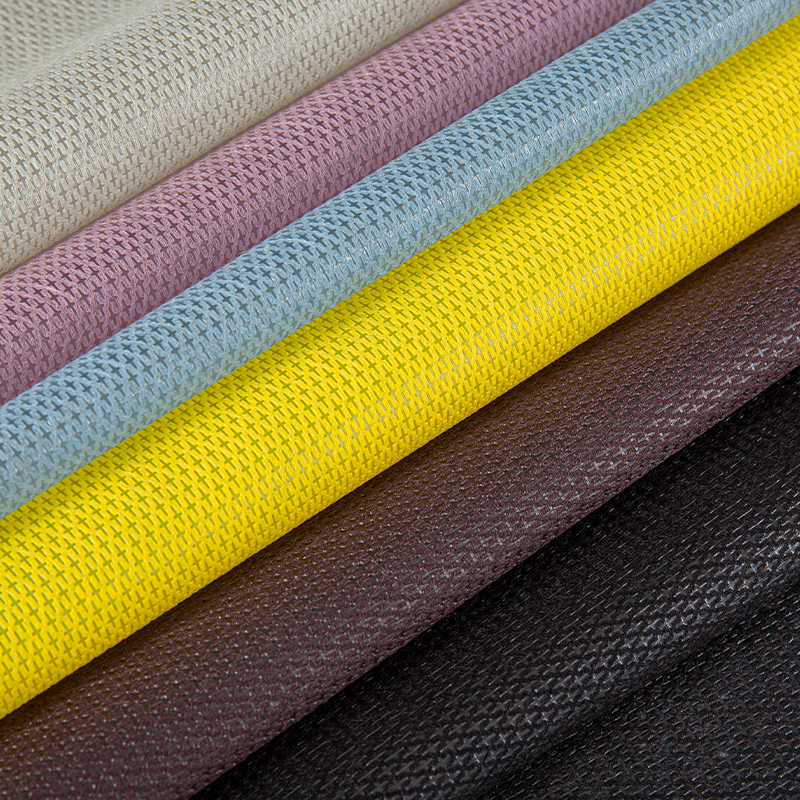 Cross-Grain Spunbond Polypropylene Fabric for Sofa LiningsDesigned for enclosed seating, this lining offers breathability, abrasion resistance, and bidirectional tensile strength. It hides springs and foam while preventing moisture buildup, making it a reliable protective layer for mid-to-high-end furniture manufacturing.View Product →
Breathability is decisive in enclosed seating. Spunbond's random web lets air pass, and the embossed grid opens the structure slightly further. That air exchange prevents moisture from accumulating inside foam cushions, which avoids musty odor and corrosion of spring steel.
The surface finish on PP spunbond changes the fabric's mechanical behavior, not just its look. Cross pattern sits at a practical midpoint: it offers surface friction, tear deflection and printability more consistently than checkered, sesame or fully printed finishes.
| Finish | Bond geometry | Surface friction | Opacity | Best-fit uses |
| Cross pattern | Diamond lattice | High | High | Shopping bags, sofa lining, luggage panels |
| Checkered | Rectangular grid | Medium | Medium-high | Luggage, handbags, agricultural film |
| Printed | Ink over smooth web | Low | Varies with coverage | Gift wrap, promotional bags |
| Sesame | Small dot matrix | Medium | Medium | Interlining, shoe liners |
The diagonal geometry spreads stress along four axes instead of two. That matters when fabric is cut into narrow strips, folded and sewn, as with bag handles, seat-edge rolls and arm facings. Checkered and printed finishes change appearance but do not contribute the same shear resistance.
The three specifications that decide whether cross pattern PP nonwoven fabric runs cleanly on your line are basis weight tolerance, roll winding consistency and calendar pattern depth. Verify all three on a physical sample, not from a photo.
A one percent basis weight drift changes bag stiffness and lining opacity. Accept a tolerance of plus or minus 3 to 5 percent and measure it edge to center, because side-to-side variation creates the most visible defects in sewn products. Roll winding matters equally: telescoped edges, soft cores and variable tension cause jams and misregistration in automatic bag making. Ask for the bond area percentage and check the lattice on a light box to confirm uniform pattern depth.
Jiangyin Jingang Non-Woven Co., Ltd., operating since 1999 with more than 80 employees and 20 production lines on a 5,000-square-meter site, produces cross pattern PP nonwoven fabric and builds the PP non-woven fabric making machines that produce it. That dual capability lets buyers qualify fabric and equipment from a single supplier, shortening audit cycles and simplifying spare-part logistics.
Both are embossed finishes on the same spunbond base. Cross pattern uses intersecting diagonal channels that form square diamonds; checkered uses straight perpendicular lines that form rectangles. The diagonal geometry spreads tearing stress in four directions, giving cross pattern higher cross-direction tear strength and better anti-slip behavior in stacks.
Use 60 to 70 gsm for lightweight promotional bags, 80 to 90 gsm for premium retail bags with full-color printing, and 90 to 100 gsm for loads above 8 kilograms. Double-stitch handle attachments at every weight above 70 gsm.
Yes. Screen printing and flexography both perform well on the embossed grid. The texture reduces printed gloss slightly, which most brands prefer for a matte finish. If a smooth print surface is required, specify a light single-side calender pass after the pattern embossing.
It is 100 percent polypropylene with no coating or lamination, so it flows through standard PP recycling streams. Standard pigment masterbatches are accepted by most recyclers; confirm the color recipe if the bag participates in a take-back program.
Plain spunbond polypropylene fabric slides. On a high-speed bag cutting line that means off-square panels, misaligned ...
READ MOREAt a packaging plant in eastern China, switching reusable shopping-bag production from woven polypropylene to PP spunb...
READ MOREWhen a surgical mask specification requires a filtration layer that stops sub-micron particles, or an HVAC filter desi...
READ MOREAn N95 respirator and a reusable shopping bag are both made from polypropylene nonwoven, yet one captures 95 percent o...
READ MOREEvery purchase order for single-use polyethylene (PE) bags commits a facility to a waste stream that will outlive the ...
READ MORE




