

 English
  русский
  Español
Why Sesame Pattern PP Nonwoven Fabric Is the Top Choice for Garment Interlining
Home / News / Industry News / Why Sesame Pattern PP Nonwoven Fabric Is the Top Choice for Garment Interlining
In garment production, interlining defects surface late and cost money: a collar that bubbles after fusing, a lapel that feels stiff, a front panel that shrinks after the first press. For shirt, blazer, and workwear manufacturers, the fix usually starts with the substrate. Sesame pattern PP nonwoven fabric has become the preferred choice for garment interlining because its point-bonded surface combines the dimensional stability of a spunbond with a softer drape and more predictable fusing than flat or calendered grades. The sesame-seed-shaped bonds scattered across the web are not decorative; they decide how the fabric behaves under heat, pressure, and fusible resin.
Content
Sesame pattern PP nonwoven fabric is preferred as an interlining substrate because its point-bonded surface gives fusible resin a mechanical grip, keeps the web dimensionally stable at fusing temperature, and preserves a soft hand. In technical terms, it is a spunbond polypropylene web consolidated by thermal point bonding, with small oval bond points arranged in a scattered sesame-seed layout that leaves micro-relief between bonded zones.
Buyers who ask why sesame pattern PP nonwoven fabric is the preferred interlining grade usually compare it with plain flat spunbond. Flat fabric is calendered smooth, which makes it compact and stiff, and that stiffness transfers to the fused panel as a hard edge at the collar or cuff. The sesame pattern keeps the web open so the interlining flexes with the shell fabric. Converters also see fewer coating defects because the textured surface holds adhesive powder more consistently during dot coating.
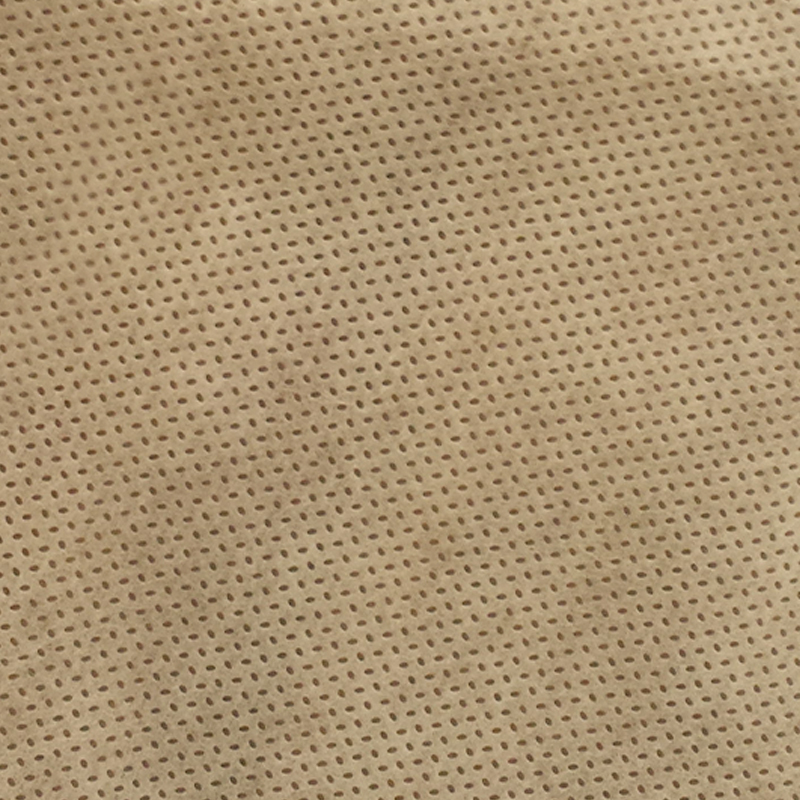 Colorful Sesame Pattern PP Spunbond Nonwoven InterliningThis patterned interlining combines a textured sesame surface with a waterproof coating, offering dimensional stability and tear resistance while preserving fabric drape for garment fusing applications.View Product →
Sesame pattern PP nonwoven fabric keeps elongation and residual shrinkage inside the tight tolerances a fusing line demands. Point bonding locks intersecting fibers at regular intervals, so the web resists stretching under the tension of coating and fusing equipment, while the unbonded areas preserve the flexibility that protects drape. In standard mill acceptance testing, a 30 gsm sesame pattern spunbond shows around 2.5 to 3 percent elongation at a 50 N load, compared with roughly 4.5 to 5 percent for a flat-calendered fabric of the same weight.
Residual shrinkage follows the same logic. When fusible resin activates at 140 to 160 degrees Celsius, heat alone can relax a poorly consolidated web. The sesame bond pattern holds the structure during this thermal event. An interlining that cannot pass a 30-second oven test at 150 degrees Celsius with less than 1.5 percent shrinkage in warp and weft will produce wavy panels in production, which is why sesame interlining spec sheets quote shrinkage limits and generic flat spunbond sheets often do not.
The sesame texture improves peel strength because it gives molten resin a mechanical anchor instead of relying on surface adhesion alone. When a smooth spunbond is coated with PA or PES dots and pressed against a shell fabric at 3 bar and 150 degrees Celsius, the resin can spread into a continuous film. That film causes strike-through on lightweight shirting and a stiff hand on heavier cloth. On the sesame pattern, the micro-relief traps each melted dot inside a bounded zone, so the bond stays strong but localized.
In coating trials on converter lines, sesame pattern PP spunbond typically delivers 15 to 30 percent higher peel strength than a flat spunbond of the same weight while reducing strike-through on plain-weave shell fabrics. The trade-off is slight: the open surface absorbs a little more resin, so operators tune resin pick-up during coating setup. It is a familiar process adjustment, not a production risk.
| Substrate | Surface profile | Adhesive anchorage | Strike-through risk | Drape | Dimensional stability |
| Sesame pattern PP spunbond | Scattered point bonds | High | Low | Soft | High |
| Flat calendered PP spunbond | Smooth | Medium | Medium to high | Stiff | Medium |
| Cross pattern PP spunbond | Continuous ribs | Medium-high | Medium | Medium | Medium-high |
| Woven fusible | Woven yarns | High | Low | Firm | Very high |
Converters need a substrate that runs cleanly through existing coating lines and matches shell-fabric weights without endless requalification. Sesame pattern PP nonwoven fabrics are manufactured in the same weight and width families as standard spunbond interlining, from 15 to 100 gsm, in widths up to 3.2 meters that can be slit and rewound to converter specifications.
A supplier with in-house spunbond capacity makes that consistency realistic. Jiangyin Jingang Non-Woven Co., Ltd. operates more than 20 spunbond production lines in a 5,000-square-meter facility in Jiangyin, China, and has produced PP spunbond specialties since 1999. Because the company builds its own spunbond lines at 1.6, 2.4, and 3.2 meter widths, it controls roll consistency from polymer feed to finished slitting. For garment interlining converters, that control translates into uniform bond-pattern density, stable roll tension, and matched shade for white, black, and dyed interlinings.
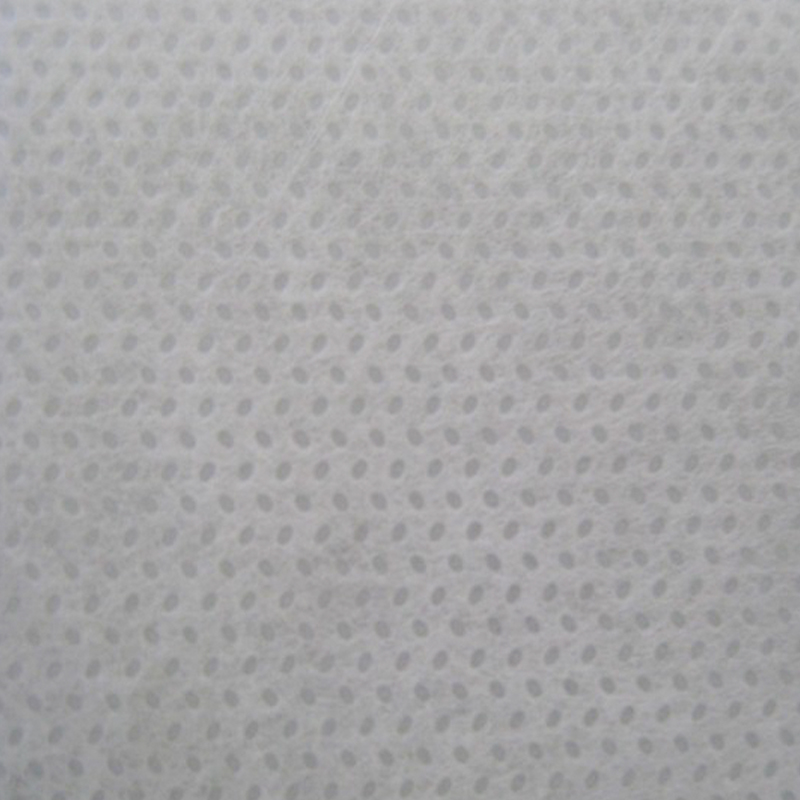 Sesame Spot Spunbond Polypropylene Nonwoven InterliningA hydrophilic-treated spunbond interlining with a sesame texture, engineered for consistent bond density and low residual shrinkage, suitable for reliable fusing and moisture management in garments.View Product →
A sesame pattern interlining roll passes qualification when it clears four checks: uniform bond pattern, stable elongation, clean fusing, and low residual shrinkage. Run these tests once on a reference roll and then again on each incoming batch.
Converters who build these checks into incoming inspection report fewer fusing rejects, faster approval of new shell fabrics, and lower interlining stock write-offs.
The sesame bond pattern leaves micro-relief on the surface. Plain spunbond is often calendered smooth, which makes it stiffer and more prone to strike-through. The sesame texture gives fusible resin mechanical anchorage, preserves softness, and reduces the risk of a boardy fused panel.
For shirts and blouses, 18 to 40 gsm is typical. For blazers and light jackets, 40 to 80 gsm; for structured waistbands and heavy coats, 80 to 100 gsm. Match the interlining weight to the shell fabric so the fused panel does not dominate the drape.
It works with the standard fusible resin family: PA for washable garments, PES for dry-cleanable garments, PU for stretch applications, and EVA for low-temperature fusing. The deciding factors are the shell fabric and care label, not the substrate pattern.
Keep rolls flat in a dry area at 20 to 25 degrees Celsius, away from direct sunlight and heat. Polypropylene barely absorbs moisture, so humidity is a minor risk; the main risks are roll crush marks and surface dust that can interfere with dot adhesion.
In garment production, interlining defects surface late and cost money: a collar that bubbles after fusing, a lapel th...
READ MOREPlain spunbond polypropylene fabric slides. On a high-speed bag cutting line that means off-square panels, misaligned ...
READ MOREAt a packaging plant in eastern China, switching reusable shopping-bag production from woven polypropylene to PP spunb...
READ MOREWhen a surgical mask specification requires a filtration layer that stops sub-micron particles, or an HVAC filter desi...
READ MOREAn N95 respirator and a reusable shopping bag are both made from polypropylene nonwoven, yet one captures 95 percent o...
READ MORE




