

 English
 русский
 Español

How to Choose Nonwoven Fabric Weight and Thickness for Your Application
Home / News / Industry News / How to Choose Nonwoven Fabric Weight and Thickness for Your Application
Content
A packaging buyer asked for medium-weight nonwoven and received a 60 gsm roll. Two weeks later, an agricultural customer used the same phrase and needed a 17 gsm row cover. Same words, completely different fabrics. When you have to choose the right nonwoven fabric weight and thickness for your application, vague terminology is the fastest route to a roll that tears in transit, drapes poorly, or jams the converting line.
The two specifications that matter are grams per square meter (gsm) and caliper thickness. Both are set on the spunbond line, both appear on every serious purchase order, and both answer different questions. Weight tells you how much polymer sits in each square meter of fabric. Thickness tells you how much space that polymer occupies.
Nonwoven fabric weight and thickness are separate specifications, and both must be stated in the purchase order. Weight is measured in grams per square meter under ISO 9073-1, and thickness in millimetres under ISO 9073-2. On a polypropylene (PP) spunbond line the two values correlate closely, but they never replace each other.
For polypropylene spunbond fabric, gsm is the primary commercial specification because resin is the dominant raw material cost. The practical commercial range is about 10 to 150 gsm. Every 10 gsm shift changes material cost and mechanical behaviour at the same time. Thickness controls secondary properties: stiffness, surface feel, and how the web bends around corners or feeds through a sewing head.
GSM stands for grams per square meter, the mass of a one-meter by one-meter sheet of fabric. Thickness is the distance between the two fabric surfaces, measured under a defined pressure. On a spunbond line, both values are set by die throughput, line speed, and calender pressure, which is why you should always specify both on your drawing or spec sheet.
A heavily calendered 80 gsm fabric can measure thinner than a lightly calendered 60 gsm fabric. That is normal. If you specify only one value, the supplier will optimise the other for production convenience, and you carry the risk. State both values, and ask the supplier to confirm that their quoted tolerance applies to both.
Choose the lightest weight that still passes the mechanical tests of your end product. Tensile strength, tear resistance, and elongation under load define performance better than any single gsm number. A 60 gsm fabric that fails a handle-seam tear test at 15 kg of force cannot be fixed by increasing stitch density; you need more polymer in the web.
The chart below maps the typical weight ranges used across common PP spunbond applications. Use it as a starting point, then validate against your own product testing.
| Application | Typical weight | Dominant requirement |
| Agricultural row cover | 15-30 gsm | Light transmission and wind resistance |
| Medical mask liner | 20-30 gsm | Breathability and drapability |
| Sofa lining | 50-80 gsm | Abrasion resistance and stretch recovery |
| Shopping bag | 60-90 gsm | Handle tear strength |
| Eco-friendly tote | 70-100 gsm | Repeated load cycling and shape retention |
| Luggage compartment liner | 100-130 gsm | Puncture resistance and stiffness |
Notice that each weight range is paired with a dominant requirement. For eco-friendly tote bags, a cross-pattern finish adds surface grip and visual texture, which lets you hold the weight at 80 to 100 gsm instead of pushing toward 120 gsm.
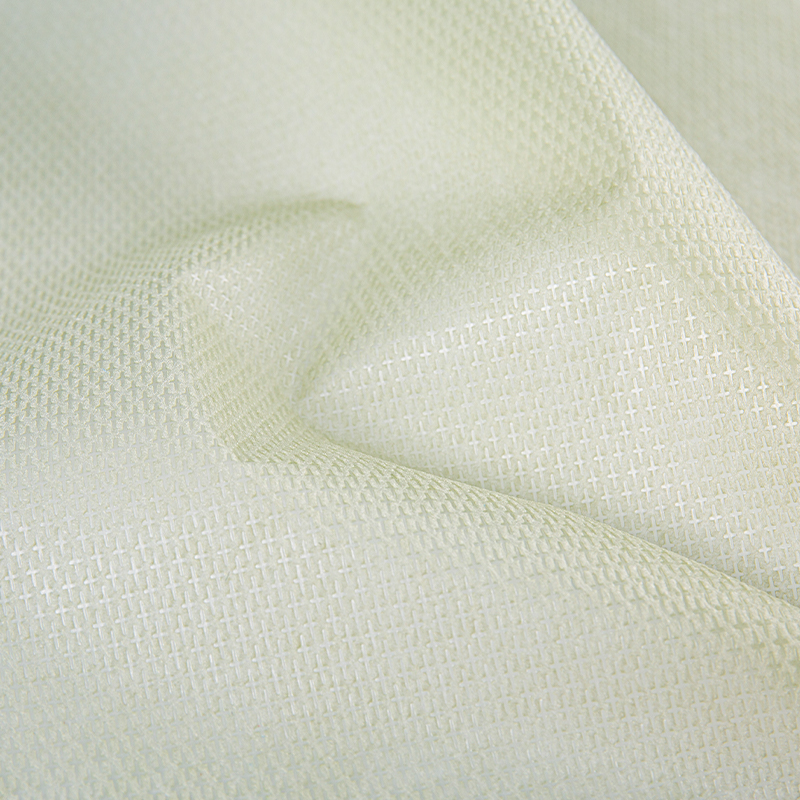 Cross Cambrella PP Spunbonded Non-woven Fabric for Eco-friendly BagsThe cross-grain Canberra polypropylene non-woven environmentally friendly bag roll is made of polypropylene (PP) as the base material through high-temperature melting,...View Product →
Every unnecessary 10 gsm multiplies across your order quantity. An 80 gsm tote bag order of 500,000 square meters carries about 5 tonnes more resin than a 70 gsm version of the same bag. Specify the lowest weight that passes the test.
Thickness governs stiffness and surface contact, and it determines whether a fabric feeds cleanly through sewing, ultrasonic welding, rotary cutting, and printing. On the same gsm, a thicker fabric is softer and loftier because the calender pressed less. A thinner fabric is denser, smoother, and slightly stiffer. Three practical bands cover most applications:
For printed shopping bags, a medium-thickness fabric at 60 to 80 gsm holds ink on the surface and feeds through rotary printers without stretching. If calender pressure drifts, printed registration shifts and the bag rejects at the cut-off station.
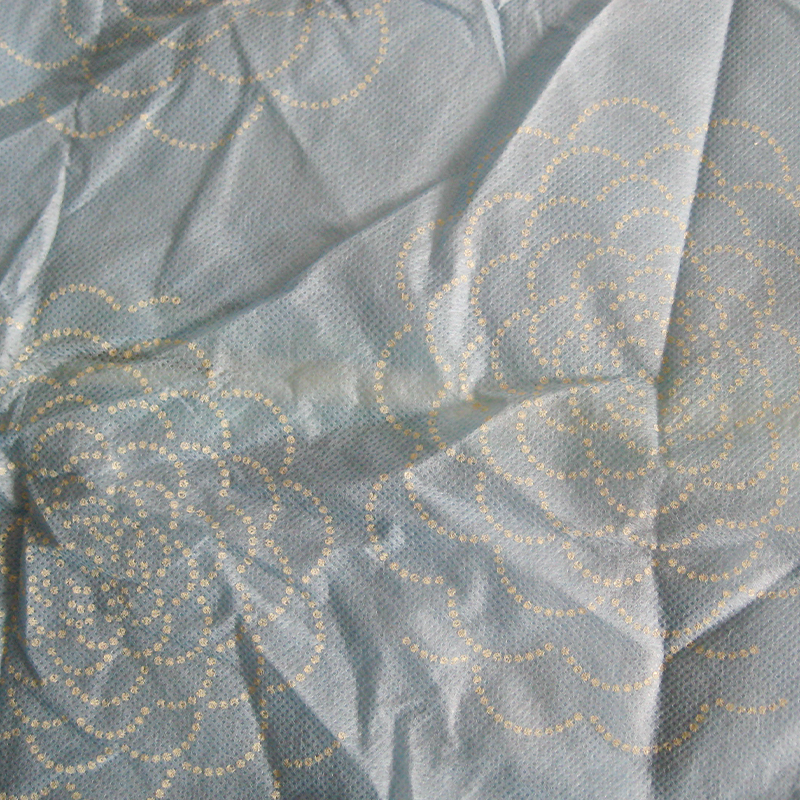 Printed Disposable PP Non-Woven Fabric Roll for Shopping BagPrinted shopping bag disposable non-woven fabric roll is an environmentally friendly packaging material made of polypropylene (PP) as the main raw material, which is m...View Product →
A quick incoming inspection: measure thickness at five points across the width, at the center, two edges, and two midpoints. Edge-to-center deviation beyond 10 percent indicates uneven calender pressure, and converting problems will follow within the first few hundred meters.
A well-run PP spunbond line holds basis weight to about 5-8 percent across the roll width and thickness to roughly 10 percent. Reject any supplier who cannot state these numbers in writing.
Tolerance is not a defect; it is a physical reality of the spunbond process. Filament distribution, die temperature, and calender wear all contribute to local variation. The specification question is whether the supplier measures the variation and keeps it inside agreed limits.
| Parameter | Typical variation | Main cause |
| Basis weight (gsm) | +/-5-8% across width | Filament distribution, die temperature |
| Thickness | +/-10% across width | Calender pressure and roll wear |
| Width | +/-3 mm | Edge trim control |
| Roll length | +/-1-2% | Winding tension and splice counting |
These numbers are a baseline, not a promise. A supplier that reports actual measured values per roll gives you a predictable process. A supplier that only repeats the brochure value asks you to trust luck.
Fast field check: cut three 1-square-meter samples from the start, middle, and end of one roll and weigh them. If the three values differ by more than 8 percent, the roll fails incoming inspection.
The most reliable way to get consistent weight and thickness is to verify the supplier's testing routine, not just the certificate attached to the order. Use this checklist when you evaluate a new supplier or audit an existing one:
For agricultural row covers, keep the gsm low but demand consistent thickness across the roll. Water vapour transmission and mechanical strength both depend on it.
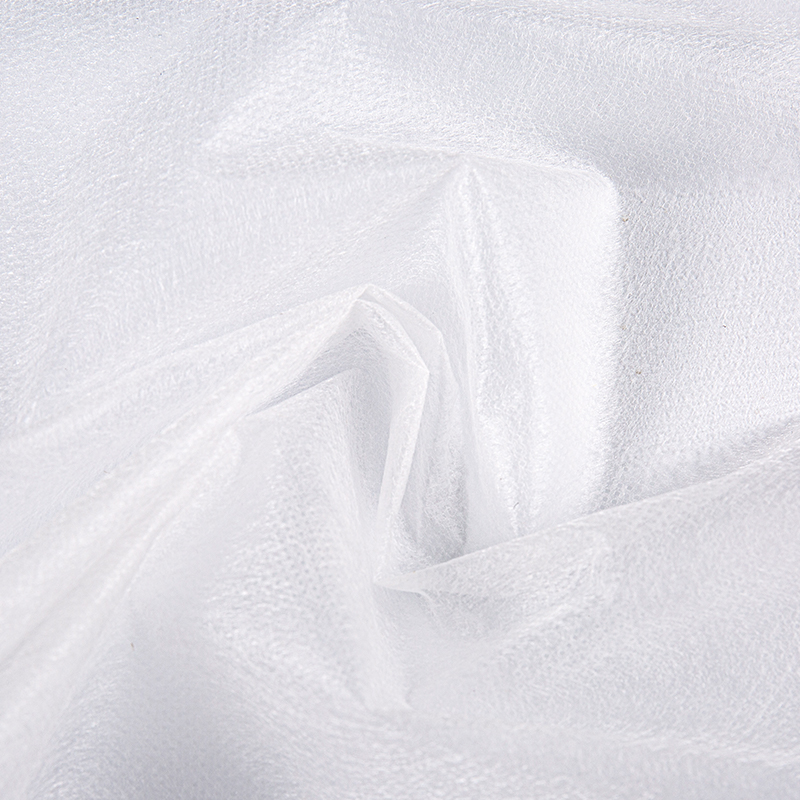 Spunbond PP Checkered Nonwoven Fabric for Agricultural FilmSpunbond PP checkered non-woven agricultural film is a functional agricultural covering material made of polypropylene (PP) through a spunbond process. Its unique chec...View Product →
A written specification with measured tolerances is worth more than a verbal promise. The supplier who shows you variation data is the supplier you can plan production around. A supplier such as Jiangyin Jingang Non-Woven Co., Ltd., which runs dedicated PP spunbond lines, should be able to produce a per-lot basis weight report on request.
If you are also evaluating production equipment, the achievable gsm range depends on the line configuration. Review the PP non-woven fabric making machine lineup to understand how die and calender design set the limits a supplier can hold.
70 to 100 gsm PP spunbond is the practical range for reusable bags. Below 60 gsm, handle seams tear during normal loading. Above 110 gsm, the fabric becomes stiff, slow on the sewing line, and unnecessarily expensive. A cross-pattern structure adds surface grip at the lower end of that range.
No. Higher gsm raises cost and stiffness without improving function. Agricultural row covers at 15 to 30 gsm need light transmission; a heavier cover blocks germination and reduces yield. Work backward from the end-use mechanical requirement, not from a preference for heavier material.
Use a dial thickness gauge with a flat foot at 0.5 kPa pressure. Measure at five points across the width, average them, and compare with the supplier's stated value. Deviation above 10 percent means the process is drifting and you should request a replacement roll or a process correction.
Yes. Thickness is controlled by calender pressure and line speed. A heavily calendered fabric is thinner, denser, and stiffer at the same gsm. A lightly calendered fabric is softer and loftier. Specify both gsm and thickness in the purchase order, or the supplier has room to optimise only one value.
Bottom line: specify gsm and thickness together, verify both at five points across the width, and choose the lightest weight that passes your mechanical test. The supplier who shows measured data is the supplier who keeps your production line running.
A packaging buyer asked for medium-weight nonwoven and received a 60 gsm roll. Two weeks later, an agricultural custom...
READ MOREA luggage factory that switches its partition-board lining from 150 gsm woven polyester to 90 gsm checkered polypropyl...
READ MOREDuring a recent mill comparison, three different rolls of printed PP nonwoven fabric carried the same specification on...
READ MOREThe question "How is PP spunbond nonwoven fabric manufactured?" deserves a concrete answer, because the polymer-to-rol...
READ MOREIn garment production, interlining defects surface late and cost money: a collar that bubbles after fusing, a lapel th...
READ MORE




