

 English
 русский
 Español

What Are the Key Environmental Benefits of PP Spunbond Nonwoven Fabric?
Home / News / Industry News / What Are the Key Environmental Benefits of PP Spunbond Nonwoven Fabric?
Content
A procurement manager evaluating reusable shopping bags rarely starts with aesthetics. The comparison typically begins with three numbers: carbon footprint per kilogram of fabric, liters of water consumed during production, and the number of reuse cycles the finished bag will survive. On all three metrics, PP spunbond nonwoven fabric sits at the favorable end of the range, and the reasons are structural, not incidental.
PP spunbond nonwoven fabric is extruded directly from polypropylene pellets into a finished web in one continuous line, so it skips the yarn spinning, weaving, knitting, and wet finishing stages that dominate the energy and water footprint of conventional textiles. A single production line can melt polymer, form filaments, lay them into a sheet, bond them thermally, and wind the fabric, all in a dry loop where edge trim is reground and returned to the extruder. The result is a lightweight, durable, mono-material fabric with a shorter manufacturing chain and a simpler end-of-life path than most alternatives.
PP spunbond manufacturing requires decisively less energy and almost no process water than woven textile routes, because the fabric is formed directly from molten polymer. The production sequence is short enough to describe in four steps.
Published lifecycle studies commonly place PP nonwoven fabric production in the range of 40-70 MJ of energy per kilogram of fabric, while woven cotton fabric, counting irrigation, harvesting, spinning, weaving, and finishing, often exceeds 100 MJ per kilogram. The water difference is larger still. Cotton cultivation is widely cited at 8,000-12,000 liters of water per kilogram of fiber; the spunbond process uses essentially no process water because cooling loops are closed and no dye baths exist. Color masterbatch is dosed directly into the extruder, eliminating dyehouse effluent entirely.
This is why manufacturers such as Jiangyin Jingang Non-Woven Co., Ltd. emphasize line efficiency rather than post-processing. On a 2.4-meter PP spunbond nonwoven production line, the same machinery that forms the web also regrinds and recycles production scrap, so waste is removed from the stream before the finished product ships.
One PP spunbond carrier used around 50 times avoids 50 single-use plastic bags, and it pays back its own production impact within the first dozen uses. That arithmetic is what makes the material attractive to brands facing extended producer responsibility obligations and single-use plastic regulations.
A typical single-use LDPE bag has a working life of 12 to 15 minutes before it becomes waste or litter. A nonwoven PP carrier made from 40-120 gsm fabric is designed for repeated loads of 10-20 kg, can be washed, and remains compatible with polypropylene recycling streams after it wears out. Comparative assessments commonly report that a nonwoven PP bag breaks even with a single-use LDPE bag between five and eleven uses; every use beyond that point is a net saving in carbon and waste.
Retailers that want a textured, printable surface usually specify a cross-pattern grade, which grips contact surfaces, prints cleanly, and keeps the same mono-material recyclability as the plain version.
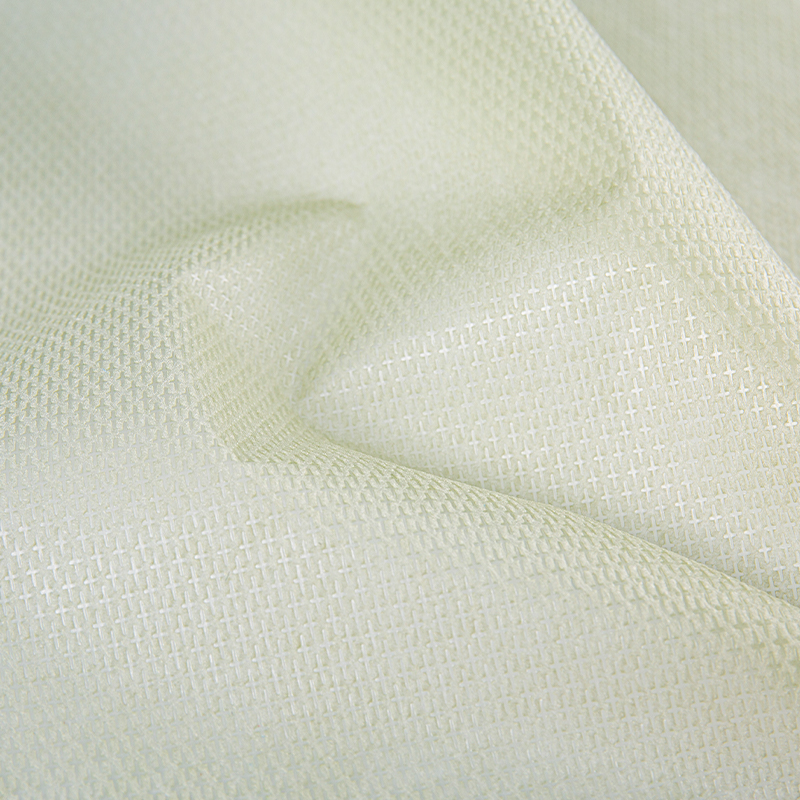 Cross-Pattern PP Spunbonded Nonwoven Fabric for BagsThis textured polypropylene fabric offers a printable surface and mono-material recyclability, making it a practical choice for eco-friendly bags and retail packaging.View Product →
The packaging performance of this grade, including tear strength and ink adhesion, is documented in our guide to packaging-grade cross-pattern PP nonwoven fabric.
PP spunbond row covers and mulch films can be removed, cleaned, and reused for several growing seasons, while conventional LDPE mulch is typically discarded after a single season. The environmental gain comes from both the longer service life and the smaller waste stream.
Spunbond covers protect crops from frost, insects, and excessive sun while still letting air and water pass through the open web. Growers use them to reduce evaporation and limit pesticide applications, because the physical barrier keeps many pests off the crop. At the end of the season, the fabric is lifted, washed, and stored; in practice, a well-maintained spunbond cover lasts three to five seasons before it reaches the end-of-life point that LDPE film reaches in one.
Agricultural grades are commonly produced with UV stabilization to tolerate full sunlight exposure.
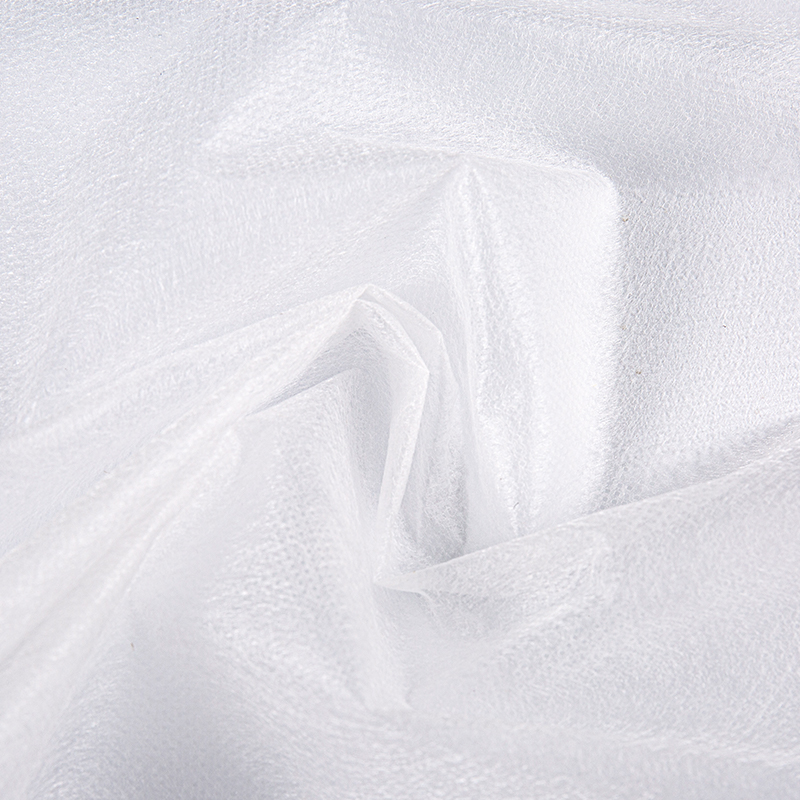 UV-Stabilized Spunbond PP Checkered Agricultural FilmThis checkered polypropylene covering resists UV and tearing while remaining breathable and recyclable, supporting crop protection and sustainable farming practices.View Product →
Because the material remains a mono-polymer web, a worn row cover can still follow the same polypropylene recycling route as a used carrier bag.
Because PP spunbond is made from a single polymer, it can be handled by the existing polypropylene recycling stream without the de-lamination and separation steps required for multilayer or blended textiles. That mono-material status is the structural reason its end-of-life story is short.
Polypropylene is the resin identified as Code 5, with established collection routes in many municipal and commercial recycling programs. A nonwoven bag, agricultural cover, or packaging interliner that stays in one polymer keeps its recycling value: printing inks and surface patterns do not substantially alter the resin chemistry. By contrast, a cotton/polyester blend or a laminated film requires separation before either fraction can be repurposed, and that separation is rarely economical at scale.
There is also a closed-loop advantage inside the factory. Spunbond lines generate edge trim and rejected rolls; because the material is a single polymer, that scrap can be reground and fed directly back to the extruder. The same logic extends to post-industrial waste from bag manufacturers, turning a waste cost into feedstock.
On the metrics that procurement and sustainability teams actually audit, production energy, process water, reuse cycles, and recyclability, PP spunbond ranks favorably against woven cotton, woven polyester, and LDPE film. The chart below summarizes representative cradle-to-gate carbon estimates; the table adds the resource and end-of-life factors.
| Metric | PP spunbond | Woven cotton | LDPE film |
| Production energy (MJ/kg) | 40-70 | 90-150 | 70-90 |
| Process water (L/kg) | under 5 | 8,000-12,000 | under 10 |
| Typical reuse cycles | 50-100+ | 50+ | 1 |
| Recycling route | PP stream, Code 5 | Fiber recycling | Film, Code 4 |
| Practical recovery after use | Established | Limited by blends | Rarely recovered |
No, and that is part of its environmental value proposition. PP spunbond is not designed to break down prematurely; it is designed to be reused many times and then recycled through the polypropylene stream. Its long service life and recyclability are what keep it out of landfill and incineration.
Comparative lifecycle assessments commonly report that a nonwoven PP bag offsets the footprint of a single-use LDPE bag within five to eleven uses, depending on bag weight and recycled content. Every reuse beyond that breakeven point produces a net reduction in carbon and waste.
Yes. Because the fabric is a mono-material, printing and surface color do not change the base polymer. Printed bags, packaging, and covers can still enter polypropylene recycling streams, although heavily coated inks or laminations should be avoided to keep reprocessing simple.
For many crops, the spunbond option wins on waste. It can be removed, cleaned, and reused for three to five seasons, whereas LDPE mulch is typically contaminated with soil after one season and is rarely recyclable in practice.
A procurement manager evaluating reusable shopping bags rarely starts with aesthetics. The comparison typically begins...
READ MOREA packaging buyer asked for medium-weight nonwoven and received a 60 gsm roll. Two weeks later, an agricultural custom...
READ MOREA luggage factory that switches its partition-board lining from 150 gsm woven polyester to 90 gsm checkered polypropyl...
READ MOREDuring a recent mill comparison, three different rolls of printed PP nonwoven fabric carried the same specification on...
READ MOREThe question "How is PP spunbond nonwoven fabric manufactured?" deserves a concrete answer, because the polymer-to-rol...
READ MORE




